In business-to-business sales, the first email is merely the opening line. The real conversation, the one that builds relationships and closes deals, happens in the follow-up. Data analysis consistently reveals a critical disconnect: a staggering 80% of sales require at least five follow-up touches after an initial meeting, yet nearly half of all salespeople abandon their efforts after just one attempt. This gap represents a massive, untapped opportunity for teams willing to embrace a more strategic approach.
Historically, the standard was a single, hopeful email blast. The future, however, is defined by a landscape of hyper-personalization, intelligent automation, and multi-channel persistence. This article bridges that gap, moving beyond generic advice to provide a technical, journalistic breakdown of eight powerful email follow-up strategies engineered for modern B2B workflows.
This is not a guide about sending more emails; it is about architecting a communication framework that respects a prospect’s time, demonstrates undeniable value, and systematically converts silence into engagement. We will dissect the mechanics, timing, and psychology behind sequences that deliver measurable results. Your key takeaway will be a set of actionable insights to ensure your next communication is a strategic move, not a shot in the dark, equipping you to master your follow-up game.
1. The 3-Touch Sequence
The 3-Touch Sequence is a highly structured yet versatile framework for email follow-ups that balances persistence with professionalism. This method involves sending precisely three targeted emails after an initial interaction, each with a distinct purpose, to guide a prospect through the consideration phase without overwhelming them. It’s a foundational strategy that moves beyond simple reminders, creating a narrative of value and assistance.
The sequence is designed to build momentum. The first email adds new value, the second anticipates and addresses potential roadblocks, and the third creates a clear, final opportunity for action. This structured approach prevents follow-up efforts from feeling random or desperate, making it a reliable tactic in any B2B playbook.
How It Works: A Breakdown
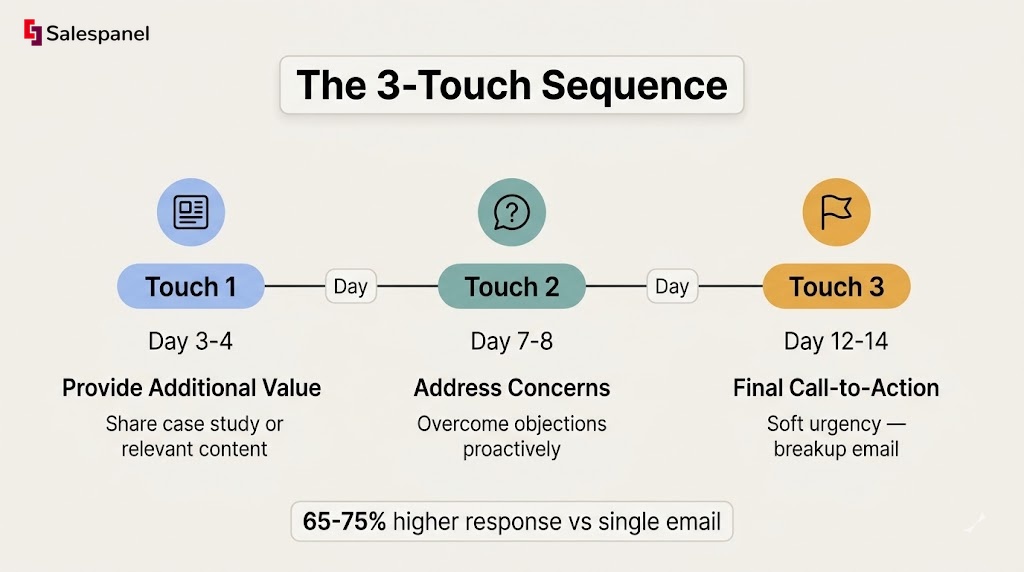
The power of the 3-Touch Sequence lies in its methodical progression. Each email builds upon the last, adapting its message based on the prospect’s continued silence.
- Touch 1: Provide Additional Value (Day 3-4): This email should not be a simple “just checking in.” Instead, offer a new piece of valuable content related to your initial conversation. This could be a relevant case study, a helpful blog post, or a link to a webinar that addresses their specific pain points. The goal is to be a resource, not just a salesperson.
- Touch 2: Address Potential Concerns (Day 7-8): At this stage, your prospect might have unspoken questions or objections. This email preemptively addresses them. You could share a customer testimonial that overcomes a common objection or offer a quick 10-minute call to clarify any points of confusion.
- Touch 3: The Final Call-to-Action (Day 12-14): This is the “breakup” email, but framed politely and professionally. It restates your value proposition one last time and creates a soft sense of urgency. A common tactic is to state that you assume the timing isn’t right and will close their file for now unless they reply.
Practical Implementation and Tips
To maximize the effectiveness of your 3-Touch email follow-ups, timing and content variation are critical. Space each email 3 to 5 business days apart to stay top-of-mind without being intrusive. Use a different subject line and a unique value proposition in each message to avoid sounding repetitive. For instance, an account executive at a SaaS company might use website visitor tracking data from Salespanel to see which pages a prospect viewed after a demo, allowing them to tailor the “Additional Value” email with a case study directly related to the features they explored. This level of personalization significantly boosts relevance and response rates.
2. Value-First Follow-Up Strategy
The Value-First Follow-Up Strategy is an approach centered on delivering genuine, tangible value in every communication before asking for anything in return. Popularized by marketing leaders like Gary Vaynerchuk, this method transforms email follow-ups from sales pitches into helpful, educational touchpoints. Instead of pushing for a demo or a sale, each email provides useful content, insights, or resources directly relevant to the recipient’s challenges.
This strategy positions you as a trusted advisor rather than just a vendor. By consistently offering value without an immediate transactional expectation, you build credibility and rapport, making the prospect more receptive when you eventually make a request. It’s a long-term play that nurtures relationships and generates warmer, more qualified leads.
How It Works: A Breakdown
The core principle of this strategy is generosity. Each follow-up is designed to solve a small problem for the prospect, demonstrate your expertise, and build a foundation of trust before the “ask.”
- Touch 1: Share a Relevant Resource: After an initial interaction, send an email with a link to an insightful blog post, a free tool, or an industry report that directly addresses a pain point they mentioned. Practical Example: A marketing agency could email a prospect who expressed concern about social media ROI a link to a recent Forrester report on industry benchmarks.
- Touch 2: Provide a Personalized Insight: Your next email can offer a quick, customized piece of advice. A classic example is Neil Patel’s strategy of sending a mini SEO audit report, highlighting a specific opportunity for improvement on the prospect’s website.
- Touch 3: Offer a High-Value Asset: In a subsequent follow-up, provide a more substantial piece of content, like an invitation to an exclusive webinar, access to a comprehensive case study, or a free e-book that aligns with their business goals.
Practical Implementation and Tips
Success with value-first email follow-ups hinges on deep personalization and a genuine desire to help. Begin by thoroughly researching your prospect’s specific challenges, company goals, and recent activities. Use this information to tailor your value offerings so they resonate strongly and feel exclusive. For instance, you could share a case study of a company in their exact niche that solved a problem you know they’re facing. Create a library of value-based content that can be easily customized, and always conclude your email with a soft, helpful question like, “Was this useful?” instead of a hard sell.
3. The Breakup Email Strategy
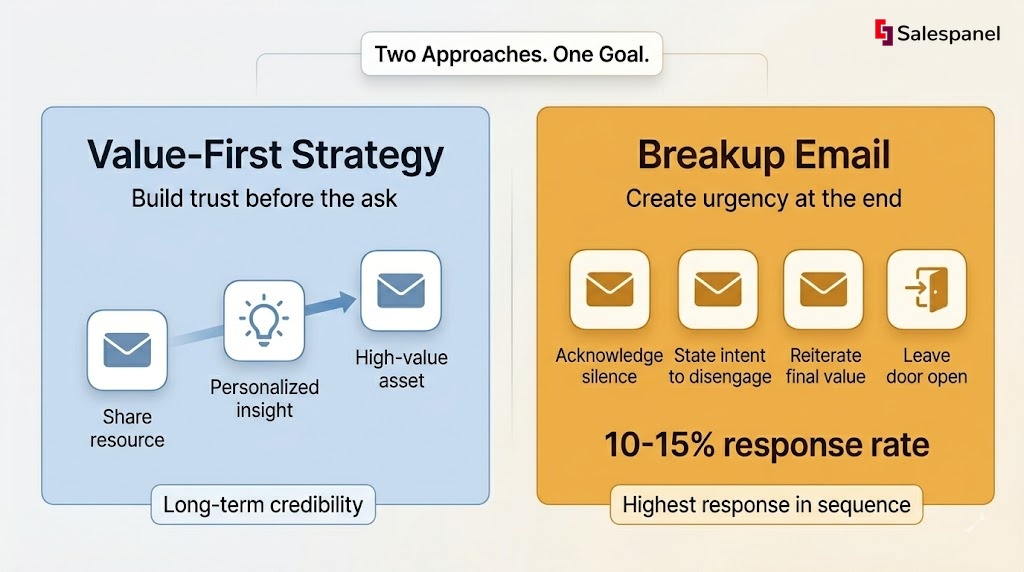
The Breakup Email Strategy is a powerful final follow-up email that politely acknowledges a prospect’s silence and signals the end of the current outreach sequence. Paradoxically, this “goodbye” email often generates the highest response rates by creating a subtle sense of urgency and giving recipients a clear, low-pressure way to either opt out or re-engage. It’s a respectful closing tactic that cleans your pipeline and revives seemingly lost leads.
This method works by leveraging the psychological principle of loss aversion. By stating your intent to “close their file” or move on, you frame the potential end of the relationship as their loss, prompting many to reply who had previously remained silent. It’s a crucial tool for any email follow-ups cadence, providing closure and clarity for both the sender and the recipient.
How It Works: A Breakdown
The effectiveness of the Breakup Email lies in its polite, professional, and definitive tone. It’s not an aggressive plea but a courteous conclusion to your communication attempts, which often earns a response.
- Acknowledge the Silence: Start by referencing your previous attempts to connect. A simple line like, “I’ve reached out a few times but haven’t heard back,” shows persistence without being accusatory.
- State Your Intent to Disengage: Clearly communicate that this will be your final email. Phrases like, “I’m assuming this isn’t a priority right now” or “I’ll be closing your file for now” are effective. This creates the finality that triggers a response.
- Reiterate Final Value: Include a concise, one-sentence summary of your core value proposition. This serves as a final reminder of what they might be missing out on.
- Leave the Door Open: End on a positive note, making it easy for them to re-engage in the future. Mention that you’re available if circumstances change or if they want to reconnect down the line.
Practical Implementation and Tips
The Breakup Email should be the last step in a multi-touch sequence, sent after 3-4 previous follow-up attempts have gone unanswered. Use a subject line that sparks curiosity and clearly indicates the email’s purpose, such as “Should I stay or should I go?” or “Closing the loop.” Keep the body of the email short, direct, and focused on providing a simple path forward: either they reply to re-engage or do nothing to confirm your assumption. Practical Example: A sales development team at HubSpot uses this strategy to qualify out unresponsive leads, ensuring their pipeline remains filled only with engaged prospects and freeing up time to focus on more promising opportunities. This tactic is essential for maintaining a clean and active sales funnel.
4. Social Proof Integration Strategy
The Social Proof Integration Strategy leverages one of the most powerful psychological triggers in marketing: the principle that people are influenced by the actions and experiences of others. This email follow up method moves beyond simply stating your value proposition; it proves it through the voices and successes of existing customers. By embedding testimonials, case studies, and customer logos into your follow-up emails, you build credibility and reduce the perceived risk for the prospect.
This approach is highly effective because it answers the unspoken question in every prospect’s mind: “Has this worked for someone like me?” Instead of relying solely on your own claims, you provide tangible evidence of your solution’s impact. It transforms a standard follow-up into a confidence-building exercise, making it a crucial tactic for overcoming skepticism and accelerating trust in B2B sales cycles.
How It Works: A Breakdown
The power of this strategy lies in its ability to validate your claims with third-party credibility. Each piece of social proof is selected to resonate with the prospect’s specific context, making the message more relevant and persuasive.
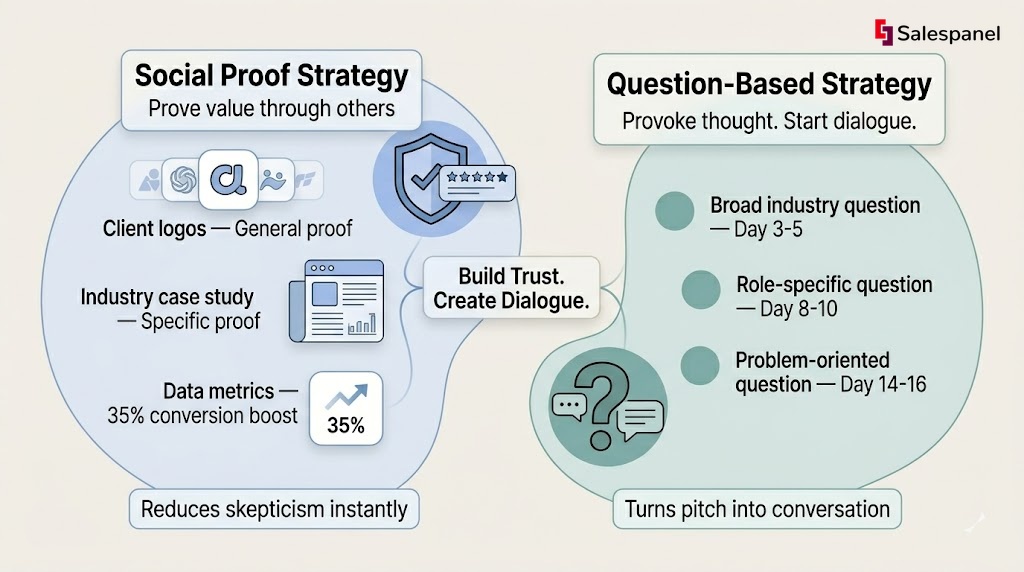
- Initial Follow-Up: General Proof: In your first follow-up, you can include well-known client logos or a powerful, general testimonial. Practical Example: A project management tool like Asana might feature a banner of Fortune 500 client logos (e.g., Google, NASA) in its email signature to immediately establish its enterprise-level credibility.
- Mid-Sequence Follow-Up: Specific Proof: As the sequence progresses, tailor the social proof more narrowly. If the prospect is in the e-commerce industry, send them a case study detailing how you helped a similar online retailer increase revenue. Shopify excels at this by sharing stories of successful merchants.
- Final Follow-Up: Data-Driven Proof: In a later email, use specific metrics to make a final, compelling argument. This could be a quote like, “Our clients in the SaaS industry see an average 35% increase in lead conversion,” or sharing success metrics from a platform like G2.
Practical Implementation and Tips
To make your social proof email follow-ups truly effective, relevance and presentation are key. Don’t just drop in a random quote; integrate the proof seamlessly into your message to support your core argument. A powerful tactic is to match the social proof directly to the prospect’s industry, company size, or specific pain points they mentioned in a prior conversation.
Use specific, quantifiable outcomes in your testimonials or case studies, such as “reduced operational costs by 22%” or “boosted user engagement by 40%.” This adds a layer of concrete evidence that vague praise lacks. Make the proof visually appealing by using brand logos, customer headshots, or even short video testimonials to capture attention and enhance authenticity. This strategic use of validation can turn a lukewarm lead into a convinced prospect.
5. Question-Based Follow-Up Strategy
The Question-Based Follow-Up Strategy shifts the focus from pitching to provoking thought. Instead of pushing a solution, this approach uses strategic questioning to re-engage prospects, uncover their specific challenges, and stimulate a genuine conversation. It positions you as an inquisitive expert rather than just another vendor.
This method is highly effective because it directly invites participation. A well-crafted question encourages the recipient to pause, reflect, and share their perspective, transforming a one-way broadcast into a two-way dialogue. For B2B sales, where understanding a prospect’s unique context is paramount, this strategy is invaluable for building rapport and gathering critical intelligence for your email follow-ups.
How It Works: A Breakdown
The power of this strategy lies in its ability to make the prospect the hero of the story. By asking about their world, you demonstrate genuine interest and guide them toward recognizing a problem you can solve.
- Initial Question: Broad but Relevant (Day 3-5): Start with an open-ended question tied to a recent industry trend or a common challenge you observed. Practical Example: A cybersecurity firm could ask a CTO, “With the recent Log4j vulnerability making headlines, how has your team been reassessing your approach to software supply chain security?”
- Follow-Up Question: Narrowing the Focus (Day 8-10): If there’s no response, your next email can pose a more specific question based on their role or company. A SaaS provider could ask, “Many marketing VPs I speak with are struggling to measure ROI from their content efforts. Is this a priority for your team in Q3?”
- Final Question: Problem-Oriented (Day 14-16): This question should directly hint at a pain point your solution addresses. A recruitment agency might ask, “Finding qualified engineers is tough right now. Are you finding your current hiring pipeline is delivering the talent you need to hit your product roadmap goals?”
Practical Implementation and Tips
To make your question-based email follow-ups effective, the key is to be specific and demonstrate expertise. Limit each email to one or two well-chosen questions to avoid overwhelming the recipient. Your questions should be specific enough that they can’t be answered with a simple “yes” or “no,” encouraging a more detailed response. For instance, a sales team can identify a prospect’s specific interests by using website visitor tracking from Salespanel to see which solution pages they viewed, then ask a highly relevant question like, “I noticed you spent some time on our A/B testing feature page. What’s the biggest challenge you currently face when optimizing your landing page conversions?” This shows you’ve done your homework and are genuinely invested in their success.
6. Multi-Channel Follow-Up Strategy
The Multi-Channel Follow-Up Strategy moves beyond the inbox to create a cohesive and persistent outreach experience. This comprehensive approach acknowledges that prospects live across various platforms and combines email follow-ups with other channels like LinkedIn messages, phone calls, and even direct mail. It creates multiple, reinforcing touchpoints that significantly increase the likelihood of cutting through the noise and getting a response.
This strategy is built on the principle of surround sound engagement. By appearing in different professional contexts, you build familiarity and demonstrate a higher level of commitment. Instead of relying on a single channel, you orchestrate a sequence that leverages the unique strengths of each platform, making your outreach efforts feel more dynamic and harder to ignore.
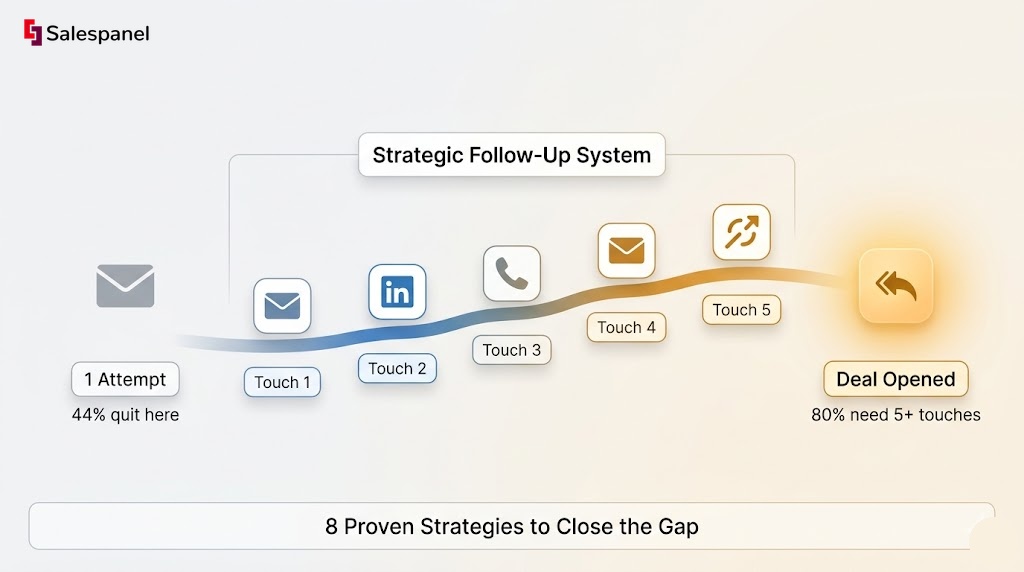
This process flow diagram illustrates a common sequence for multi-channel email follow ups.
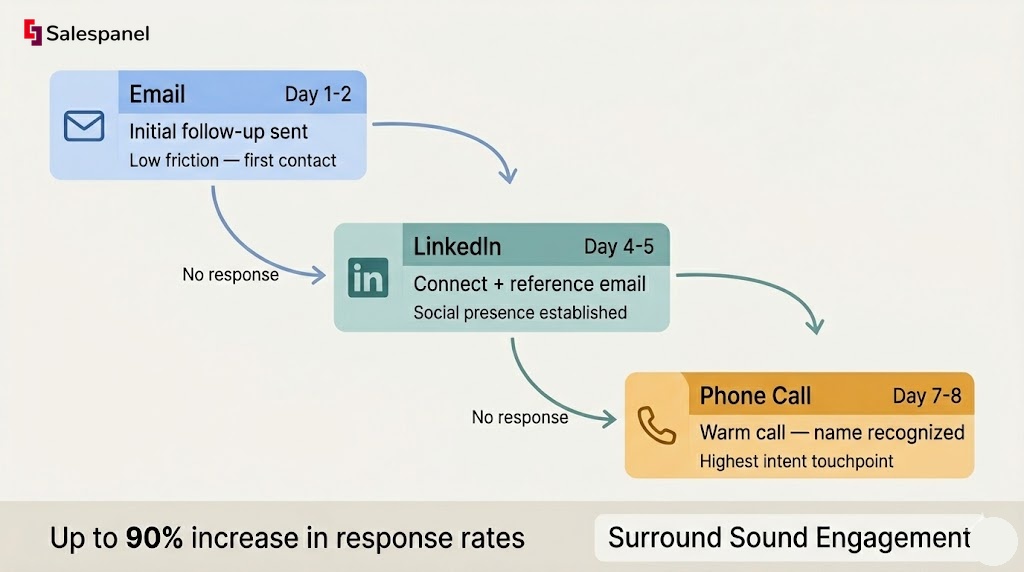
The sequence starts with a low-friction email, moves to a social touchpoint on LinkedIn, and culminates in a direct, high-intent phone call, creating a logical escalation in engagement.
How It Works: A Breakdown
The power of a multi-channel approach lies in its coordinated execution. Each touchpoint is part of a larger plan, with actions on one channel influencing the next.
- Touch 1: Initial Email & Social Connection (Day 1-2): Send your initial follow-up email, then connect with the prospect on LinkedIn. This dual touchpoint establishes your presence on two key professional platforms from the outset.
- Touch 2: LinkedIn Message (Day 4-5): If there’s no email response, send a brief, non-salesy message on LinkedIn. Reference your email to create a connection, for example: “Hi [Name], I sent an email your way a few days ago about [Topic]. Just wanted to connect here as well.”
- Touch 3: Phone Call (Day 7-8): A phone call becomes much warmer when the prospect has already seen your name in their inbox and on LinkedIn. This final touchpoint in the initial sequence is your best chance for a direct conversation.
Practical Implementation and Tips
To execute this strategy successfully, you need coordination and respect for channel-specific etiquette. Start with less intrusive channels like email and LinkedIn before escalating to a phone call. Maintain consistent messaging across all platforms to build a clear and unified value proposition. Practical Example: An enterprise sales team at Oracle uses a sales engagement platform to automate a sequence where an email follow-up triggers a task for a LinkedIn connection request two days later. If the prospect accepts but doesn’t reply to the email, a third touchpoint—a phone call—is scheduled, ensuring no opportunity is missed.
7. Trigger-Based Follow-Up Strategy
The Trigger-Based Follow-Up Strategy is a highly automated and contextual approach where email follow-ups are sent in response to specific recipient behaviors or events. Instead of relying on a fixed timeline, this method uses a prospect’s actions like website visits, content downloads, or email opens to initiate a relevant and timely conversation. It’s a powerful strategy that transforms generic follow-ups into personalized, one-to-one dialogues.
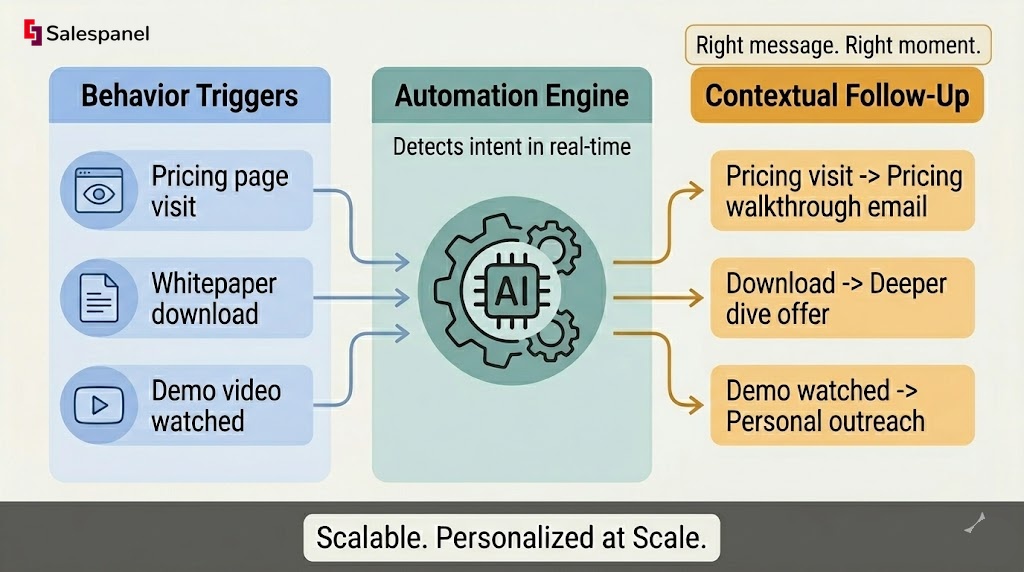
This approach is rooted in the principle of acting on intent. When a prospect interacts with your brand, they are signaling interest. A trigger-based system capitalizes on that moment, delivering a tailored message when the prospect is most engaged. This level of responsiveness makes your outreach feel helpful and insightful, rather than intrusive, significantly boosting engagement and conversion rates.
How It Works: A Breakdown
The effectiveness of this strategy comes from its real-time, behavior-driven nature. Each follow-up is a direct consequence of an action taken by the prospect, making the communication inherently relevant.
- Define Key Triggers: Identify high-intent actions that signal a prospect is ready for engagement. Common triggers include downloading a whitepaper, visiting the pricing page, watching a product demo video, or a period of inactivity after signing up for a trial.
- Create Contextual Templates: For each trigger, develop a specific email template. If a prospect downloads a case study on “improving logistics,” the follow-up should reference that content and offer a deeper dive, not a generic sales pitch.
- Automate the Workflow: Use a marketing automation platform to connect the triggers to their corresponding email sequences. When the defined action occurs, the system automatically sends the pre-written, contextual email, ensuring no opportunity is missed.
Practical Implementation and Tips
To properly execute trigger-based email follow-ups, robust tracking and segmentation are essential. The goal is to make the automation feel personal and perfectly timed. For example, a marketing manager can use website visitor tracking from Salespanel to identify when a known prospect from their CRM revisits the pricing page. This action can trigger an automated email from their assigned sales rep offering to walk them through the different tiers, a highly relevant message delivered at the peak of their interest. Test different timing intervals for your triggers; a follow-up for a content download might be immediate, while one for a pricing page visit could be delayed by an hour to feel less robotic. Always reference the trigger in your email (“I saw you were interested in our latest report…”) to provide context and make the outreach feel logical.
8. The Story-Driven Follow-Up Strategy
The Story-Driven Follow-Up Strategy moves beyond data and features to create an emotional connection with your prospect. This narrative-based approach uses compelling stories, customer success journeys, or relevant anecdotes to illustrate your value proposition in a memorable way. Instead of simply stating what your product does, you show what it helps others achieve.
This method transforms a standard follow-up into an engaging experience. Each email in the sequence tells a part of a story that resonates with the recipient’s challenges, aspirations, or desired outcomes. It positions your solution not as a tool, but as the key to a successful transformation, making your email follow-ups feel personal and impactful.
How It Works: A Breakdown
The power of this strategy lies in its ability to make abstract benefits concrete and relatable. By framing your follow-up around a narrative, you invite the prospect to see themselves as the hero of their own success story.
- Email 1: The Relatable Challenge: Start with a story about a past client who faced a problem very similar to your prospect’s. Briefly describe their pain points and the negative business impact. Practical Example: A B2B software company might share the story of a client who was drowning in manual data entry, highlighting the hours wasted and the high risk of human error.
- Email 2: The Turning Point: The next email introduces your solution as the catalyst for change. Detail the “aha” moment or the specific implementation that started turning things around for the client in your story. This isn’t about features; it’s about the shift in their journey.
- Email 3: The Successful Outcome: Conclude the narrative by sharing the specific, measurable results the client achieved. Highlight the positive transformation, such as increased revenue, improved team productivity, or enhanced customer satisfaction. The goal is to make the prospect think, “I want that outcome, too.”
Practical Implementation and Tips
To execute this strategy effectively, your stories must be concise, relevant, and authentic. Choose narratives that mirror the prospect’s industry or specific challenges, which you can identify from initial discovery calls or their website activity. Keep each story brief, ideally under 150 words, to maintain engagement in the inbox. Always end by connecting the story’s resolution back to how you can help the prospect achieve a similar outcome. Make them the hero of the potential future story, shifting the focus from “what we did for them” to “what we can do for you.”
Email Follow-Up Strategies Comparison
| Strategy | Implementation Complexity | Resource Requirements | Expected Outcomes | Ideal Use Cases | Key Advantages |
|---|---|---|---|---|---|
| The 3-Touch Sequence | Low to moderate | Moderate (content planning) | 65-75% higher response rates vs. single emails | SaaS trials, abandoned carts, B2B demos | Limits email fatigue, easy to track |
| Value-First Follow-Up Strategy | Moderate to high | High (content creation) | Builds trust; longer sales cycles | Educational campaigns, thought leadership | Establishes credibility, higher CTR |
| The Breakup Email Strategy | Low | Low | 10-15% average response rate, highest in sequences | Closing outreach sequences | Provides closure, cleans email lists |
| Social Proof Integration | Moderate | Moderate (proof gathering/updating) | Builds credibility, reduces skepticism | B2B sales, SaaS, marketing agencies | Immediate trust via testimonials & logos |
| Question-Based Follow-Up | Moderate | Moderate (question crafting) | Encourages dialogue, collects prospect info | Consultancies, SaaS, recruitment | Natural conversations, personalized |
| Multi-Channel Follow-Up | High | High (multi-platform management) | Up to 90% increase in response rates | Enterprise sales, real estate, B2B | Diverse touchpoints, higher engagement |
| Trigger-Based Follow-Up | High | High (automation setup/data) | Timely, relevant engagement via automation | E-commerce, SaaS, content downloads | Scalable, personalized at scale |
| The Story-Driven Follow-Up | Moderate | Moderate to high (storytelling) | Strong emotional engagement, memorable outreach | Brand storytelling, emotional selling | Creates emotional connection, memorable |
From Theory to Execution: Implementing a Winning Follow-Up System
Navigating the landscape of B2B communication requires more than just a good opening line; it demands a sophisticated, persistent, and value-driven approach. Throughout this article, we’ve dissected eight powerful strategies, from the structured discipline of the 3-Touch Sequence and the definitive closure of the Breakup Email to the engagement-centric Question-Based approach. Each strategy serves a distinct purpose, yet they all share a common philosophical core: shifting from brute-force communication to intelligent, personalized engagement.
The true takeaway is that these tactics are not isolated tricks. They are components of a larger, integrated system. A successful follow-up system is not merely a collection of templates but a dynamic engine powered by data, guided by strategy, and executed with precision. Mastering effective email follow-ups means understanding when to deploy each strategy for maximum impact.
Turning Insights into Actionable Workflows
The transition from theory to execution is where many teams falter. It’s one thing to understand the power of a trigger-based follow-up, but it’s another to implement it at scale. This is where your technical framework becomes the critical linchpin holding your strategy together.
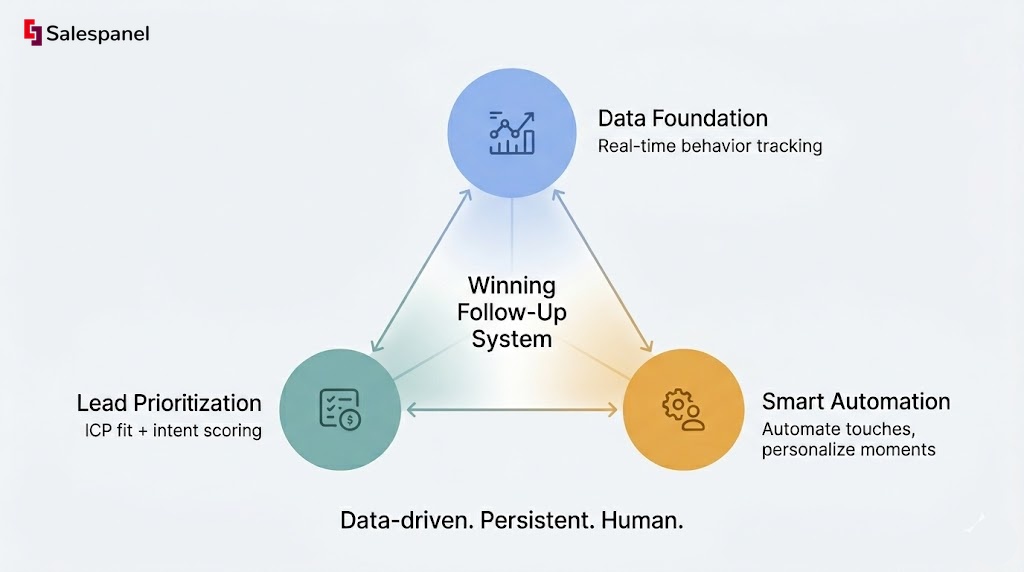
Here are the key principles to internalize as you build your system:
- Data is Your Foundation: To effectively implement a trigger-based or multi-channel strategy, you need robust behavioral data. Knowing a prospect visited your pricing page three times is the fuel for a timely and highly relevant follow-up. This is where advanced server-side website visitor tracking from Salespanel becomes indispensable, providing the granular insights needed to act at the perfect moment.
- Prioritization is Paramount: Not all leads are created equal. You cannot afford to deploy high-touch, story-driven sequences on every single contact. A dynamic lead scoring framework, like the one offered by Salespanel, allows you to segment and prioritize prospects based on their fit with your Ideal Customer Profile (ICP) automatically. This ensures your sales team invests its most valuable resource, time, on the accounts most likely to convert.
- Automation Augments, It Doesn’t Replace: The goal of technology is not to eliminate human interaction but to make it more meaningful. Use automation for the initial touches and trigger-based alerts, but empower your team to inject the human element, like a personalized video or a reference to a shared connection, where it matters most.
By combining the psychological principles we’ve discussed, such as social proof and value-first content, with the analytical power of a platform designed for the B2B journey, you can elevate your outreach. You transform your email follow-ups from a necessary chore into your most potent sales and marketing conversion tool, building relationships and driving revenue with every message sent.
Ready to power your follow-up strategy with real-time behavioral data? See how Salespanel’s website tracking and lead scoring can help you identify your most engaged prospects and trigger the perfect follow-up at the exact right time. Explore our B2B marketing resources to learn more about building a data-driven sales engine at Salespanel.