
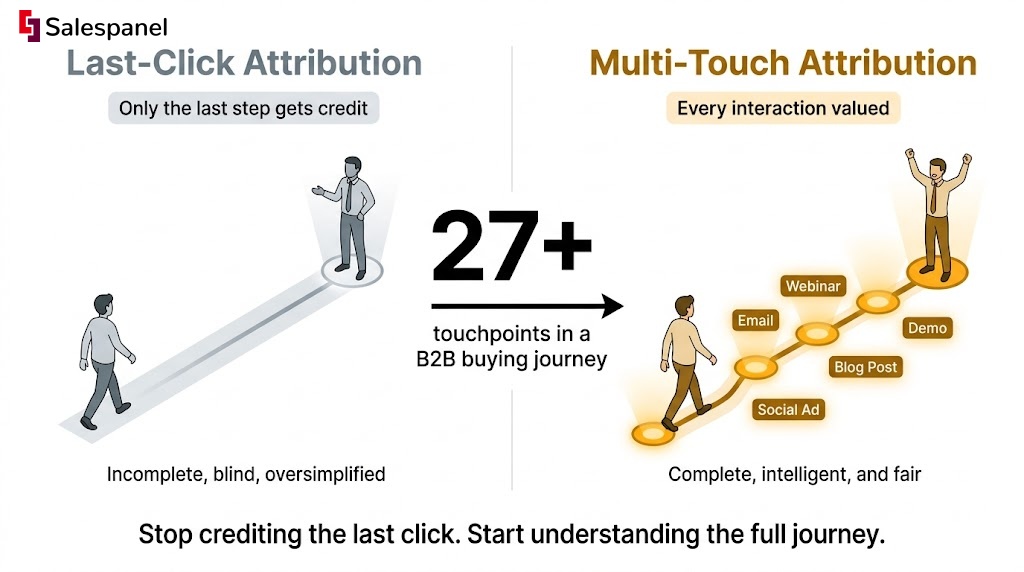
Just a decade ago, ‘last-click’ was the undisputed king of attribution, a simple model for a simpler digital world. It credited the final touchpoint before a conversion, painting a clean but dangerously incomplete picture of the customer journey. Fast forward to today’s fragmented landscape, where a single conversion can involve a dozen interactions across social media, search, email, and content. The average B2B buying journey now involves over 27 interactions, making last-click attribution not just outdated, but a liability. Relying on it is like giving the final penalty-taker all the credit for winning a football match, ignoring the defenders, midfielders, and strikers who got the ball there.
As we move into an era of heightened privacy regulations and cookie deprecation, the need for sophisticated, multi-touch attribution marketing software has become critical. The central theme of our analysis is this: to achieve sustainable growth, marketers must transition from merely tracking conversions to deeply understanding the entire narrative of value creation. This guide is a technical roadmap to navigating this new reality. We will dissect the capabilities of the top 12 platforms, providing practical examples and a clear framework for selecting a solution that aligns with your specific business model—whether you are a mobile-first app, a high-growth DTC brand, or a complex B2B enterprise. Our goal is to equip you with the insights to choose software that doesn’t just track clicks, but deciphers the entire narrative of your customer’s journey from first glance to final sale. To truly understand the value of your marketing efforts and drive more efficient spending, consider strategies to help you maximize the ROI of marketing automation. This comprehensive analysis will ensure every dollar of your marketing budget is accounted for, validated, and optimized for future growth.
1. Google Analytics 4 (GA4)
Google Analytics 4 (GA4) serves as the ubiquitous entry point into web analytics and, by extension, attribution modeling. As a native component of the Google Marketing Platform, it provides a foundational layer of attribution marketing software capabilities without any initial financial investment, making it an essential starting point for nearly any organization.
What sets GA4 apart is its event-based data model and its default data-driven attribution (DDA) model. Unlike older rule-based models (like last-click), DDA uses machine learning to assign conversion credit across all contributing touchpoints. This provides a more nuanced understanding of complex customer journeys, especially for businesses leveraging multiple Google Ads campaigns. For example, a user might first discover a brand via a display ad (impression), then engage with a YouTube video, later click a search ad, and finally convert through an organic search. The DDA model analyzes thousands of such paths to intelligently distribute credit, a significant technical leap from crediting only the final organic search click. The platform’s deep, bidirectional integration with Google Ads allows marketers to not only analyze performance but also directly import conversion data to optimize bidding strategies automatically.

Key Considerations
Best Use Case: Businesses heavily invested in the Google ecosystem (Google Ads, Search Console) seeking a free, yet powerful, solution to understand cross-channel impact on conversions. It’s ideal for those just beginning their attribution journey.
Pricing: The standard version of GA4 is completely free. For large enterprises requiring higher data limits and advanced features, GA4 360 is available, though pricing is custom and requires direct sales contact.
Limitations: While its DDA model is powerful, GA4 has deprecated most rules-based models (like linear and time-decay), limiting flexibility for teams who prefer those specific views. It also primarily focuses on digital touchpoints captured via tracking code, offering limited insight into offline interactions or a complete, individual-level customer journey.
Access the platform: https://analytics.google.com/
2. Adobe Analytics / Customer Journey Analytics
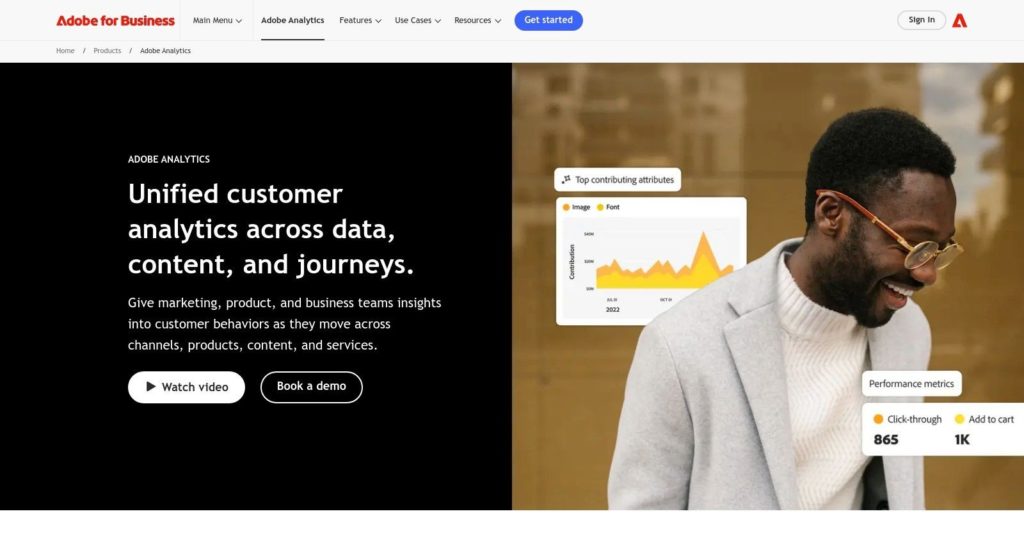
For enterprise organizations navigating vast and complex data ecosystems, Adobe Analytics stands out as a highly sophisticated solution. Paired with its Customer Journey Analytics (CJA) component, it offers unparalleled flexibility and power, cementing its role as a premier piece of attribution marketing software for large-scale operations. It moves beyond simple conversion tracking to provide a holistic, person-centric view across multiple brands, channels, and devices, including both online and offline data sources.
What truly differentiates Adobe’s offering is its “report-time processing” and the dedicated Attribution IQ panel within Analysis Workspace. This allows analysts to apply and compare unlimited attribution models to historical data on the fly without permanent changes. For example, a retail enterprise can analyze a holiday campaign’s sales data. Using Attribution IQ, they can instantly switch from a last-touch model (crediting the final promo code email) to a U-shaped model to see which initial social media ads drove first-time awareness. This level of granular control is crucial for enterprises needing to understand intricate, non-linear customer journeys and attribute value with precision across a diverse marketing mix.
Key Considerations
Best Use Case: Large enterprises with multi-brand portfolios, complex cross-channel digital properties, and significant offline data sets (e.g., from CRM or call centers). It is ideal for mature analytics teams who require deep customization and the ability to process massive volumes of data.
Pricing: Adobe Analytics is an enterprise-level product with pricing available only through direct consultation with Adobe’s sales team. It represents a significant financial investment suited for large organizations.
Limitations: The platform’s immense power comes with a steep learning curve and requires significant technical expertise for implementation and day-to-day use. Its high cost makes it inaccessible for small to mid-sized businesses, who may find more immediate value in more focused, B2B-centric tools.
Access the platform: https://business.adobe.com/products/analytics/
3. HubSpot Marketing Hub (Attribution & Advanced Marketing Reporting)
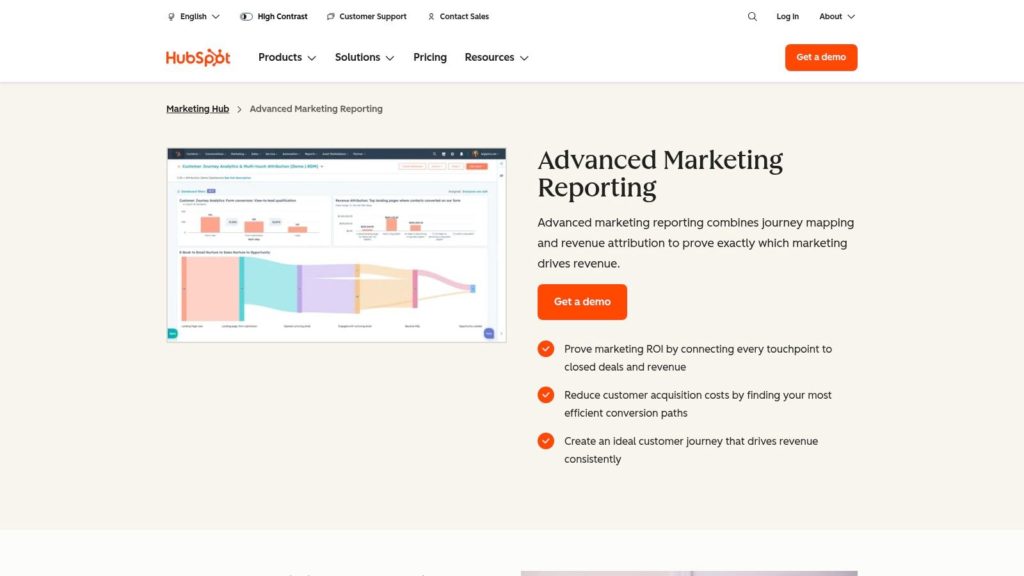
HubSpot Marketing Hub integrates attribution directly into its all-in-one CRM and marketing automation platform. For organizations already embedded in the HubSpot ecosystem, its native reporting offers a seamless way to connect marketing activities directly to revenue. This solution isn’t just about tracking clicks; it’s about tying every blog post, email, and social campaign to the contacts and deals they influence within the CRM.
What makes HubSpot’s approach unique is its object-oriented model. The platform’s multi-touch revenue attribution reports link specific marketing assets to deal creation and closed-won revenue, providing clear ROI justification for content marketers and campaign managers. A practical example is a B2B SaaS company: HubSpot can show that a specific series of blog posts, a webinar, and a follow-up email sequence directly influenced five deals that closed for a total of $50,000. Instead of relying on a standalone attribution marketing software tool that requires complex integration, HubSpot provides this analysis out of the box, offering a unified view of the entire customer lifecycle from first touch to final sale.
Key Considerations
Best Use Case: B2B companies using HubSpot CRM as their central source of truth for sales and marketing. It’s ideal for teams needing to prove the revenue impact of their content marketing and inbound campaigns without leaving their primary platform.
Pricing: Core attribution features are available in the Professional tier, but comprehensive multi-touch revenue attribution is reserved for the premium Marketing Hub Enterprise plan, which starts at $3,600/month (billed annually). Costs can scale significantly with the number of contacts and paid user seats.
Limitations: The most powerful attribution models are locked behind the expensive Enterprise tier, making it inaccessible for many small to mid-sized businesses. Its insights are largely confined to interactions tracked within the HubSpot platform, potentially overlooking external touchpoints not captured by its tracking code or native integrations.
Access the platform: https://www.hubspot.com/products/marketing/advanced-marketing-reporting
4. AppsFlyer
AppsFlyer is a dominant force in the mobile ecosystem, operating as a leading Mobile Measurement Partner (MMP) that has evolved into a comprehensive attribution marketing software suite. Its core function is to provide precise and real-time attribution for mobile app installs and in-app events, bridging the gap between ad spend and user actions. This is critical for businesses whose primary customer interactions happen within a native app environment.
What distinguishes AppsFlyer is its deep integration with thousands of ad networks and its robust support for modern privacy frameworks like Apple’s SKAdNetwork. This allows mobile marketers to navigate complex privacy requirements while still gaining actionable insights. A practical example: a gaming app running campaigns on five different networks can use AppsFlyer to see not only which network drove the most installs, but which one drove users who made in-app purchases within the first 7 days. The platform moves beyond basic last-touch attribution, offering incrementality testing to measure the true lift of marketing campaigns and a sophisticated fraud protection suite (Protect360) to ensure data integrity and prevent budget waste.
Key Considerations
Best Use Case: Mobile-first or mobile-centric businesses that rely heavily on paid user acquisition and app engagement. It’s essential for brands needing to measure campaign ROI across a wide array of mobile ad networks and channels.
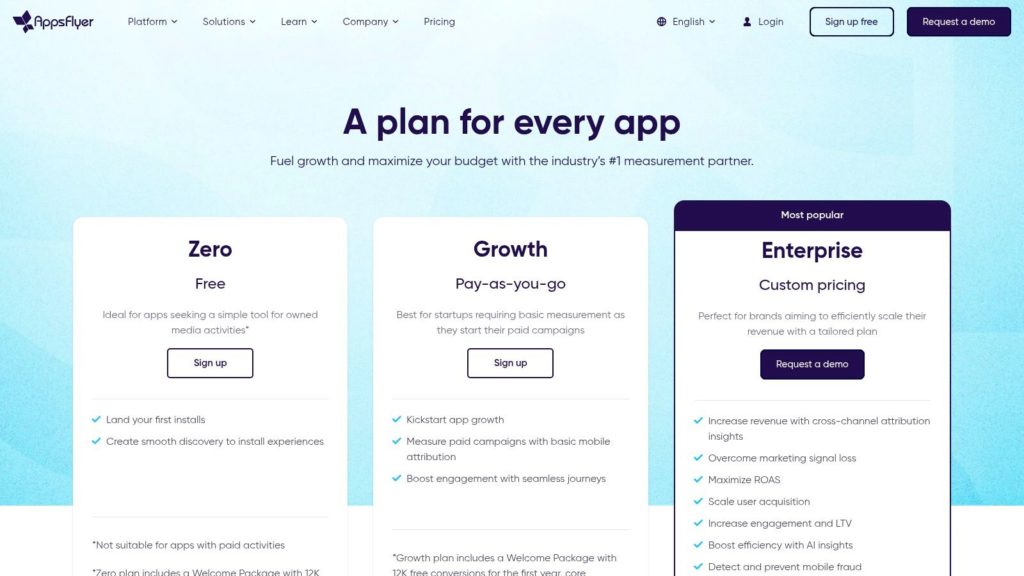
Pricing: AppsFlyer offers a “Zero” plan that is free forever for up to 12,000 attributed non-organic conversions. Paid “Growth” and “Enterprise” plans scale based on conversion volume, offering more advanced features and support.
Limitations: While a leader in mobile, AppsFlyer’s primary focus is not on web-to-lead B2B journeys or desktop-based analytics. Businesses requiring a unified view of a customer’s entire journey across web and app may need to integrate it with other platforms.
Access the platform: https://www.appsflyer.com/pricing/
5. Branch
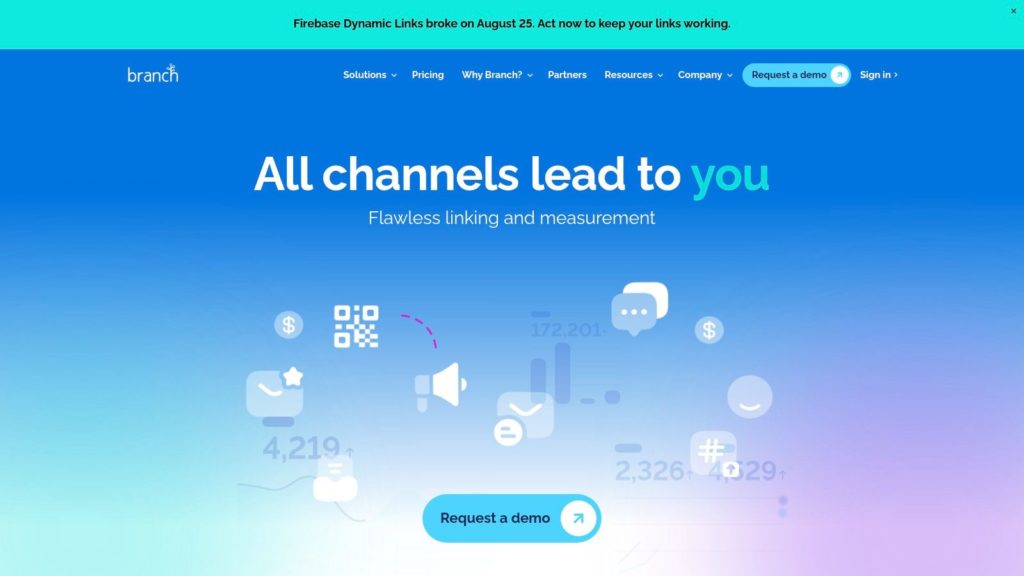
Branch excels in the specialized area of mobile and cross-platform attribution, positioning itself as a leader in connecting user journeys from web to app. While many platforms focus broadly on web conversions, Branch provides the critical infrastructure for deep linking and mobile measurement, making it an essential piece of attribution marketing software for businesses with a significant mobile app presence. Its technology ensures a seamless user experience, accurately attributing app installs and in-app events back to the specific marketing campaigns that drove them.
What distinguishes Branch is its robust deep linking engine, which reliably navigates users to specific in-app content, even through the install process (deferred deep linking). For instance, a user clicks a social media ad for a specific pair of shoes, is taken to the app store to install the e-commerce app, and upon first opening, is immediately shown that exact shoe product page instead of the generic homepage. This technical capability not only improves user experience but also provides precise attribution, linking the ad click directly to the in-app view and subsequent purchase. This bridges the often-fragmented gap between mobile web and native app environments.
Key Considerations
Best Use Case: Mobile-first companies or brands with a significant app component that need to measure and optimize the web-to-app customer journey. It is ideal for teams focused on driving app installs and increasing in-app engagement through multiple marketing channels.
Pricing: Branch offers a free “Launch” plan for up to 10,000 monthly active users (MAUs), making it highly accessible for startups. Paid plans scale based on MAU volume, and add-ons like data feeds are priced separately.
Limitations: While powerful for mobile, Branch is not a comprehensive, all-in-one attribution solution for businesses focused solely on B2B web-based conversions. Its primary strength is in the app ecosystem, and its web attribution capabilities are designed mainly to support that journey rather than stand alone.
Access the platform: https://branch.io
6. Singular
Singular is a leading mobile-first marketing intelligence and analytics platform, establishing its place as a critical piece of attribution marketing software for app-focused businesses. It excels at unifying disparate data sources, combining mobile attribution with cost aggregation, creative reporting, and robust fraud prevention. This holistic approach moves beyond simple install attribution to deliver a comprehensive view of marketing ROI.
What makes Singular stand out is its ability to tie every marketing dollar spent back to a tangible result. By pulling in cost data from thousands of media sources and connecting it with in-app event and revenue data, it provides granular, cohort-based performance analysis. For example, a subscription app marketer can use Singular to see that while “Campaign A” drives cheaper installs, “Campaign B” attracts users who subscribe at a 20% higher rate and have a 15% greater lifetime value. This level of technical analysis allows for optimization based on true ROAS, not just vanity metrics. The platform’s ability to offer both aggregated insights and raw, user-level data exports via APIs and ETLs gives it the flexibility to support teams of all analytical maturities.
Key Considerations
Best Use Case: Mobile-first companies, from early-stage apps to large enterprises, that need to unify complex ad spend data with mobile attribution to measure and optimize for true ROI. It’s particularly powerful for performance marketing teams managing large budgets across numerous ad networks.
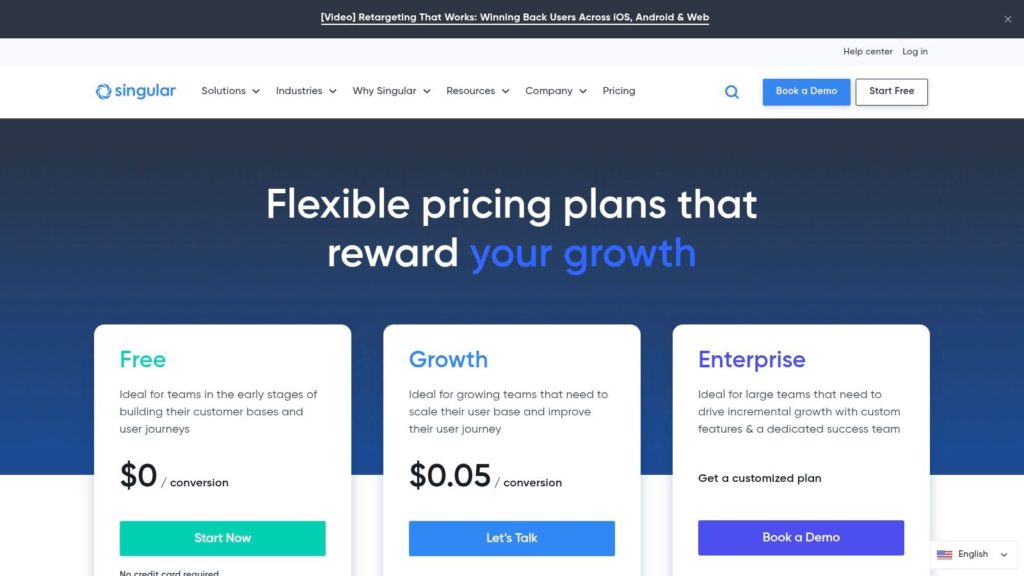
Pricing: Singular offers a free plan that includes up to 15,000 paid conversions, making it accessible for startups. Paid plans (Growth and Pro) are based on conversion volume and feature sets, with enterprise pricing available for custom needs.
Limitations: While its focus on mobile is a strength, it’s not designed as a primary web attribution tool, making it less ideal for B2B or web-first businesses. The per-conversion pricing model for paid plans can also become a significant expense as an app scales its user acquisition efforts.
Access the platform: https://www.singular.net/pricing/
7. Kochava
Kochava positions itself as a robust, omnichannel attribution and measurement platform, with a pronounced strength in the mobile and Connected TV (CTV) advertising ecosystems. It provides a unified view of the customer journey across these emerging channels alongside traditional web touchpoints, making it a critical piece of attribution marketing software for modern, app-first, or media-heavy brands. The platform is engineered to not just measure but also enhance user acquisition through its integrated fraud prevention and identity resolution capabilities.
What differentiates Kochava is its transparent and accessible pricing model combined with enterprise-grade features. Its IdentityLink technology helps marketers connect user activities across different devices to build a cohesive customer profile. A practical application is tracking a user who sees a CTV ad for a food delivery service, later searches for it on their laptop, and finally downloads and orders from the app on their phone. Kochava’s technology aims to connect these touchpoints, providing a more complete picture of how top-of-funnel channels like CTV influence bottom-funnel mobile conversions.
Key Considerations
Best Use Case: Mobile-first businesses, gaming companies, and brands investing heavily in CTV advertising who need granular, real-time attribution and robust fraud detection. Its free tier also makes it a great starting point for app developers.
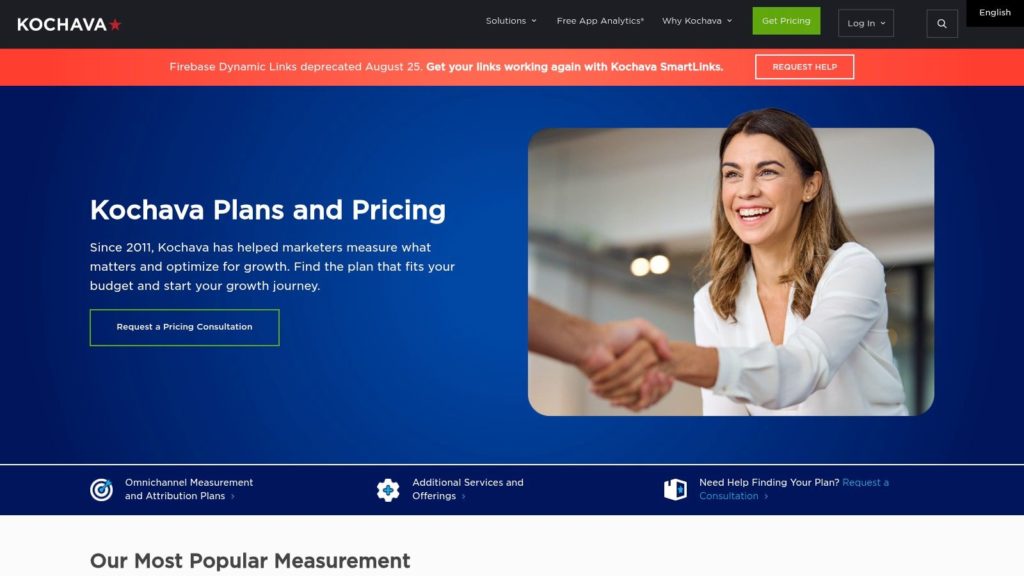
Pricing: Kochava offers a Free App Analytics plan that includes up to 10,000 attributed conversions. The paid Foundation tier has a competitive, published starting price, with higher tiers available for advanced features and larger data volumes.
Limitations: While powerful, the platform’s primary focus is on mobile and CTV, meaning businesses centered purely on B2B web funnels might find its feature set less tailored to their needs. Unlocking its most advanced capabilities, like comprehensive identity resolution, requires upgrading to more expensive enterprise tiers.
Access the platform: https://www.kochava.com/get-started/
8. Adjust
Adjust specializes in mobile attribution and analytics, offering a robust platform designed to measure and optimize user acquisition campaigns for mobile applications. As a focused piece of attribution marketing software, its primary strength lies in providing granular insights into the mobile user journey, from initial ad click or impression to in-app events and lifetime value. It is engineered to navigate the complexities of the mobile ecosystem, including app store dynamics and privacy frameworks.
What differentiates Adjust is its comprehensive support for Apple’s SKAdNetwork (SKAN) and its deep, privacy-compliant solutions for iOS 14.5+ and Android. The platform provides flexible click and impression-based attribution, fraud prevention tools, and unlimited tracking for organic installs, giving marketers a holistic view of both paid and organic performance. For example, Adjust allows marketers to configure their SKAN conversion values to measure not just installs, but also valuable post-install events like completing a tutorial or making a first purchase, all within Apple’s privacy constraints. This technical detail is crucial for optimizing campaigns in a privacy-centric world.
Key Considerations
Best Use Case: Mobile-first businesses and app developers who need to accurately attribute app installs and post-install events across numerous ad networks. It is particularly valuable for teams navigating the challenges of iOS privacy updates and SKAdNetwork.
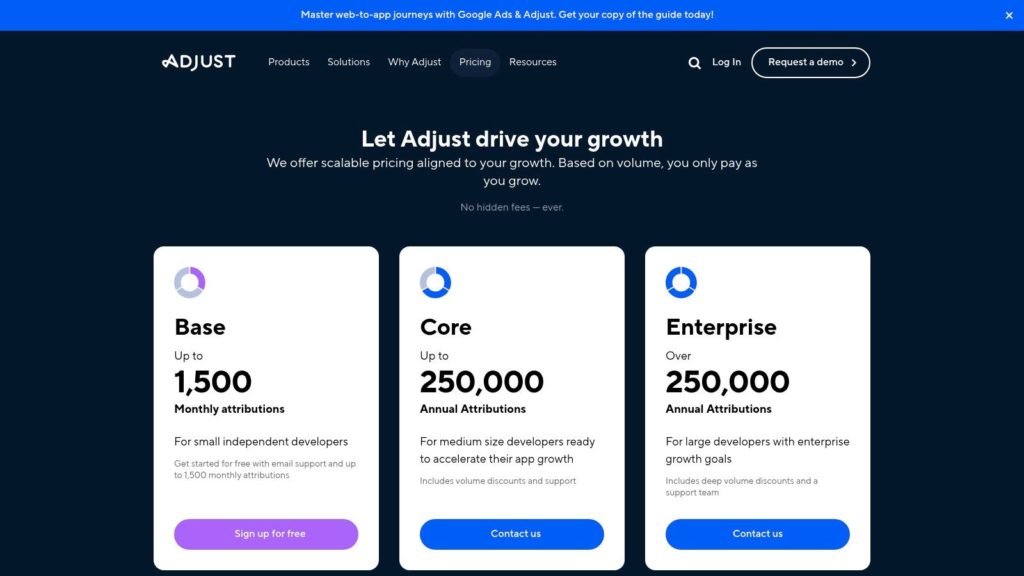
Pricing: Adjust offers a transparent tiered pricing model that starts with a free “Base” plan, which includes unlimited organic tracking and core attribution features. Paid “Core” and “Enterprise” plans scale with attribution volume and offer more advanced features, but require contact with their sales team for a custom quote.
Limitations: The platform is purpose-built for mobile, meaning it lacks the broader web and B2B journey tracking capabilities found in more generalized attribution solutions. While powerful, its advanced features and pricing structure are geared more toward dedicated mobile marketing teams.
Access the platform: https://www.adjust.com/pricing/
9. impact.com
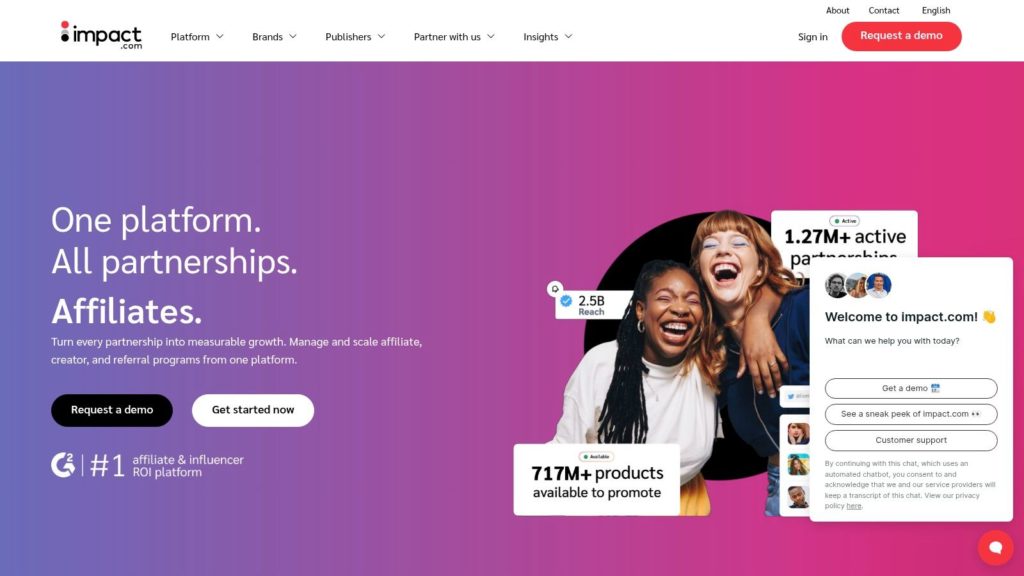
impact.com specializes in a distinct and rapidly growing segment of digital marketing: partnership attribution. Moving beyond traditional channels like search and social, it provides a comprehensive platform to manage, track, and credit conversions from affiliates, influencers, content creators, and other strategic brand partners. This focus makes it a vital piece of attribution marketing software for businesses whose growth is heavily reliant on their partnership ecosystem.
The platform’s strength lies in its end-to-end management capabilities, handling everything from partner discovery and recruitment to contracting, tracking, and automated payouts. It offers robust cross-device tracking and its proprietary TrueLink technology, which helps ensure marketers can accurately attribute actions even in complex, cookie-restricted environments. For instance, a brand can use impact.com to track a conversion from an influencer’s podcast ad read, even if the user listens on one device and purchases on another days later, by correctly commissioning the influencer instead of misattributing the sale to a last-click search. This allows for a more holistic view of how different partners contribute to the customer journey.
Key Considerations
Best Use Case: E-commerce and direct-to-consumer (DTC) brands that leverage affiliate marketing, creator collaborations, and influencer campaigns as core acquisition channels. It is ideal for teams needing to scale and automate their entire partnership program lifecycle.
Pricing: Transparent, tiered pricing plans are available directly on the Shopify App Store, which includes a 14-day free trial. For larger enterprise clients, pricing is customized and requires direct contact with their sales team.
Limitations: The platform is purpose-built for partnership marketing. While it excels in that area, it is not an all-in-one attribution solution for tracking the entire customer journey across channels like paid search, organic, or email.
Access the platform: https://impact.com/
10. Rockerbox
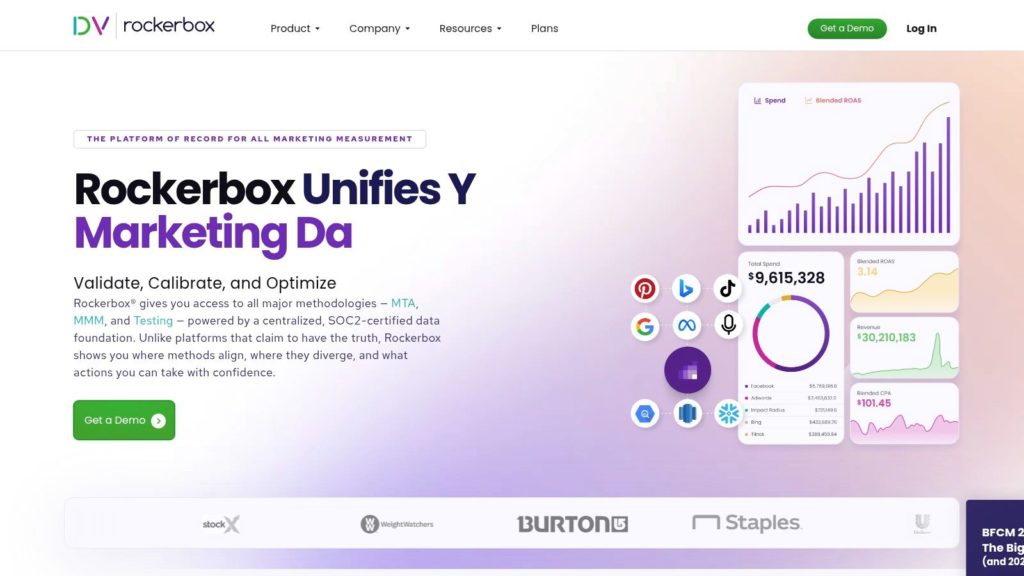
Rockerbox is a unified marketing measurement platform specifically engineered for the direct-to-consumer (DTC) and ecommerce sectors. It moves beyond singular models by combining multi-touch attribution, marketing mix modeling (MMM), and incrementality testing into a single view. This holistic approach makes it a powerful piece of attribution marketing software for brands needing to justify ad spend and understand performance across a complex digital landscape.
The platform’s core strength lies in its first-party data foundation and extensive integration library, boasting over 100 connectors. Rockerbox excels at deduplicating conversions and mapping complex, non-linear customer journeys. A practical example: Rockerbox can show a DTC brand that while Facebook Ads is credited with the last click, a significant portion of converting customers were first introduced to the brand via podcast ads two weeks prior. This technical validation of upper-funnel activities helps justify budget allocation to channels that don’t always get last-click credit. Its robust data export capabilities allow marketing and BI teams to feed clean, structured attribution data directly into warehouses like BigQuery or Snowflake for deeper analysis.
Key Considerations
Best Use Case: High-growth ecommerce and DTC brands that rely on a diverse mix of digital advertising channels and require a unified, granular view of marketing performance to scale effectively.
Pricing: Pricing is not publicly available and requires a custom quote following a demo. It is generally positioned for mid-market to enterprise-level brands with significant marketing budgets.
Limitations: The platform is highly specialized for ecommerce, making it less suitable for B2B or lead-generation-focused businesses. The lack of transparent pricing means smaller companies may find it difficult to assess affordability without engaging in the full sales process.
Access the platform: https://www.rockerbox.com/
11. Northbeam
Northbeam is an ecommerce-centric attribution platform designed to provide clarity for direct-to-consumer (DTC) brands navigating complex digital advertising ecosystems. It combines a sophisticated multi-touch attribution model with marketing mix modeling (MMM) and creative analytics, delivering a unified view of performance. The platform is particularly valued for its first-party data approach, using a proprietary pixel to capture granular customer journey data that remains resilient against third-party cookie deprecation.
What differentiates Northbeam is its emphasis on high-frequency data refreshes and its “Apex” modeling, which blends machine learning with heuristic models to assign credit across the entire funnel. This offers a more dynamic and allegedly more accurate picture than static models alone. The platform also provides deep creative correlation analysis. For example, it can show a DTC brand not just that TikTok ads are performing well, but that specifically, video ads featuring user-generated content are driving a 30% higher ROAS than polished studio ads. This focus on both channel and creative performance makes it a powerful attribution marketing software for optimization.
Key Considerations
Best Use Case: High-growth DTC and ecommerce brands, particularly those built on Shopify, that spend significantly on paid social (like Meta and TikTok) and paid search. It’s ideal for teams needing to justify ad spend with granular, creative-level performance data.
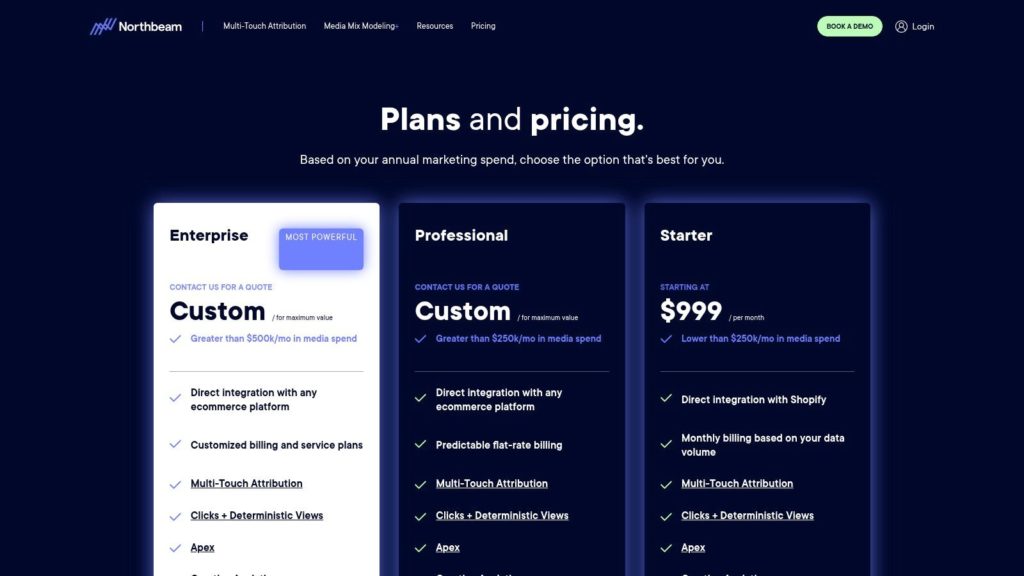
Pricing: Northbeam offers transparent starter pricing, beginning at $400/month for brands with under $50k in monthly ad spend. Higher tiers with more advanced features and support are available, but pricing is customized and requires sales consultation.
Limitations: While powerful for ecommerce, its specialization means it may be less suited for B2B, lead generation, or businesses with long, complex sales cycles that involve significant offline interactions.
Access the platform: https://www.northbeam.io/pricing
12. Triple Whale
Triple Whale is a finance and analytics platform built explicitly for the Shopify ecosystem, positioning itself as the “Source of Truth” for direct-to-consumer (DTC) brands. It combines its proprietary pixel with server-side tracking to offer a clearer view of marketing performance than is often possible through ad platform data alone. This focus makes it a powerful piece of attribution marketing software for e-commerce businesses navigating the complexities of post-iOS 14 advertising.
What makes Triple Whale stand out is its blend of first-party attribution data, creative performance analysis, and profitability metrics all in one dashboard. The Triple Pixel captures customer journey data, while integrations with ad platforms, email services, and SMS tools create a centralized hub. The platform also incorporates post-purchase surveys (dubbed “zero-party data”) to fill in attribution gaps where pixel tracking falls short. For instance, after a customer buys a product, a survey can ask “How did you first hear about us?”, validating or correcting the digital attribution model with direct customer feedback. This provides a more holistic and qualitative layer to its quantitative analysis.
Key Considerations
Best Use Case: Shopify-based DTC brands that rely heavily on paid social channels like Meta and TikTok and need a single, unified dashboard to track ad spend, revenue, profitability, and multi-touch attribution.
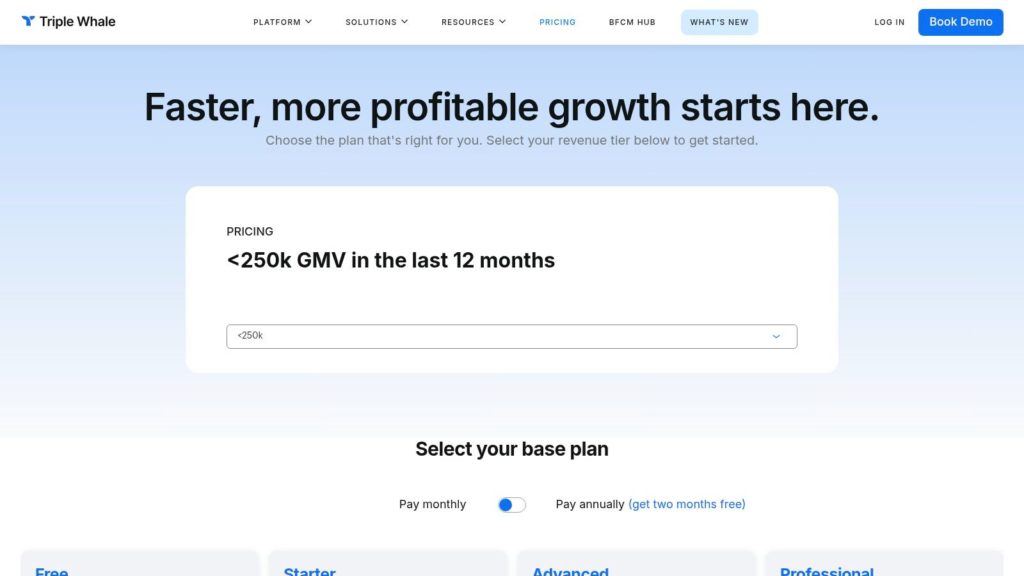
Pricing: Triple Whale offers tiered pricing that scales with a store’s gross merchandise value (GMV). It includes a free “Whale Mail” plan, with paid attribution plans starting from $129/month. Advanced features like Marketing Mix Modeling (MMM) are available in higher-tier plans.
Limitations: The platform is purpose-built for e-commerce on Shopify, making it unsuitable for B2B, SaaS, or non-Shopify businesses. Its pricing model, tied to GMV, can become expensive for rapidly scaling brands.
Access the platform: https://www.triplewhale.com/pricing
Attribution Software Feature Comparison
| Platform | Core Features | User Experience / Quality Metrics | Value Proposition | Target Audience | Price Points & Unique Selling Points |
|---|---|---|---|---|---|
| Google Analytics 4 (GA4) | Attribution models, Google Ads integration | Free standard tier, widely adopted | Data-driven attribution across channels | Marketers needing free attribution | Free tier; enterprise pricing via sales contact |
| Adobe Analytics / Customer Journey Analytics | Configurable attribution, session analytics | Highly flexible, scales to complex data | Advanced modeling for multi-brand setups | Large enterprises, complex data | Enterprise pricing, sales contact required |
| HubSpot Marketing Hub | Multi-touch revenue attribution, CRM integration | Native CRM linkage, clear revenue reporting | All-in-one marketing and sales reporting | HubSpot CRM users | Pricing scales with seats; Enterprise tier for full features |
| AppsFlyer | Mobile attribution, fraud protection | Strong ad network integrations | Mobile app focus with flexible pricing | Mobile marketers, app developers | Free tier available; pricing scales with conversion volume |
| Branch | Deep linking, web-to-app journey support | Reliable linking, free plan for 10K MAU | Enhances user experience via deep linking | Brands focused on mobile UX | Free for up to 10K MAU; add-ons scale with volume |
| Singular | Mobile attribution, cost aggregation | Unified ROI & cost analytics | Detailed creative reporting & APIs | Early-stage to enterprise teams | Free plan limits conversions; usage-based growth pricing |
| Kochava | Omnichannel attribution, identity resolution | Clear published pricing, free conversions | Covers Mobile, CTV, Web channels | Budget-conscious marketers | Free plan with 10K conversions; Foundation tier published |
| Adjust | Click/impression attribution, privacy compliance | Transparent free base plan | Strong privacy & SKAN support | Mobile marketers with privacy needs | Free base plan; paid tiers scale with volume |
| impact.com | Affiliate/partner tracking, partner management | Comprehensive lifecycle tools | Partner marketing and referral attribution | Affiliate & influencer marketers | Free trial; Shopify App Store; enterprise pricing varies |
| Rockerbox | Multi-touch & MMM, incrementality testing | Robust ecommerce integrations | Unified ecommerce measurement & BI export | DTC & ecommerce brands | Pricing by demo only; enterprise focus |
| Northbeam | Multi-touch attribution, creative analytics | Transparent starter pricing | Tailored for Shopify ecommerce workflows | Small-to-medium ecommerce | Published starter plans; premium tiers require sales |
| Triple Whale | Shopify-native multi-touch, MMM, product analytics | Clear pricing tiers, free tier available | Designed for Shopify & DTC brands | Shopify merchants & DTC brands | Free tier; pricing scales with GMV and features |
From Data Points to Decisions: Making Attribution Your Strategic Advantage
The journey through the landscape of attribution marketing software reveals a clear, central theme: modern marketing success is no longer about casting the widest net, but about understanding precisely which threads in that net are catching the most valuable fish. We’ve explored a dozen powerful platforms, from the comprehensive analytics suites of Google and Adobe to the mobile-first specialists like AppsFlyer and Branch, and the e-commerce powerhouses such as Northbeam and Triple Whale. Each tool offers a unique lens through which to view your customer’s journey, translating raw data points into a coherent narrative of value creation.
The primary takeaway from this deep dive is that there is no universal “best” attribution platform. The right choice is fundamentally tied to your business model, customer lifecycle, and technical infrastructure. An e-commerce brand with a short sales cycle will have vastly different needs than a B2B enterprise navigating a six-month sales process with multiple decision-makers. The crucial first step is to map your own ideal customer journey before you attempt to overlay any software upon it.
Actionable Next Steps: A Framework for Selection and Implementation
Embarking on your attribution journey requires a structured approach. Simply purchasing a tool without a clear strategy is a recipe for overwhelming data and underwhelming results. Here’s a practical framework to guide your next steps:
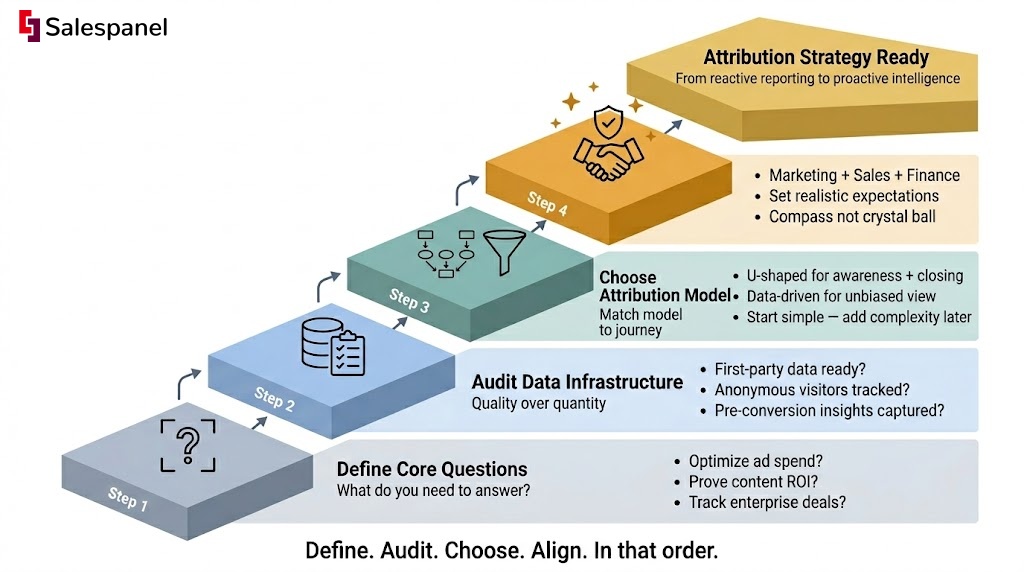
Define Your Core Business Questions: Before evaluating vendors, articulate the specific questions you need to answer. Are you trying to optimize top-of-funnel ad spend? Understand the impact of content on lead quality? Or prove the ROI of specific channels on enterprise deals? Your questions will dictate the features you prioritize.
Audit Your Data Infrastructure: The most sophisticated attribution marketing software is only as good as the data it receives. Assess the quality and completeness of your first-party data. Do you have a clear view of user behavior on your website before they convert? For B2B organizations, this is a critical blind spot. Tools that enhance this initial data capture, like Salespanel’s server-side website visitor tracking, create the solid foundation necessary for any advanced attribution model to succeed. By identifying anonymous company visitors and tracking their engagement early, you feed your attribution system a richer, more accurate dataset, illuminating the true first touchpoints that traditional analytics often miss.
Choose the Right Attribution Model: Don’t default to last-click. Based on your business questions, select a model (or multiple models) that reflects your customer journey. A U-shaped or W-shaped model might be ideal for understanding both initial awareness and final conversion drivers, while a data-driven model offers an unbiased, algorithmic perspective. Start simple and add complexity as your team’s analytical maturity grows.
Align Stakeholders and Set Expectations: Attribution is a team sport. Involve marketing, sales, and finance from the outset to ensure buy-in and alignment on key metrics. It’s crucial to set realistic expectations: attribution software provides powerful insights and direction, not absolute, infallible answers. It’s a compass, not a crystal ball.
Beyond Tracking: The Shift to Proactive Intelligence
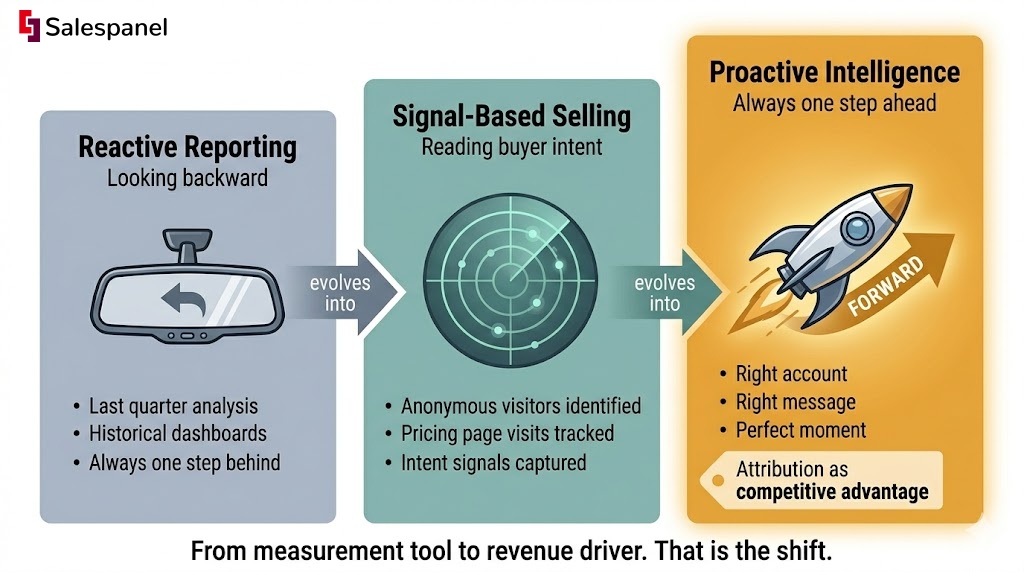
Ultimately, the goal of implementing attribution marketing software is to transition from reactive reporting to proactive, strategic decision-making. It’s about more than just assigning credit; it’s about understanding buyer intent at a granular level. To truly gain a strategic advantage, it’s essential to not just track touchpoints but to understand the “signals” buyers emit, moving towards a more proactive, data-driven approach to revenue generation known as signal-based selling. This evolution turns your attribution data from a historical record into a forward-looking predictive engine, empowering sales and marketing teams to engage the right accounts with the right message at the perfect moment. By embracing this mindset, you transform your attribution platform from a simple measurement tool into a core driver of business growth and a sustainable competitive advantage.
Ready to build your attribution model on a foundation of complete, first-party data? Salespanel identifies your anonymous website visitors and tracks their entire journey, providing the critical pre-conversion insights that most attribution tools miss. Discover how to capture the full customer story and make your marketing truly accountable.