With big data comes big business. And with big business comes a big challenge. This challenge has changed significantly throughout time. With regards to data, the problem was previously scarcity and is now intelligence. Companies have large amounts of raw data: emails from a form, and company names from webinar signups, etc. But this data, in its raw state, is fragmented and lacks context. Data enrichment is where these challenges become a necessary business practice. It is the process of refining data, appending details, and adding more context from other relevant sources to raw data. The global data enrichment tool market was valued at USD 1.5 billion in 2023 and is projected to grow at a compound annual growth rate of 16.3% to USD 5.8 billion by 2032—a direct response to a fundamental business need.

Understanding strategic data derived from raw facts is a testament to growth. This guide seeks to help contemporary B2B institutions recognize the pricelessness of data augmentation and the utilization of such to achieve competitive dominion in the marketplace. On the face of it, data is a commodity, but it is not straightforward to harness, especially as it augments.
Why Your Raw Data Is No Longer Enough
Information overload is a big part of modern business when it doesn’t have to be. In theory, gathering data sounds easy enough, but this is something companies struggle with. The issue is not simply accumulation, but data interpretation. Let’s say you have an email address. What does the data really say, though? It is a point of contact, but a single, flat image. It does not illustrate the person’s occupation, the company’s magnitude, the potential buying power, or the buying intent. Sure, it identifies a lead, but it does not speak to their needs or interest levels. The incomplete picture a company gets is unfit to guide major business decisions. It is akin to navigating without a compass.
The Bridge from Information to Intelligence

It is through data enrichment that businesses can progress. Integrating internal, first-party data with validated third-party data improves internal data. This is how data points can be assembled into a more comprehensive, multi-dimensional customer profile. This is akin to jumping from a low-res, black-and-white photo to a brilliant, full-color image. Targeting, predictive analysis, personalization, and clarity are made easier through this enrichment.
Let’s consider a simple example of before and after a lead profile is enriched.
Raw Data vs. Enriched Data at a Glance
| Attribute | Raw Data Example | Enriched Data Example |
| Contact Info | [email protected] | Jane Doe, VP of Marketing |
| Company Info | Acme Corp | Acme Corp, 500-1000 employees, B2B SaaS, $50M revenue |
| Location | – | San Francisco, CA |
| Behavioral Data | Downloaded one eBook | Visited pricing page 3 times, viewed 2 case studies |
| Tech Stack | – | Uses Salesforce, Marketo, Slack |
When you enrich a profile, you get a fuller picture. It makes it easier for the marketing and sales teams to have the right conversations and the right kind of conversations.
It isn’t just having a ton of fields in a database; it is about enriching every touch point of a customer interaction. Adding clarity and context, and a competitive edge.
This is a large part of the reason the data enrichment market is continuing to expand. This is some of the data market research. This is some of the data research. Today, having the right understanding and use of the data is enrichment is no longer a ‘nice to have’, it is an essential threshold to sustainable growth. Failure to do this results in relying on estimates for decision-making.
Understanding the Data Enrichment Process
If you picture the raw data you have for a new lead as a rough pencil sketch, then you aren’t too far off. You have the general shape of it, maybe a first name and email, and there isn’t much to work with, but this is just the base for the outline. Data enrichment is like adding detail and turning it into a picture.

The main factor for success here is integrating outside data with what the company already has. Incorporating outside, third-party records will help give existing data the context it needs. Rather than keeping records operational and static, these records have the potential to transform and become active. It is not about information overload; it is about integrating the right information to obtain a complete, consistent picture of every customer or lead. Ultimately, the aim is to have one single, 360-degree view of the customer.
The Key Data Layers for Enrichment
The enrichment process typically concentrates on four core types of information. Along with each data layer enriching the customer’s information base, they each add a different dimension to the customer profile that is then useful for the go-to-market teams.
- Firmographic data: This makes up the base of B2B intelligence. This is a profile of the companies and includes things like industry, revenue, employee count, and tech stack. For instance, having a lead that works at a tech startup of 50 people, as opposed to a financial institution with 10,000 employees, will drastically change the sales team’s approach, messaging, and product offer.
- Demographic data: These datasets are arguably the most important for defining personal attributes in the business-to-business industry. Specifically, they are job title, job seniority level, and job-related skills. These datasets are essential for recognizing decision-makers and customizing messages relative to their position.
- Geographic information: The city, state, and/or country of a lead is valuable information for determining sales geographies, executing micro-targeted marketing campaigns, and ensuring compliance with various data protection regulations (e.g., GDPR and CCPA).
- Behavioral data: The level of curiosity and the actions the prospect takes themselves give insight into the prospect’s intent. Indicators such as the pages someone visits, the resources they download, and the time spent on the pricing page give insight into the prospect’s active research.
The infographic below shows how all these layers of data work together to achieve the result we’re after.
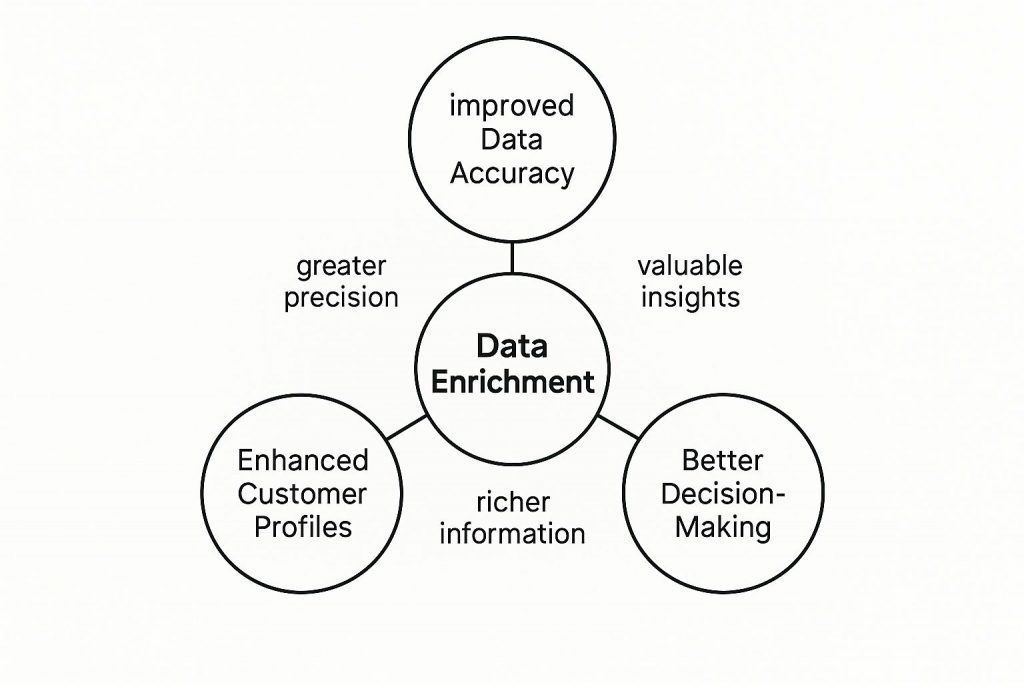
Following this flow keeps the data accurate and up to date and adds to the depth of individual customer profiles. This provides better insights and makes for better and more informed decisions organization-wide.
The true value of enrichment is the transformation of uncertainty into clarity. This is where the guesswork is taken out and replaced by a sound understanding of who your customers are and what they truly need, all backed by data.
Take the case of a raw lead, for example, [email protected]. After enrichment, you might know that this raw lead is John Smith, Senior IT Manager, TechSolutions Inc., a SaaS company with 500 employees, located in Austin, Texas. You might also know that he recently downloaded your case study on API Integration. This enriched profile is actionable intelligence and enables your team to respond in a timely and relevant manner and to truly address the prospect’s needs.
The Strategic Benefits of High-Quality Enriched Data
Not only should you understand how data enrichment works, but you should also understand the mechanics of how data enrichment values your business. Quality data enrichment should be seen as an investment rather than an expense because it will positively impact revenue growth and operational efficiency. Its impact will be felt at every stage of your customer life cycle, but most importantly, it will help you convert misses into wins. You will be able to communicate more than just blanket messaging and have tailored conversations with potential customers. One message makes all the difference.
Enable Hyper-Personalized Marketing
Personalization should not only be limited to adding a {first_name} token into a message. Next-level personalization means understanding the type of profession the lead is in, along with their business difficulties and objectives. That, and more, is the level of marketing data enrichment is able to accomplish. The difference data enrichment can make is obvious.
Take 2 examples of marketing data in the same industry. At the first level, they might look identical. If you enrich the data, you might discover that one lead is a C-level executive at a 500-employee organization while the other is a manager in a 20-employee organization. That one-minute difference is everything.
Due to that insight and enrichment, you can achieve the following marketing data segmentation.
- Execute precise segmentation: You can build hyper-specific target data sets with segmentation, including industry, company size, revenue, and company technology stack.
- Tailor messaging: Email Campaigns, Targeted Ads. Address every pain point that is specific to Enterprises vs. Small businesses.
- Deliver relevant content: Auto-provision the most relevant case study and/or whitepaper based on the lead’s job, vertical, or interest.
This detail ensures your marketing hits the target and greatly improves engagement and conversion rates.
Dramatically Improve Lead Scoring Accuracy
All leads are not created equal. Your scoring model is only as good as the data it uses, and raw data isn’t enough.
Enrichment is what combines the firmographic and demographic data that will enable reliable scoring. In the case of a lead tracking your ICP, they should be scoring higher. EG: Director of Marketing, SaaS, 200 employees+.
When enriched firmographic data is combined with real-time behavioral signals, you can determine not only who is a good fit, but who is a good fit right now. This dual view—fit plus intent—is what makes a lead truly sales-ready.
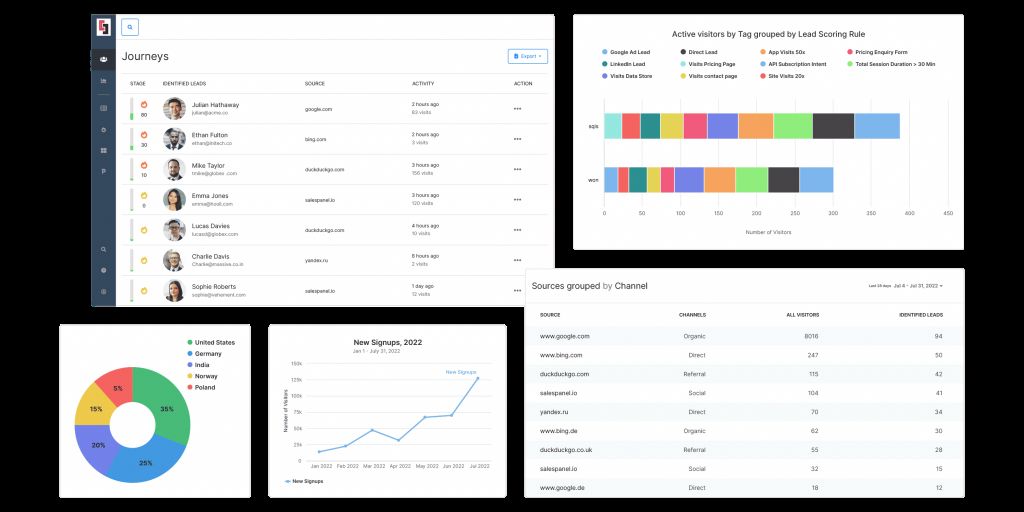
This is where the process becomes especially powerful. For example, website visitor tracking from Salespanel shows exactly what pages a lead is viewing, such as the pricing page. When this intent data is layered on top of an enriched company profile, your lead scoring becomes predictive instead of just descriptive. It helps teams understand both the quality of the lead and the urgency of their interest.
Boost Sales Conversion Rates
At the end of the day, the goal is to close more deals. Enriched data equips sales teams with the intelligence they need to be more effective, efficient, and ultimately increase conversion rates.
When a salesperson receives an enriched lead, they have a complete profile before reaching out. They know the lead’s job title, company size, industry, and even what pages they recently viewed on your website.
With this context, salespeople can skip generic discovery questions and jump straight into meaningful, value-driven conversations. For example: “I noticed you were exploring our integration page. Since you’re in the logistics industry, you may be interested in how we helped Acme Freight streamline its supply chain.” This shifts a cold outreach into a relevant consultation, builds immediate trust, and shortens the sales cycle.
The How-To: Key Data Enrichment Methods
So how does data enrichment actually happen? There are multiple ways to get it done, and the right approach depends on your tech stack, budget, and how quickly you need the data. Methods range from manual uploads to fully automated, real-time systems operating behind the scenes.
Demand is high for these solutions. The global data enrichment market was valued at USD 2.37 billion in 2023 and is projected to reach USD 4.58 billion by 2030. This growth clearly shows that companies are investing heavily in better data to power improved decision-making and customer engagement.
Third-Party Data Providers
The most common method of enrichment is working with third-party data providers like ZoomInfo or 6sense. These companies act as data brokers, aggregating, verifying, and structuring vast amounts of company and contact information from numerous public and private sources.
They typically offer two main ways to access their data:
- Batch Enrichment: Ideal for large, one-time data cleanup and enhancement. You upload a list of contacts (e.g., a CSV export from your CRM), and the provider appends the requested data points to each record, giving you a much richer and more usable dataset.
- Real-Time API Enrichment: Best for instant, on-demand enrichment. When a new lead signs up on your website, your system triggers an API call using their email address. The provider returns a full profile—including company size, industry, and job title—which is automatically added to your CRM in real time.
The Role of AI and Machine Learning
Artificial Intelligence (AI) and Machine Learning (ML) are crucial to modern data enrichment. These technologies enable enrichment at a massive scale while maintaining a high degree of accuracy.
The true value of AI doesn’t stop at adding data — it begins with validating it. Machine learning models recognize patterns, fix inconsistencies with surprising accuracy, and predict missing information. This reliance on AI makes the entire workflow more dependable.
AI tools work with unstructured data such as social media posts, news articles, and press releases. They identify important business signals hidden within those texts. This process is known as Entity Resolution — linking disparate pieces of information to ensure, for example, that details about Acme Corp from a news article correctly connect to the Acme profile in your CRM.
Behavioral Data Enrichment from First-Party Sources
Third-party data answers the “who” (company size, industry), but not the “why now.” That’s why your first-party data is essential — the behavior captured on your website reveals what someone is interested in at that moment.
This involves tracking interactions and appending behavioral context to enrich each profile. For example, Salespanel’s on-site tracking automatically logs a lead’s full journey to give deeper behavioral insight.
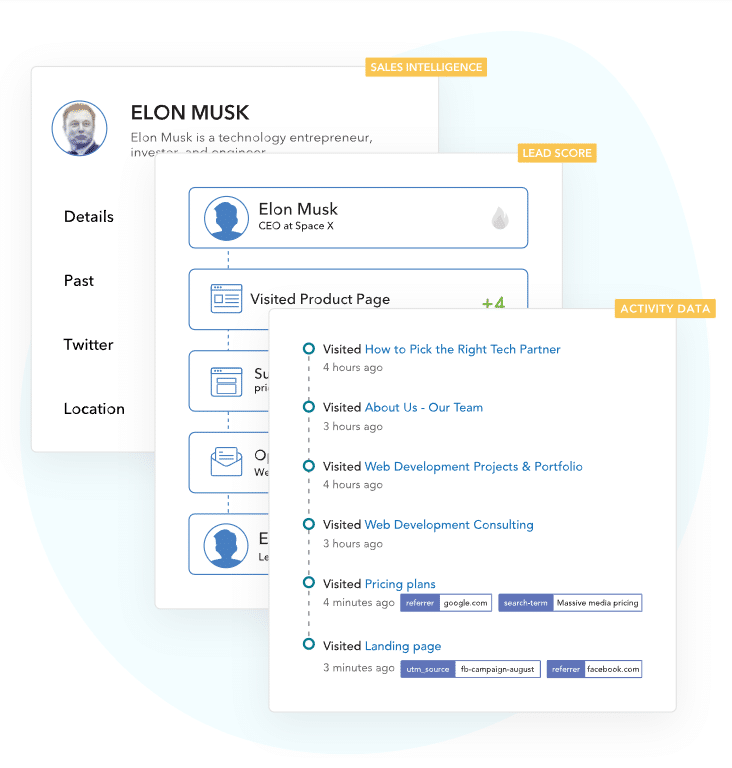
This enrichment helps answer questions that third-party data cannot:
- What detailed product pages did they open?
- Did they spend significant time on the pricing page?
- What case studies or whitepapers did they download?
When you combine firmographic data from a third-party tool with your own behavioral data, you gain a 360-degree customer view. You don’t just know who the prospect is — you understand what they actively care about.
Putting Data Enrichment to Work in B2B
Data enrichment starts to show its real value when it meets the day-to-day challenges of B2B teams. A contact list stops being just a list and starts to look like a pipeline full of qualified opportunities. The effects of data enrichment touch every phase of the buyer journey, from first-touch data capture all the way to closed-won business. Bringing enrichment into daily workflows gives teams the context needed to move from assumptions to meaningful, data-backed interactions.
For example, consider the quintessential lead generation use case. A lead fills out a form and provides only an email address. Without enrichment, that’s a low-value lead. With real-time enrichment, that single data point becomes the key to a wealth of valuable information.
An automated process can append critical data points within seconds:
- Job Title and Seniority: Are they an intern or a C-suite decision-maker?
- Company Name and Size: Are they a small startup or a big Fortune 500 company?
- Industry and Location: Do they align with your ideal customer profile and your assigned territories?
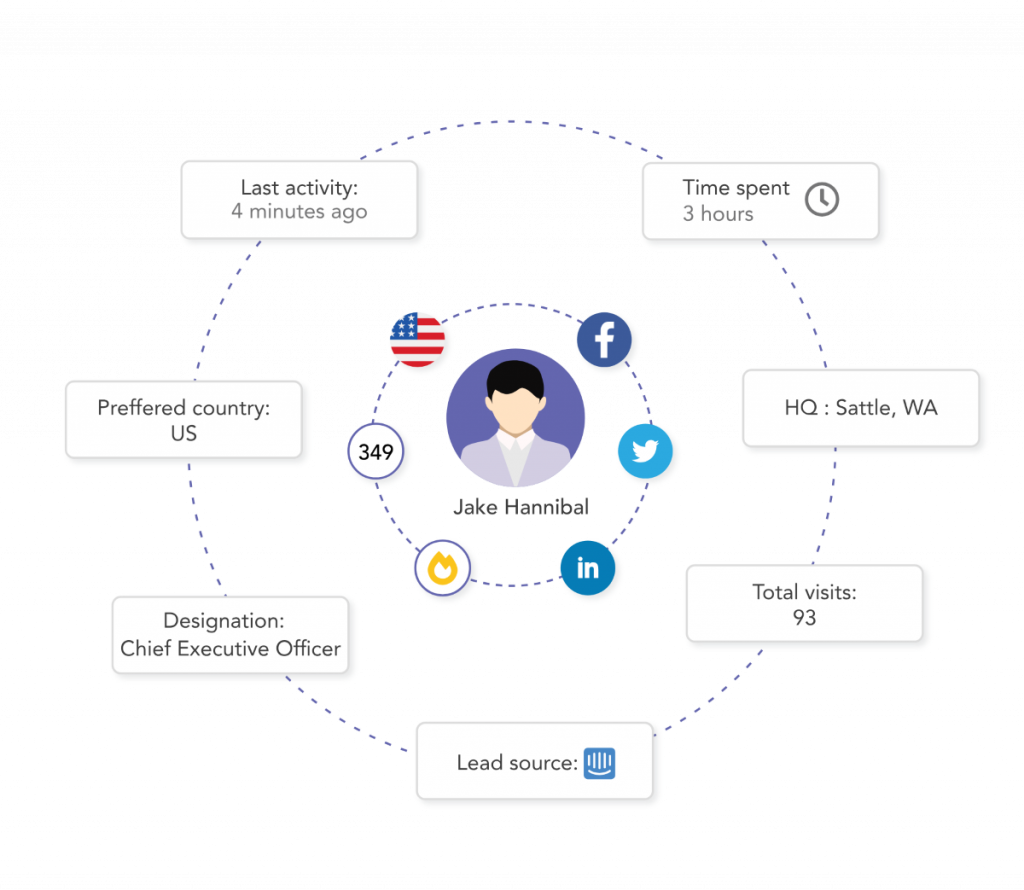
A practical use case of this is intelligent lead routing. A high-value lead from a target account can be sent directly to a senior sales rep, while a non-target lead can be placed in a long-term nurturing flow that saves sales time.
Empowering Sales Conversations
Once a lead is qualified, enrichment gives your sales team a major strategic advantage. Instead of starting calls with generic “discovery” questions, reps can enter conversations already knowing the prospect’s industry, size, and even their tech stack.
This context lets them tailor their pitch from the very first interaction. They can mention relevant industry challenges, relate solutions to company size, or reference technologies the prospect uses. This builds trust faster and helps speed up the sales cycle.
Analysts project that by 2025, the lead enrichment market will be valued between USD 1.2 billion and 1.5 billion. The reason is simple: enriched leads convert 20-30% more effectively. For deeper insights, you can explore the trends on MarketsandMarkets.
Perfecting Lead Scoring
Lead scoring is one of the most impactful B2B applications of enrichment. For a sales team to be efficient and productive, they need to focus on opportunities that have a strong chance of closing. This is why having an accurate lead score is essential.
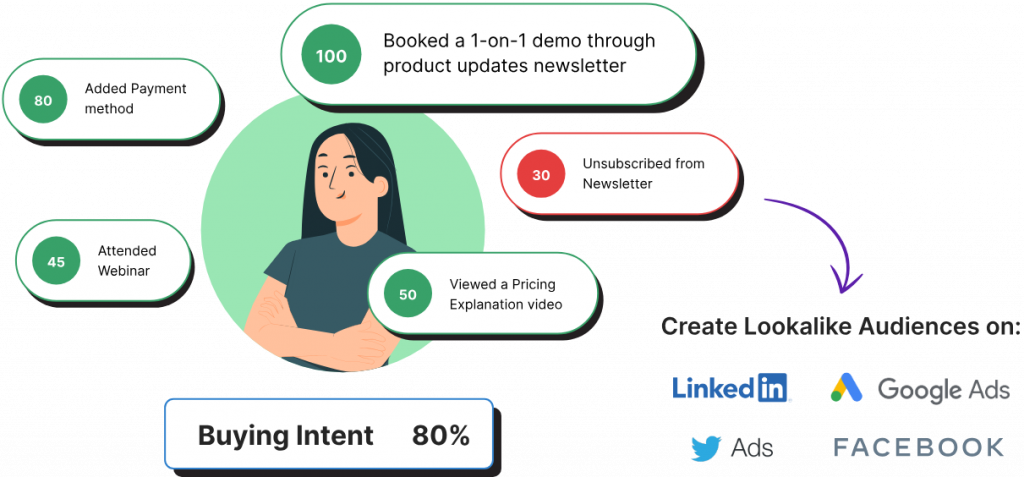
The best practice is to combine static enriched firmographic data with dynamic, real-time behavioral data (intent). This ensures the score reflects both how well a lead fits your ideal profile and how engaged they currently are.
For example, with Salespanel, you can configure scoring rules based on both enriched firmographics and observed on-site behavior. If a lead belongs to a target industry (enriched data) and has visited your pricing page three times (behavioral intent), they receive a high score and are flagged as sales-ready for immediate follow-up.
In the example shown in the screenshot, point values are assigned to attributes such as job title, company size, and pages visited. This helps build a customizable and accurate scoring model, ensuring that your team prioritizes leads who are both a good fit and actively showing purchase intent.
Turning Enriched Data into Actionable Intelligence

The core idea is transforming disconnected data into real business value. Data enrichment is what enables this shift. It takes you from simply collecting information to truly understanding who your customers are, what they care about, and when they’re ready to talk. The goal isn’t to have more data—it’s to have the right data that leads to smarter, faster, and more accurate decisions.
Whether you’re personalizing marketing campaigns, improving lead qualification, or strengthening sales outreach, enriched data powers your entire go-to-market engine. The first step is auditing your existing data to identify gaps and move toward a complete, unified customer profile.
At Salespanel, this philosophy drives our approach. We believe that unifying firmographic and behavioral data is essential for modern marketing and sales. Our platform brings these data streams together so your teams can act on real insights, not isolated data points. By embracing data enrichment, you position your business to build stronger relationships and achieve scalable growth based on intelligence rather than guesswork.
Got Questions About Data Enrichment? We Have Answers
To wrap things up, let’s address a few of the most common questions people run into when they first discover data enrichment. Think of this as a practical Q&A to clear up any lingering confusion before you dive in.
What Is the Difference Between Data Cleaning and Data Enrichment?
It’s easy to confuse the two since they often happen together, but they solve very different problems. Think of it like restoring a classic car.
Data cleaning is like fixing dents, sanding rust, and polishing the chrome. You’re improving what already exists. In practice, this means correcting things like a typo in a state name (“CA” to “California”), standardizing job titles, or removing duplicate contacts. It ensures your current data is accurate and reliable.
Data enrichment, on the other hand, is like installing a brand-new engine and adding a modern GPS system. You’re adding valuable components that weren’t there before. This is where you take a basic contact record and append details such as the company’s industry, revenue, or its tech stack—making the data more insightful and useful.
How Often Should I Enrich My Data?
There’s no universal answer because it depends on how your business operates. Most companies find that a hybrid approach works best—combining two core methods:
- Batch Enrichment: A large-scale periodic process. For example, you might run a full CRM “data deep clean” every quarter. You export your database, enrich it in bulk through a provider, and upload the updated records. This helps maintain accuracy across your existing data.
- Real-Time Enrichment: An ongoing, automated process that runs in your workflows. When a new lead fills out a form, an API call instantly enriches their profile. This ensures all new data entering your system is immediately contextualized and actionable.
Using both methods together ensures your historical data stays clean, while new leads are enriched and qualified the moment they enter your system.
Can Data Enrichment Help with GDPR Compliance?
Yes—it can support GDPR compliance, especially the principle of data accuracy (Article 5(1)(d)), which requires organizations to keep personal data correct and up to date. Enrichment helps you maintain accurate contact records, which is one part of compliance.
However, the responsibility for lawful data processing rests 100% with your company.
It’s essential to work with enrichment providers who source data legally and ethically. While enrichment improves accuracy, your team still must ensure there is a lawful basis for processing that data. Enrichment should always operate within a comprehensive and well-documented data governance strategy, not as a standalone fix.
Transform your raw data into actionable intelligence with Salespanel. Start unifying behavioral and firmographic data to get a complete view of your customers and drive smarter growth. Explore our resources to learn more.