The way we manage data is undergoing a seismic shift. A decade ago, the mantra was “store everything forever,” a strategy that has since become a liability minefield in the face of modern privacy regulations and sophisticated cyber threats. Today, holding onto unnecessary data is no longer a passive act; it’s an active risk. Regulatory fines for data mismanagement have skyrocketed, with GDPR penalties alone exceeding €4.5 billion since 2018. This evolution from data hoarding to data minimalism signals a future where a well-crafted retention policy is not just a legal document, but a core strategic asset.
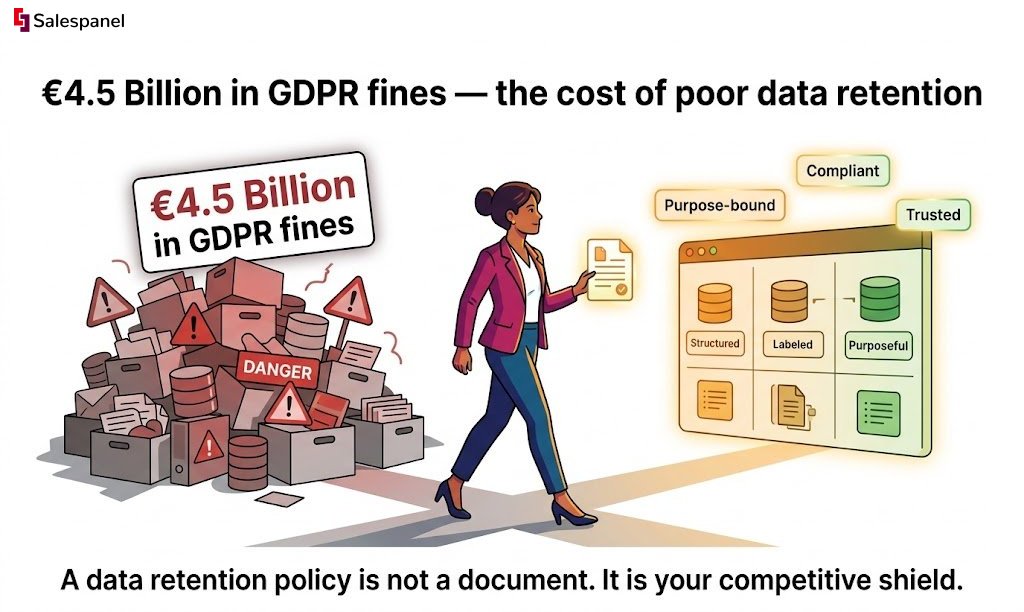
This isn’t just about avoiding penalties; it’s about building trust and operational efficiency. A precise data retention policy transforms data from a potential risk into a streamlined, strategic asset. It ensures you have the information you need for business intelligence while responsibly sunsetting data that has served its purpose. A clear policy is foundational to demonstrating compliance and respecting customer privacy—a critical brand differentiator in an era of heightened digital awareness.
In this article, we dissect 8 foundational data retention policy examples, moving beyond generic advice to provide a technical blueprint for compliance. You will get a strategic breakdown of frameworks from GDPR and HIPAA to SOX and NIST, complete with actionable takeaways. Our goal is to equip you with the specific insights needed to build a resilient policy that navigates the complex realities of data management, ensuring your organization is prepared for what’s next.
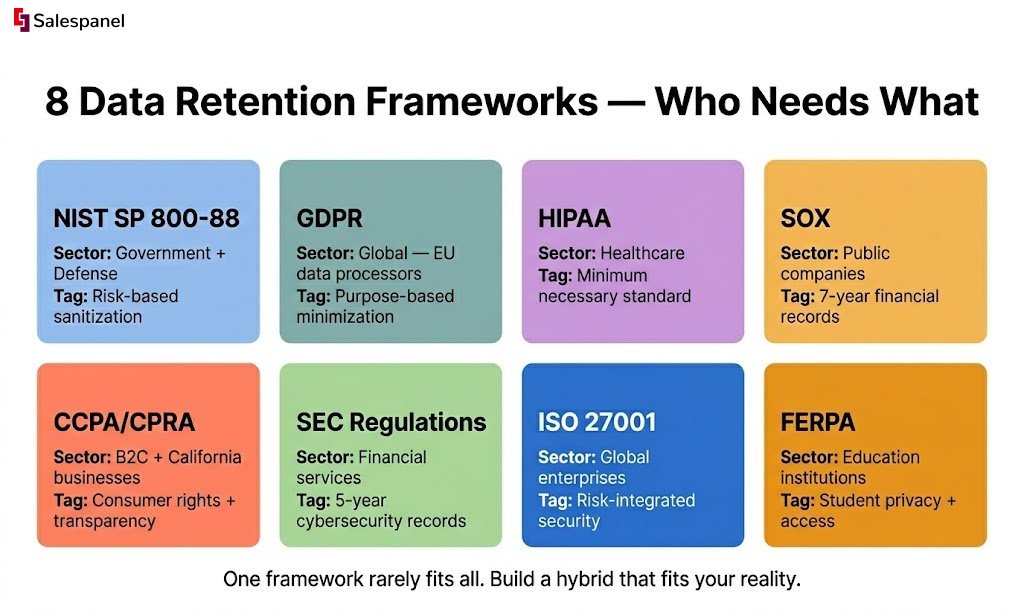
1. NIST SP 800-88 Data Retention Guidelines
While not a standalone policy, the National Institute of Standards and Technology (NIST) Special Publication 800-88 provides a foundational framework for media sanitization that directly informs data retention. It establishes a risk-based approach, making it one of the most robust data retention policy examples for organizations handling sensitive information. Instead of prescribing fixed timelines, it forces an organization to link retention schedules directly to data sensitivity and legal requirements.
The framework’s power lies in its structured process: first, you classify your data (e.g., public, sensitive, confidential). Then, you align retention periods with the risks and compliance mandates for each classification. A practical example would be a defense contractor using this framework to set a 30-day retention period for routine visitor logs (low risk) but a multi-year, legally mandated retention for project schematics (high risk), with a documented, secure destruction method for each.
Strategic Analysis & Actionable Takeaways
This approach is ideal for government contractors, healthcare providers, and financial institutions that must demonstrate rigorous data lifecycle management. Federal agencies like the Department of Defense (DoD) use these guidelines to ensure classified information is handled and disposed of securely.
Key Insight: NIST 800-88 shifts the focus from simple data storage to secure data lifecycle management. The core principle is that data should only be retained as long as it has a legitimate business, legal, or regulatory purpose, and its disposal must be secure and verifiable.
How to Implement This Strategy:
- Data Classification First: Before setting any retention rules, categorize all data based on sensitivity and business value. This is the cornerstone of the NIST approach.
- Document Everything: Maintain a detailed record of why specific retention periods were chosen for each data category, citing relevant laws (like HIPAA or GDPR) or business needs.
- Integrate Sanitization: Your retention policy must include clear procedures for data sanitization (clearing, purging, or destroying media) as outlined in NIST SP 800-88.
- Automate Deletion: Use automated systems to enforce retention schedules. This reduces human error and ensures policies are applied consistently across the organization. For example, a marketing analytics platform can be configured to automatically anonymize or delete visitor data after a set period to comply with privacy regulations.
2. GDPR Data Retention Framework
The General Data Protection Regulation (GDPR) sets a global standard for data privacy, establishing a principle-based approach rather than a rigid set of rules. It requires organizations to retain personal data only as long as necessary for the specific purpose for which it was collected. This framework is built on the core principles of data minimization and storage limitation, making it one of the most critical data retention policy examples for any organization processing the data of EU residents.
Under GDPR, a blanket “keep everything forever” policy is explicitly forbidden. Instead, organizations must justify the retention period for every type of personal data they process. For instance, a practical application would be an e-commerce company setting a 6-month retention period for abandoned cart data for marketing purposes (based on consent), but a 7-year retention for actual transaction records to comply with financial laws. This demonstrates purpose-based differentiation.
Strategic Analysis & Actionable Takeaways
This principle-based approach is essential for any business with a global footprint, especially those in e-commerce, SaaS, and digital marketing. It forces a proactive, privacy-first mindset, turning compliance from a checklist into a strategic advantage. Deutsche Bank, for example, treats its GDPR framework as a core component of its risk management and customer trust initiatives, not just a legal hurdle.
Key Insight: GDPR shifts responsibility to the data controller to proactively justify retention. The guiding principle is “purpose limitation”—if the original, lawful purpose for collecting the data no longer exists, the data must be securely erased or anonymized.
How to Implement This Strategy:
- Conduct a Data Protection Impact Assessment (DPIA): Before launching new projects or processing new types of personal data, perform a DPIA to identify and mitigate privacy risks, including defining appropriate retention periods from the start.
- Create Layered Retention Schedules: Do not use a single retention period for all data. Classify data by its purpose (e.g., customer account data, marketing analytics, legal contracts) and assign a specific, justifiable retention period to each category.
- Justify and Document Everything: Maintain a detailed record of processing activities (ROPA) that explains why a certain retention period was chosen, citing the specific legal basis (e.g., consent, contractual necessity, legitimate interest).
- Automate Data Deletion Workflows: Use technology to enforce your policy automatically. For instance, website visitor tracking from Salespanel can be configured to anonymize or delete EU visitor data after a predefined period, ensuring consistent compliance with GDPR’s storage limitation principle without manual intervention.
3. HIPAA Minimum Necessary Standard
The Health Insurance Portability and Accountability Act (HIPAA) sets a stringent benchmark for data retention in the healthcare sector. Its “Minimum Necessary” standard mandates that covered entities and their business associates must limit the use, disclosure, and request of Protected Health Information (PHI) to the minimum necessary to accomplish the intended purpose. This principle acts as a powerful framework for data retention, forcing organizations to justify not only why they are keeping data but also how much data they truly need.
Unlike a fixed timeline, this standard requires a dynamic, context-aware approach. The retention period for a patient’s billing record may differ significantly from their clinical trial data or marketing consent form. A practical example: a hospital retains a patient’s full medical chart for the state-mandated period (e.g., 7 years post-treatment) but only retains billing inquiry call logs for 90 days. This granular approach directly ties retention to specific functions and legal obligations.
Strategic Analysis & Actionable Takeaways
This standard is non-negotiable for any organization handling PHI, including hospitals like the Mayo Clinic, insurance providers like United Healthcare, and even pharmacies like CVS Health. These organizations implement detailed policies that segregate PHI by its purpose (e.g., treatment, payment, operations) and assign distinct retention and access rules to each category, ensuring compliance with both HIPAA and state-specific medical record laws.
Key Insight: The HIPAA Minimum Necessary Standard transforms data retention from a passive storage function into an active privacy protection measure. The core principle is that every piece of PHI retained must have a clear, documented, and time-bound purpose, with its lifecycle managed to protect patient privacy above all else.
How to Implement This Strategy:
- Create Granular Schedules: Develop separate retention schedules for different types of PHI, such as patient charts, billing information, and insurance claims. This avoids over-retaining less critical data.
- Implement Role-Based Access Controls (RBAC): Align data access permissions directly with the Minimum Necessary principle. A billing clerk, for instance, should not have access to a patient’s detailed clinical history.
- Leverage De-identification: For research or analytics, use de-identification techniques to strip personal identifiers from PHI. This allows for long-term data use without violating HIPAA’s retention constraints on identifiable information.
- Maintain Comprehensive Audit Logs: Continuously monitor and log all access to PHI. These audit trails are crucial for demonstrating compliance and investigating potential breaches, proving that data was only accessed for legitimate purposes during its retention period.
4. SOX Compliance Records Retention Model
The Sarbanes-Oxley Act (SOX) of 2002 established a strict, non-negotiable framework for data retention that primarily targets publicly traded companies in the United States. Unlike risk-based models, SOX compliance sets firm minimum retention periods, making it one of the most prescriptive data retention policy examples. It mandates that audit workpapers, financial statements, and related internal communications be kept for at least seven years, with severe criminal penalties for non-compliance or document destruction.
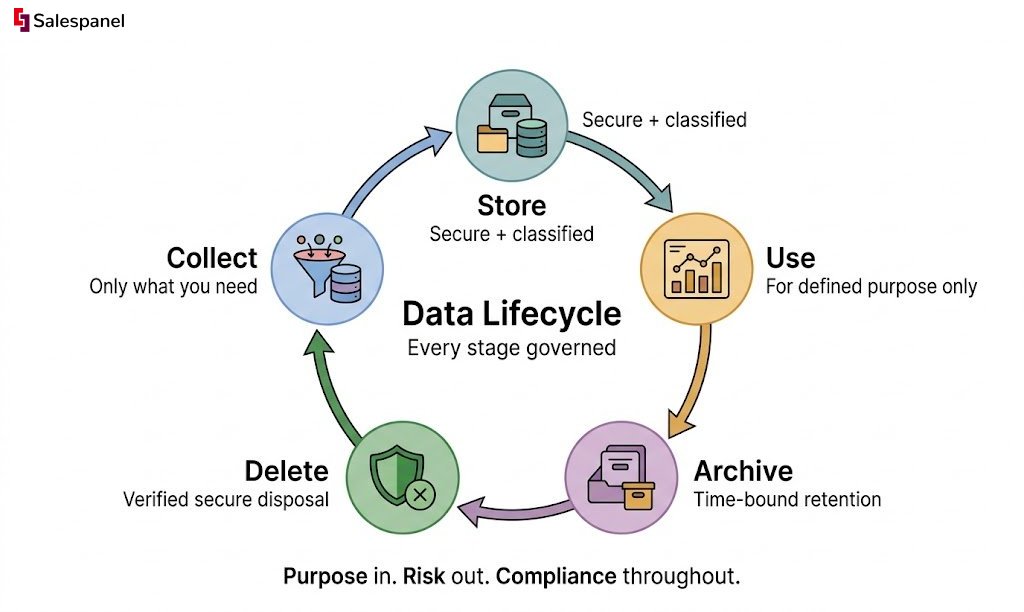
This model is fundamentally about ensuring corporate accountability and transparency. It forces organizations to meticulously manage the lifecycle of financial records, from creation to secure disposal. A practical application is a public company implementing an automated email archiving system that flags and retains all messages containing financial keywords or originating from the finance department for the mandatory 7-year period, overriding any standard 90-day email deletion policy.
Strategic Analysis & Actionable Takeaways
This approach is mandatory for public companies and their auditors, including major firms like Deloitte and JPMorgan Chase, which have built extensive frameworks to meet SOX requirements. It’s a crucial model for any organization preparing for an IPO or operating in a highly regulated financial environment, as it establishes a foundation of documentary evidence and internal control integrity.
Key Insight: SOX transforms data retention from an IT task into a core financial and legal function. The policy’s primary goal is not data minimization but evidence preservation, ensuring that a verifiable record of financial reporting and internal controls exists for a legally mandated period.
How to Implement This Strategy:
- Categorize Financial Records: Create distinct retention schedules for different types of financial documents. For example, audit workpapers have a seven-year minimum, while other accounting records might have different business or state-level requirements.
- Establish Litigation Holds: Implement a clear process to place an immediate “hold” on the destruction of relevant documents during an investigation or litigation. This protocol must override standard automated deletion schedules.
- Automate Email Archiving: Use enterprise-grade tools to automatically archive all emails related to financial controls and audits. This ensures communications, which can be considered records under SOX, are not accidentally deleted by employees.
- Conduct Regular Audits: Perform annual internal audits specifically focused on SOX compliance to identify gaps in your record-keeping and retention processes before they become a regulatory issue.
5. California Consumer Privacy Act (CCPA) Model
The California Consumer Privacy Act (CCPA), now expanded by the California Privacy Rights Act (CPRA), provides a consumer-centric framework for data handling. Unlike internal risk-based models, this approach forces organizations to build their retention policies around consumer rights, specifically the right to know and the right to delete. It mandates that businesses disclose what personal information they collect, the purpose for its collection, and the length of time they intend to retain it.
This model shifts the default from indefinite data storage to purpose-bound retention. Companies must justify why they keep data, linking each category of personal information directly to a disclosed business purpose. A practical example is a retail company’s privacy policy stating, “We retain your browsing history for 90 days for personalized recommendations.” This transparent declaration allows consumers to understand the data lifecycle and exercise their rights, making transparency a core operational requirement.
Strategic Analysis & Actionable Takeaways
This model is essential for any B2C or B2B company that processes the data of California residents, but its influence extends far beyond state lines. With similar laws emerging in Virginia, Colorado, and Utah, adopting a CCPA-style policy is a proactive strategy for national compliance. It’s particularly critical for marketing and sales teams that collect customer data for personalization and analytics.
Key Insight: The CCPA model operationalizes the principle of data minimization by linking retention directly to consumer consent and stated business purpose. Retention is no longer just an internal IT decision; it’s a public commitment that must be justified and auditable.
How to Implement This Strategy:
- Create a Public-Facing Retention Schedule: Your privacy policy must clearly state the retention periods for each category of personal information you collect. Be specific, for example, “Customer support chat logs are retained for 90 days to ensure quality control.”
- Establish a Consumer Rights Portal: Implement a user-friendly system, often called a Data Subject Access Request (DSAR) portal, for consumers to easily request access to or deletion of their data.
- Implement a 45-Day Response Workflow: Build and document an internal process to handle consumer data requests within the CCPA’s 45-day response window, including identity verification and confirmation of deletion.
- Justify and Document Every Data Category: For every piece of personal data retained, document the specific operational, legal, or security reason. This documentation is your first line of defense in a compliance audit.
6. SEC Records Retention and Cybersecurity Regulations
The U.S. Securities and Exchange Commission (SEC) has enacted stringent regulations that directly link data retention with cybersecurity resilience, making it a critical framework for the financial services industry. These rules, particularly the updated cybersecurity regulations effective in 2024, mandate that investment advisers and broker-dealers not only report material incidents but also maintain comprehensive records of their cybersecurity policies, risk assessments, and incident response efforts. This transforms data retention from a simple storage issue into a core component of regulatory compliance and operational transparency.
This framework requires firms to document their entire cybersecurity lifecycle. This includes retaining records of annual security reviews, risk assessments, and detailed documentation of any cybersecurity incident for at least five years. A practical example is a brokerage firm creating a standardized digital “incident binder” for a minor phishing attack, which includes email logs, remediation steps, and team communications, and then archiving it in an immutable WORM (Write Once, Read Many) system for the full 5-year retention period.
Strategic Analysis & Actionable Takeaways
This model is non-negotiable for any firm regulated by the SEC, including investment funds, brokers, and financial advisers. It provides a clear, prescriptive mandate for how cybersecurity-related data must be managed, retained, and made available for inspection. The goal is to enforce accountability and ensure that firms learn from and fortify their defenses after every security event.
Key Insight: The SEC framework merges data retention with cybersecurity governance. The core principle is that a firm’s ability to demonstrate a robust, documented, and consistently enforced cybersecurity program is just as important as the program itself. Retention is the proof.
How to Implement This Strategy:
- Establish Incident Documentation Templates: Create standardized templates for documenting cybersecurity incidents, including timelines, impact assessments, and remediation steps taken. This ensures consistency and completeness.
- Implement Immutable Audit Logs: Use systems that generate unchangeable audit logs for all cybersecurity events, access controls, and policy changes. This provides a verifiable record for regulatory review.
- Coordinate Retention with Legal: Align your data retention schedules for incident reports with your legal and public relations teams to ensure breach notification timelines are met without compromising investigations.
- Annual Policy and Vendor Review: Schedule and document annual reviews of your cybersecurity policies and third-party vendor security agreements. Retain these records to demonstrate ongoing compliance and proactive risk management.
7. ISO 27001 Information Security Standard
ISO/IEC 27001 is a global standard for Information Security Management Systems (ISMS), providing a holistic framework for managing sensitive company information. Unlike policies focused solely on timelines, it integrates data retention into a broader risk management context. An ISMS built on this standard ensures that retention schedules are not arbitrary but are derived from a thorough risk assessment and aligned with the organization’s security objectives.
This standard requires organizations to systematically identify, manage, and treat information security risks. Consequently, data retention becomes a critical control within the larger security posture. As a practical example, an ISO 27001-certified SaaS company would conduct a risk assessment that identifies long-term storage of inactive user data as a high risk. As a control, they would implement an automated policy to anonymize user accounts after 24 months of inactivity, directly linking the retention rule to a specific, identified risk.
Strategic Analysis & Actionable Takeaways
This approach is best suited for global organizations or those in industries where trust and certified security are paramount differentiators, such as tech, finance, and consulting. It’s not just a policy but a comprehensive management system that requires continuous improvement and regular audits. For a deeper understanding of information security management systems that often underpin data retention policies, explore what ISO 27001 certification entails.
Key Insight: ISO 27001 frames data retention as a component of overall information security risk management. The policy is a living document, subject to regular review and improvement, ensuring it evolves with business needs, technology changes, and emerging threats.
How to Implement This Strategy:
- Create an Information Asset Register: Begin by cataloging all information assets, identifying where data resides, who owns it, and its classification.
- Conduct a Risk Assessment: Analyze the risks associated with retaining different types of data for various periods. This assessment should directly inform your retention schedules.
- Establish Clear Controls: Define and document specific controls for data retention and disposal as part of your ISMS, including roles and responsibilities.
- Plan for Audits: An essential part of ISO 27001 is regular internal and external audits. Build your retention procedures with auditability in mind, ensuring all decisions and actions are logged.
8. FERPA Educational Records Retention Framework
The Family Educational Rights and Privacy Act (FERPA) provides a crucial framework for any educational institution handling student data. Unlike rigid corporate policies, FERPA doesn’t mandate specific retention periods; instead, it establishes strict guidelines around student privacy, access rights, and the conditions under which records can be retained or destroyed. This makes it one of the most important data retention policy examples for the education sector, focusing on the purpose of retention rather than a fixed timeline.
The core of this framework is the concept of “legitimate educational interest.” An institution can retain student records as long as they are needed for educational purposes, but must destroy them once that purpose is fulfilled. As a practical application, a university might retain academic transcripts indefinitely for alumni services but implement a policy to securely shred disciplinary records one year after graduation, as their “legitimate educational interest” has expired.
Strategic Analysis & Actionable Takeaways
This approach is non-negotiable for universities, K-12 school districts, and even EdTech platforms like Coursera that handle student information. The framework’s value lies in its focus on balancing administrative necessity with the fundamental privacy rights of students. For example, New York City public schools maintain detailed schedules specifying how long different types of records, from attendance to health information, must be kept before secure disposal.
Key Insight: FERPA shifts the retention paradigm from “how long can we keep it?” to “why do we need to keep it?” The policy is driven by student privacy and legitimate need, requiring institutions to justify the continued storage of every piece of personally identifiable information (PII) in an educational record.
How to Implement This Strategy:
- Create Granular Schedules: Develop distinct retention schedules for different record types. Academic, financial aid, disciplinary, and health records all have different legal and operational requirements.
- Document Destruction: Maintain meticulous logs of when and how student records are destroyed. This documentation is critical for demonstrating FERPA compliance during an audit.
- Implement Role-Based Access: Use strict access controls to ensure only authorized personnel with a legitimate educational interest can view sensitive student data. This minimizes the risk of internal breaches.
- Mandate Staff Training: Regularly train all staff who handle student data on FERPA requirements, including what constitutes an “educational record” and the proper procedures for access, amendment, and disposal.
8-Point Data Retention Policy Comparison
| Framework | Implementation complexity | Resource requirements | Expected outcomes | Ideal use cases | Key advantages |
|---|---|---|---|---|---|
| NIST SP 800-88 Data Retention Guidelines | High — detailed technical controls and processes | Significant IT/security expertise, documentation and audit tooling | Secure sanitization, traceable retention decisions, reduced compliance risk | Government, critical infrastructure, regulated enterprises (finance, healthcare) | Government-backed, prescriptive technical specs, strong auditability |
| GDPR Data Retention Framework | High — principle-based requires policy decisions and reassessments | Legal/privacy team, DPIAs, consent management, automation | Minimized personal data storage, stronger individual rights, regulatory compliance | Organizations processing EU residents’ data or global services | Strong privacy protections, accountability, widely influential |
| HIPAA Minimum Necessary Standard | Moderate — sector-specific rules with role-based controls | Staff training, de-identification tools, legal coordination | Limited PHI access and retention, lower breach liability | Healthcare providers, insurers, pharmacies, business associates | Clear patient privacy focus, established regulatory guidance |
| SOX Compliance Records Retention Model | Moderate–High — strict timeframes and legal holds | Robust document management, long-term storage, audit processes | 7-year financial/audit retention, fraud prevention, audit readiness | Publicly traded companies, auditors, finance departments | Specific retention periods, strong legal clarity for financial records |
| CCPA Model | Moderate — consumer-request handling and disclosure processes | Consumer portals, operational changes, privacy/legal support | Transparent retention practices, consumer deletion and opt-out rights | Businesses serving California residents, DTC platforms | Consumer-centric rights, clear deletion requirements, business-friendly vs GDPR |
| SEC Records Retention & Cybersecurity Regulations | High — new, specialized incident documentation demands | Cybersecurity staff/CISO, incident logging, legal/PR coordination | Detailed incident records, faster breach response, investor protection | Investment advisers, brokers, financial services firms | Focused on cybersecurity incidents, enforces documentation and accountability |
| ISO 27001 Information Security Standard | High — ISMS design, risk assessments, ongoing audits | Certification costs, external auditors, continuous management | Integrated security posture, aligned retention policies, certification readiness | Global enterprises, vendors seeking trusted security credentials | Internationally recognized, integrates retention with overall security program |
| FERPA Educational Records Retention Framework | Low–Moderate — records-focused with role/access rules | Staff training, access controls, destruction logs | Protected student records, documented retention and destruction | K‑12 and higher education institutions, educational service providers | Clear federal guidance for education, established case law and practice |
From Policy to Practice: Activating Your Data Retention Strategy
Navigating the landscape of data retention policy examples, from the prescriptive framework of HIPAA to the principles-based approach of GDPR, reveals a universal truth: a static policy document is merely a starting point. The real value lies in its activation, transforming abstract rules into an automated, defensible, and dynamic system. The central theme connecting these diverse frameworks is the strategic shift away from indefinite data hoarding toward purposeful and minimal data management. This isn’t just a compliance exercise; it’s a fundamental pillar of modern data governance that builds operational efficiency and customer trust.
The examples we’ve explored demonstrate that a one-size-fits-all policy is an illusion. An effective strategy is a carefully crafted hybrid, borrowing principles from multiple models like ISO 27001’s security focus and SOX’s financial record integrity, then tailoring them to your specific industry, data categories, and jurisdictional obligations. The ultimate goal is to create a retention schedule where every piece of data has a clear purpose, a defined lifecycle, and an automated end-of-life plan.
Your Actionable Blueprint for Implementation
Building a robust data retention strategy requires a methodical approach. The insights from the data retention policy examples analyzed in this article distill into a clear, actionable path forward:
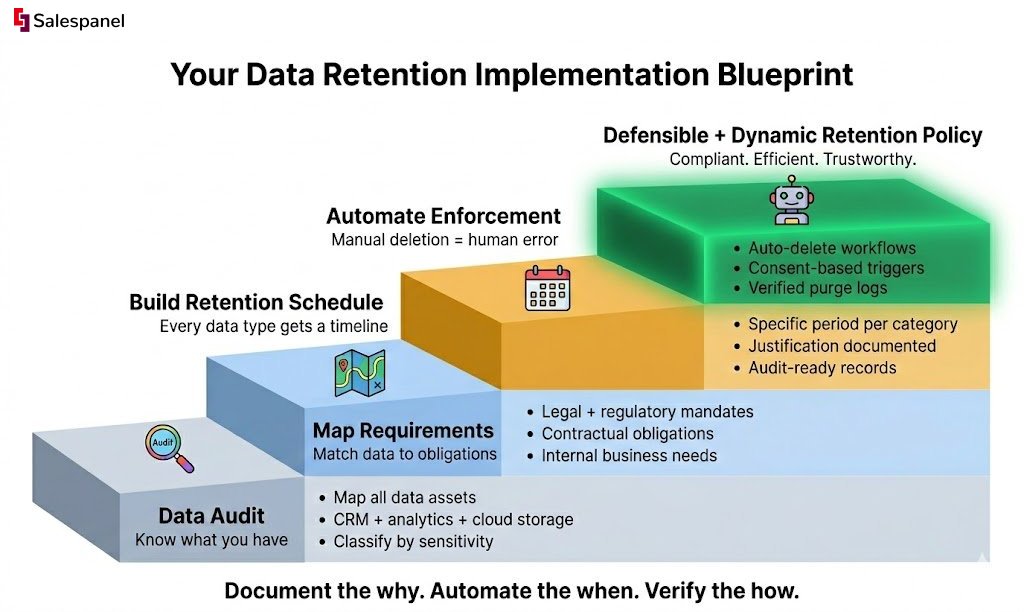
- Conduct a Comprehensive Data Audit: You cannot manage what you do not know. Begin by mapping all data assets across your organization, from CRM entries and analytics platforms to unstructured data in cloud storage. Classify data based on sensitivity, business value, and regulatory impact.
- Map Legal and Business Requirements: For each data category, identify all applicable legal, regulatory, and contractual obligations. Cross-reference this with internal business needs, such as the data required for longitudinal marketing analytics or financial forecasting.
- Develop a Defensible Retention Schedule: Create a clear schedule that defines the retention period for each data category. Document the justification for each period, citing the specific legal statute or business driver. This documentation is your first line of defense in an audit.
- Automate Enforcement and Disposal: Manual data deletion is prone to error and inconsistency. Leverage technology to automate the enforcement of your retention rules. This ensures data is securely and verifiably purged once it reaches the end of its lifecycle, minimizing risk.
Integrating Retention into Your Martech Stack
For B2B marketing and sales teams, these principles directly impact the martech stack. It’s not enough to apply retention rules only to your CRM contacts. You must also consider the vast amount of behavioral data collected, such as website visitor activity and email engagement. Salespanel’s philosophy centers on purposeful data utilization, which aligns perfectly with modern retention principles. By focusing on identifying and engaging high-intent leads, you inherently avoid the trap of mass data collection for its own sake.
This approach means embedding retention logic directly into your data collection and processing tools, turning compliance into an operational advantage. Modern platforms are built to accommodate these needs. For example, with server-side tracking and consent management, you gain the granular control necessary to honor user preferences and automatically purge data that no longer has a legitimate processing basis. For a deeper dive into regional specifics, this A Guide to UK Data Retention Policies offers valuable context.
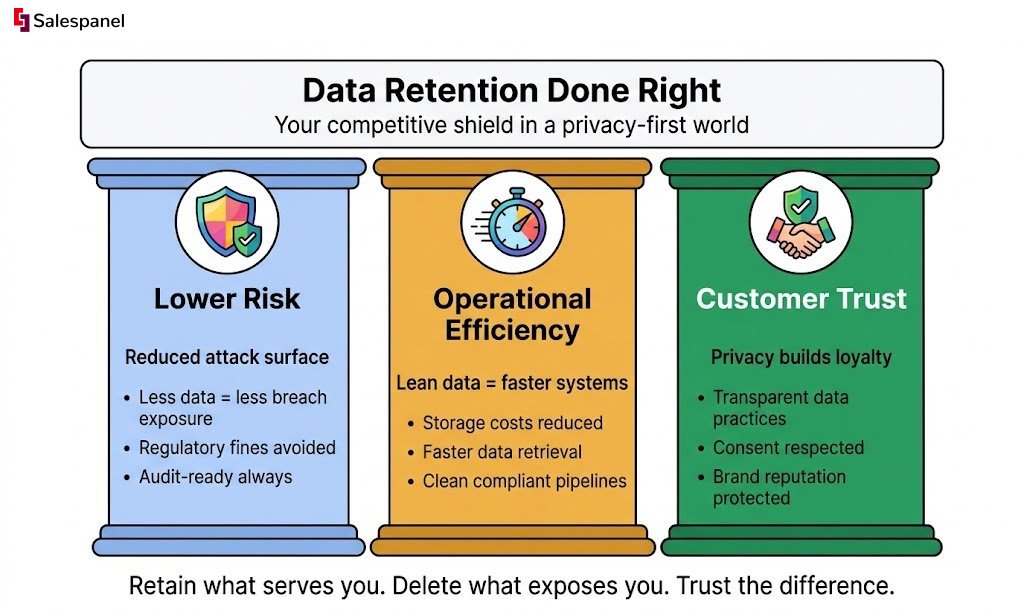
Ultimately, mastering your data retention strategy transforms it from a perceived burden into a competitive differentiator. It reduces your digital footprint, lowers storage costs, minimizes your attack surface for cyber threats, and demonstrates a tangible commitment to privacy that resonates with today’s discerning B2B buyer. Your policy is no longer just a document; it’s an active system that fortifies your business from the inside out.
Ready to turn your data strategy into a revenue engine? See how Salespanel helps you track, qualify, and engage leads while respecting data privacy principles. Explore our resources to learn how to build a smarter, more compliant marketing funnel at Salespanel.