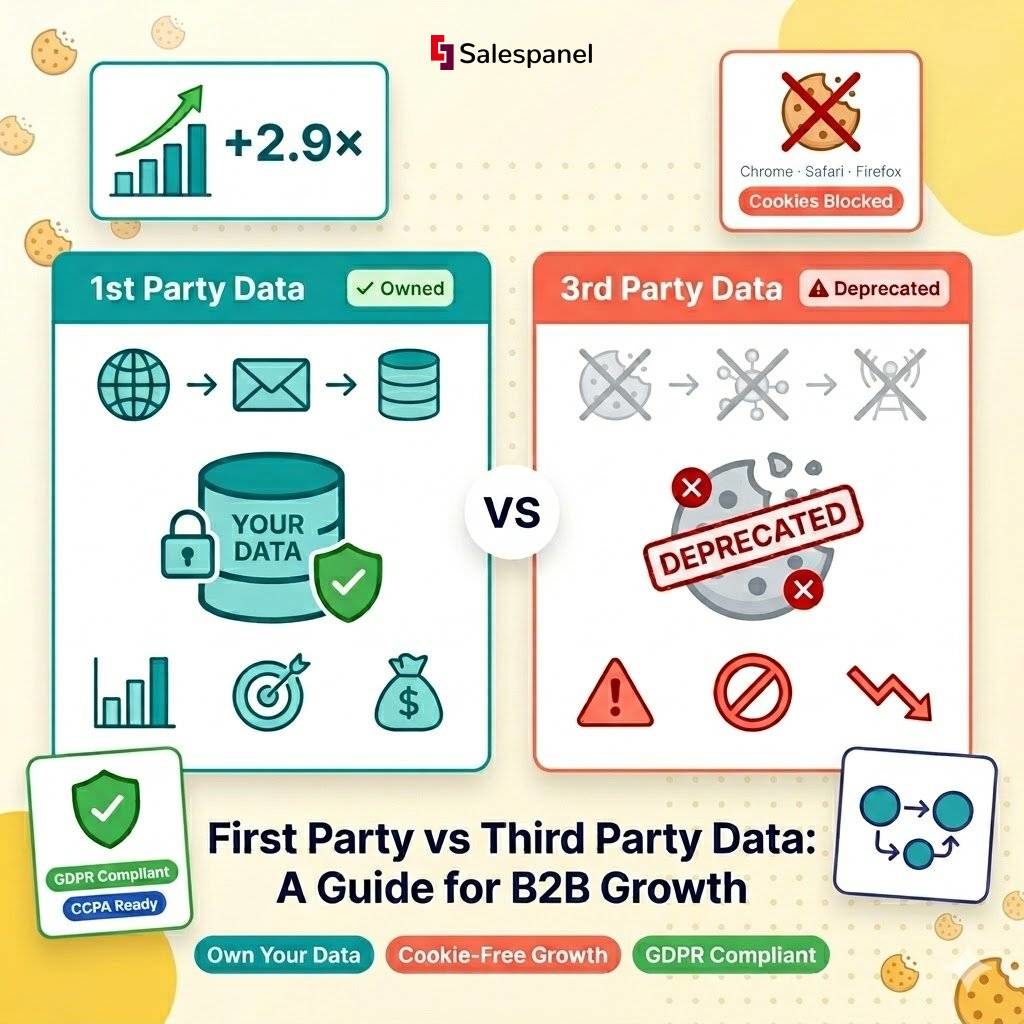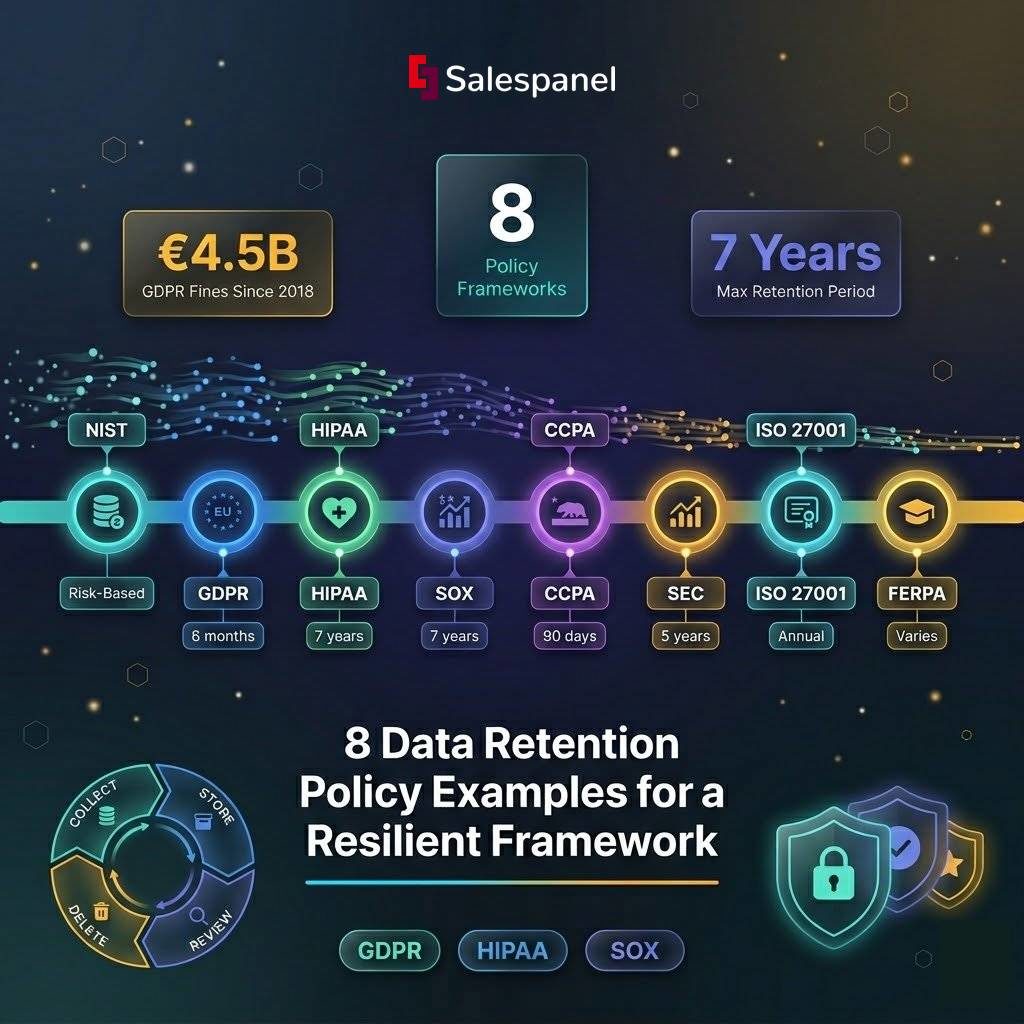
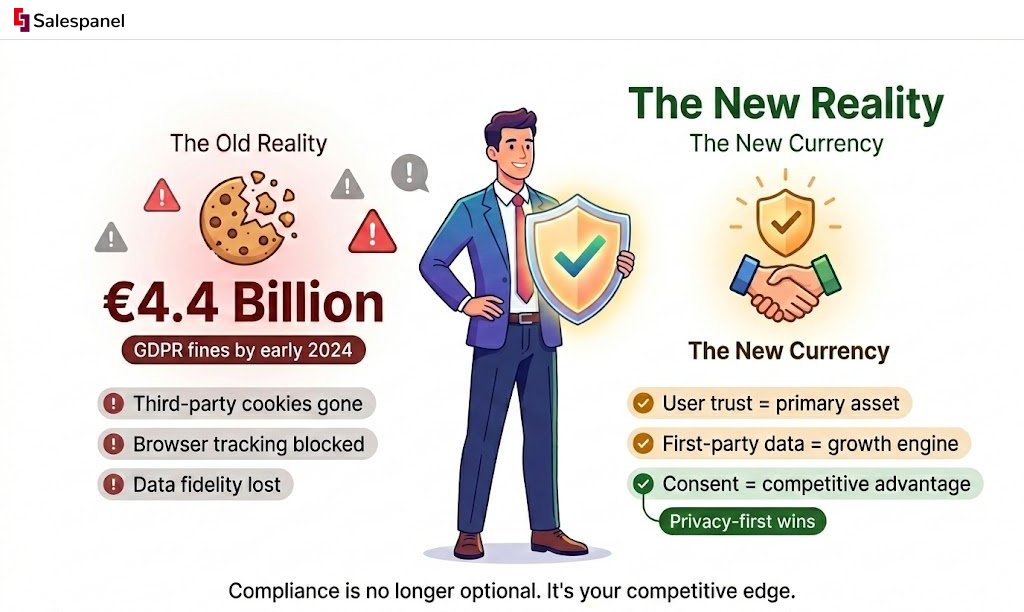
The digital landscape has fundamentally shifted. Gone are the days of unrestricted third-party cookies and assumed user consent. Regulations like GDPR, which brought fines exceeding €4.4 billion by early 2024, were just the beginning. Today, browser-level tracking prevention and the deprecation of traditional analytics tools have created a new reality for businesses. This shift represents more than just a regulatory hurdle; it’s a core component of the new advertising world order where user trust is the primary currency.
Fines for non-compliance are a tangible threat, but the more insidious cost is lost data fidelity. This isn’t just about avoiding legal trouble; it’s about future-proofing your entire marketing and sales engine. Choosing from the best consent management platforms is now a strategic imperative, not just a compliance checkbox. The central challenge is finding a solution that doesn’t just display a banner but integrates deeply into your martech stack. This enables you to respect user choice while still capturing the high-quality, first-party data needed for growth, a core philosophy behind tools like website visitor tracking from Salespanel.
This comprehensive guide moves beyond marketing copy to provide a technical analysis of the market’s leading CMPs. We will dissect features, pricing, and integrations for each platform, complete with screenshots and direct links. Our goal is to equip you with the practical insights needed to select the right partner for a privacy-first future, ensuring your data strategy is both compliant and competitive.
1. Salespanel
Salespanel positions itself as a powerful, privacy-first B2B marketing automation platform where robust consent management is a core component, not an afterthought. It uniquely combines advanced, server-side visitor intelligence with actionable prospecting tools, making it an excellent choice for teams needing to balance aggressive growth with stringent compliance demands. The platform’s philosophy is built on creating a unified, high-fidelity data foundation that respects user privacy from the ground up.
What truly sets Salespanel apart is its server-side tracking architecture, which reduces reliance on traditional, client-side cookies that are increasingly blocked by browsers. This approach consolidates data from cookies, pixels, and scripts into identity-resolved profiles, providing a more accurate and durable view of the customer journey. For example, a B2B marketer can use this to stitch together a prospect’s interactions across multiple marketing campaigns and website visits, creating a single consent-backed customer view even if browser-side identifiers are lost. This technical advantage allows businesses to convert anonymous traffic into qualified leads using AI-driven prospecting while maintaining a clear consent trail, making it a standout among the best consent management platforms by integrating compliance directly into its lead generation and analytics workflows.
Key Strengths & Use Cases
- Privacy-First Data Consolidation: Salespanel’s server-side tracking offers a more reliable way to capture visitor data, which is crucial as third-party cookies are phased out. A practical example is a SaaS company using Salespanel to track a prospect’s journey across multiple sessions and marketing touchpoints, even if the user clears their browser cookies, creating a single, consent-backed customer view.
- AI-Driven Prospecting & Identity Resolution: The platform excels at identifying and prioritizing high-value, previously anonymous visitors. For instance, sales and marketing teams can leverage its identity resolution to uncover the companies visiting their site and apply lead scoring to focus outreach on the most promising accounts, turning compliant data into revenue opportunities.
- Actionable Analytics: Customizable analytics and engagement workflows empower teams to personalize outreach at scale. This goes beyond simple consent banners by allowing businesses to build marketing campaigns based on the specific permissions a user has granted.
Pros:
- Privacy-first server-side tracking provides reliable data and enhances compliance.
- AI-driven prospecting and lead scoring surface high-value, anonymous visitors.
- Customizable workflows improve personalization and conversion efficiency.
- Extensive educational resources support modern, privacy-compliant strategies.
Cons:
- No public pricing requires contacting sales for a quote, hindering quick comparisons.
- Advanced setup may require technical resources, posing a challenge for smaller teams.
Website: https://salespanel.io/resources
2. OneTrust
OneTrust is an enterprise-grade consent and preference management platform designed for large, global organizations navigating complex privacy regulations. It excels in providing a unified solution for web, mobile apps, and even Connected TV (CTV), making it a top contender among the best consent management platforms for businesses with diverse digital footprints. The platform’s core strength lies in its deep integration with broader governance, risk, and compliance (GRC) programs, offering a holistic view of data privacy beyond just website cookies.
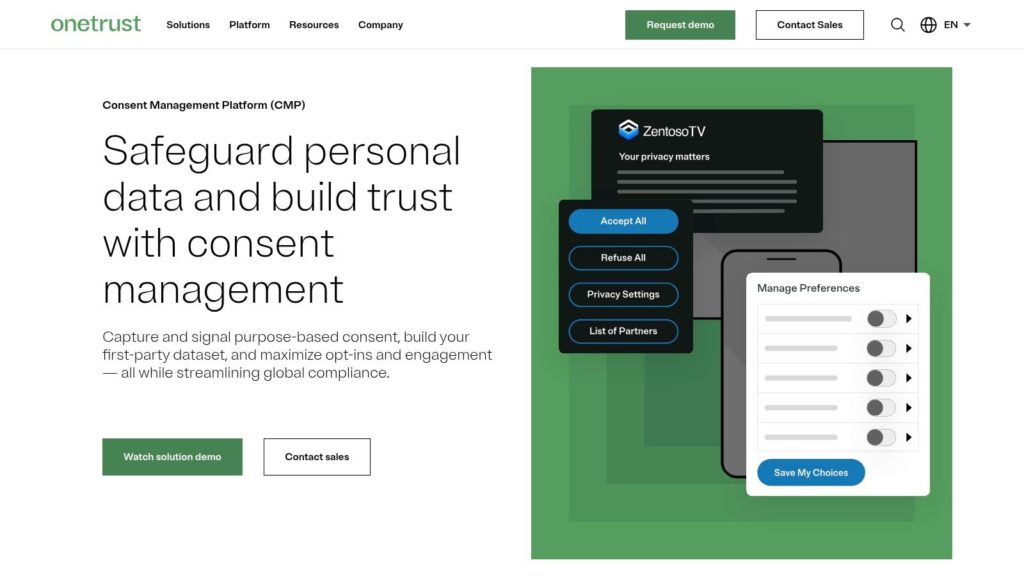
Its automated discovery and categorization of trackers, combined with geo-targeted, A/B testable consent banners, provide granular control. For compliance officers, the centralized consent receipts and audit-ready logs are invaluable for demonstrating adherence to laws like GDPR and CCPA. A practical example would be a multinational corporation using OneTrust to automatically display a GDPR-compliant banner in the EU and a CCPA-compliant one in California, with all consent records stored centrally for auditing. However, this comprehensive power comes at a cost. Pricing is quote-based and reflects its enterprise focus, and the implementation can be resource-intensive for smaller teams.
Key Features:
- Automated Discovery: Automatically scans and categorizes cookies, SDKs, and other tracking technologies.
- Centralized Auditing: Provides a single repository of consent records, crucial for audit and accountability purposes.
- Cross-Channel Support: Manages consent across websites, mobile applications, and OTT/CTV platforms.
Website: https://www.onetrust.com/products/universal-consent-management/
3. TrustArc
TrustArc stands out as a privacy-first consent management platform with a strong emphasis on global compliance and accessibility. For businesses heavily reliant on Google’s advertising and analytics ecosystem, TrustArc’s status as a Google-certified CMP is a significant advantage, providing a documented path to implementing Google Consent Mode v2 with formal service-level agreements. This makes it a compelling choice among the best consent management platforms for organizations prioritizing ad revenue and data accuracy within Google’s framework.
The platform’s support for over 100 jurisdictions and adherence to WCAG 2.2 accessibility standards demonstrate a mature, enterprise-ready approach. Its technical capabilities include support for IAB TCF 2.2, Global Privacy Control (GPC), and consent modes for both Google and Microsoft. In practice, this means an e-commerce company can use TrustArc to ensure their consent banner is accessible to users with disabilities while simultaneously passing the correct consent signals to Google Ads to preserve conversion modeling. However, this enterprise focus means pricing is not public and requires direct sales engagement, which may be cumbersome for smaller businesses.
Key Features:
- Certified Google Consent Mode v2: Offers a certified, SLA-backed path for implementation, crucial for marketers using Google Ads.
- Broad Jurisdictional & Framework Support: Covers 100+ jurisdictions and supports key industry standards like IAB TCF 2.2 and GPC.
- Accessibility Compliance: Banners and preference centers are designed to meet WCAG 2.2 and ADA standards.
Website: https://trustarc.com/products/consent-consumer-rights/cookie-consent-manager/
4. Usercentrics
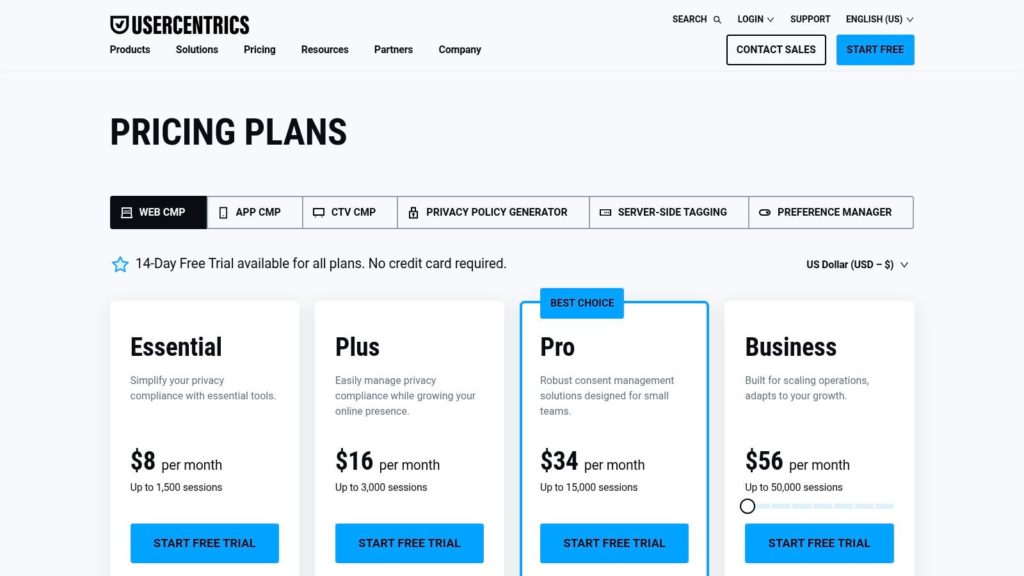
Usercentrics provides a versatile and user-friendly consent management platform that appeals to a wide range of businesses, from SMBs to large enterprises, thanks to its transparent, self-serve pricing tiers. It stands out by offering clear, session-based plans and a straightforward trial path, making it an excellent choice for organizations that need a quick and predictable implementation. The platform’s strength lies in its ability to manage global compliance requirements, including support for the IAB TCF v2.2 framework and Google Consent Mode.
For businesses operating internationally, Usercentrics offers extensive multi-language support and cross-domain consent sharing, simplifying the user experience across multiple web properties. A practical use case is a brand with separate country-level domains (.com, .de, .fr) implementing Usercentrics so that a user’s consent choice on one site is remembered across all others, reducing friction. While its transparent pricing is a major advantage, growing businesses should monitor their traffic, as session caps may necessitate upgrading to a higher-tier plan. Nonetheless, it remains one of the best consent management platforms for those seeking a balance of powerful features and predictable costs.
Key Features:
- Tiered Self-Serve Plans: Offers clear, published pricing with plans scaling based on monthly sessions, from Essential to Business.
- Global Compliance Support: Features IAB TCF v2.2 and Google Consent Mode compatibility, with support for over 60 languages.
- Cross-Domain Consent: Allows users to give consent once and have it apply across all of a company’s related domains.
Website: https://usercentrics.com/us/pricing/
5. Cookiebot (by Usercentrics)
Cookiebot, now part of the Usercentrics family, is a self-serve consent management platform tailored for small to mid-sized businesses (SMBs). Its primary strength is its straightforward, plug-and-play implementation, especially for websites built on popular CMS platforms like WordPress and Shopify. It offers a quick path to compliance by automating the scanning, categorization, and blocking of cookies until user consent is obtained, making it a strong choice among the best consent management platforms for organizations needing a fast and simple solution.
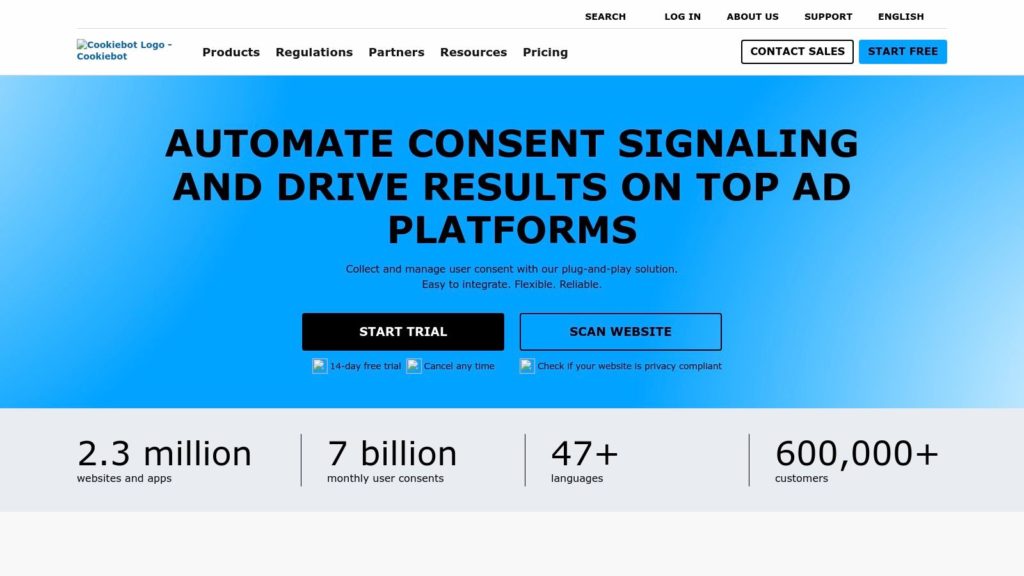
The platform stands out with its clear, tiered pricing based on the number of subpages, which is ideal for businesses that want predictable costs. It includes a generous free tier for very small sites (under 50 subpages), making it highly accessible. For example, a small e-commerce store on Shopify can install the Cookiebot app and have a functional, auto-blocking consent banner live within minutes, without needing a developer. While it covers essential regulations like GDPR and supports Google Consent Mode, organizations with complex, multi-jurisdictional needs might find its capabilities less comprehensive than enterprise-focused solutions.
Key Features:
- Automated Scanning: Regularly scans your website to detect and categorize all cookies and trackers in use.
- Extensive CMS Plugins: Offers simple integrations for major platforms like WordPress, Shopify, and Magento.
- Google Consent Mode Support: Provides native support for Google Consent Mode v2, enabling compliant data collection for analytics and advertising.
Website: https://www.cookiebot.com/
6. Osano
Osano is a US-based consent and privacy platform that emphasizes ease of use, robust enforcement of tracker blocking, and straightforward deployment. It particularly appeals to organizations that need a quick, reliable solution, offering tag-manager style implementation and automated discovery of tracking technologies. What sets Osano apart is its unique “No Fines, No Penalties” pledge, providing customers with a financial guarantee that underscores its confidence in its compliance capabilities, making it one of the best consent management platforms for risk-averse businesses.
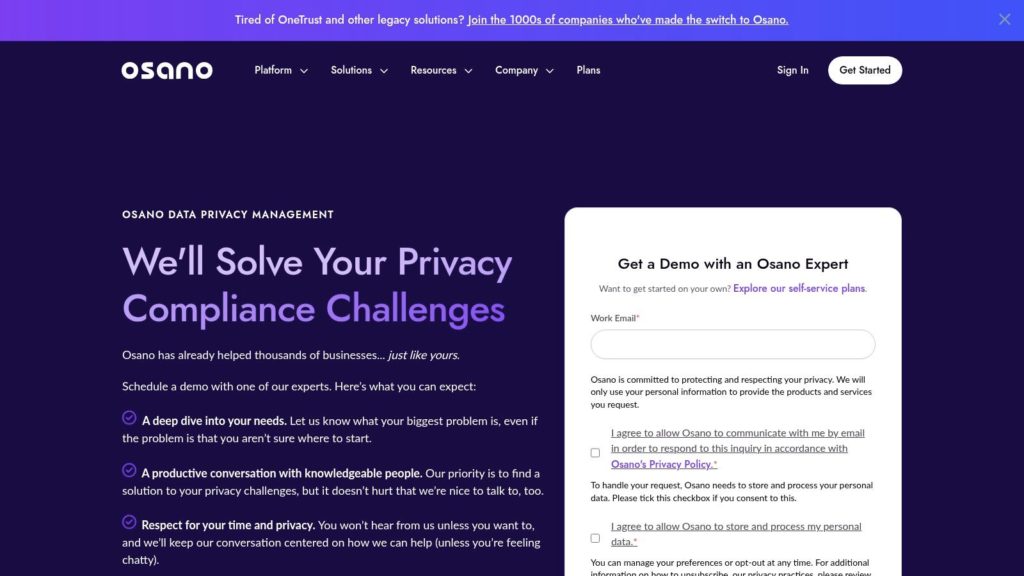
The platform automatically discovers, blocks, and classifies cookies using AI, ensuring that no unauthorized scripts execute before consent is given. A practical example of its enforcement is its ability to block not just cookies but also third-party <iframe> and <script> tags before user consent is granted, preventing potential data leakage from embedded content like YouTube videos. It supports key frameworks like Google Consent Mode and the IAB TCF. However, its pricing is tied to traffic metrics like daily average users (DAU) or script loads, which requires careful estimation.
Key Features:
- Automated Blocking & Classification: Discovers and automatically blocks trackers before consent, using AI to classify their purpose.
- “No Fines” Pledge: Offers a financial guarantee against fines related to non-compliance with certain privacy laws when using its platform.
- Unified Consent Hub: Centralizes consent records and user preference data with detailed, audit-ready logs.
Website: https://www.osano.com/plans
7. Didomi
Didomi is a robust consent and preference management suite engineered for publishers and brands that require granular control over user data. Its recent combination with Sourcepoint positions it as a powerful enterprise solution, extending its capabilities deep into the publisher and advertising ecosystem. This makes Didomi one of the best consent management platforms for organizations looking to bridge compliance with sophisticated ad-tech and marketing strategies, leveraging consent as a strategic asset.
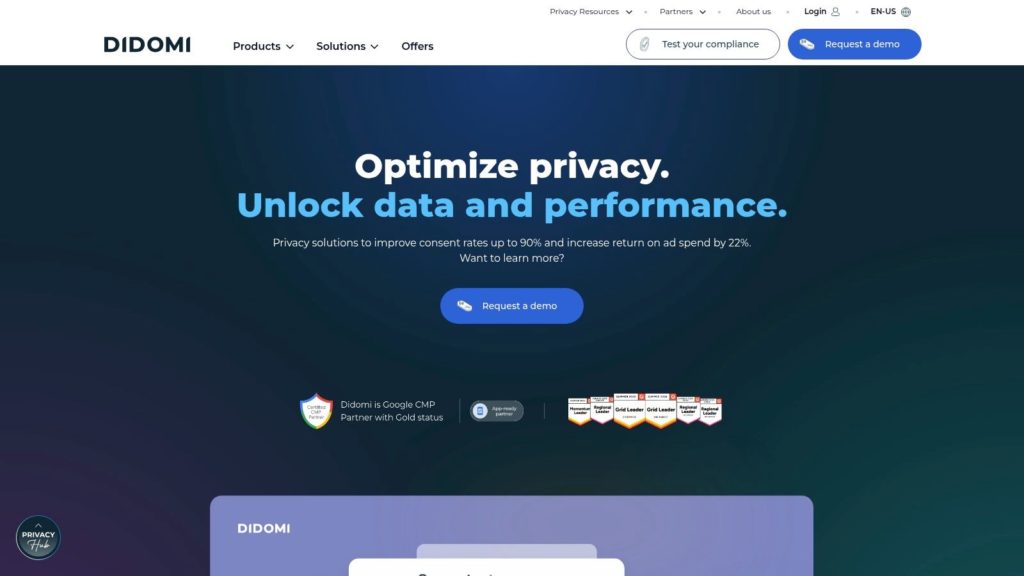
The platform stands out with its strong focus on consent analytics, providing actionable insights into consent rates and user preferences. A media company, for instance, could use Didomi’s A/B testing on its consent banners to identify the design and wording that maximizes opt-in rates without being intrusive, directly impacting ad revenue. Its identity-aware consent capabilities are particularly valuable for creating personalized user journeys. The primary drawback is its enterprise focus, with quote-based pricing that may not be suitable for smaller businesses.
Key Features:
- Consent Analytics: Offers detailed dashboards and reporting to analyze and optimize consent collection rates.
- Preference Centers: Allows users to manage their communication and data preferences in a centralized, user-friendly hub.
- Multi-Environment Compliance: Provides consistent consent management across websites, mobile apps, and other digital properties.
Website: https://www.didomi.io/
8. Sourcepoint
Sourcepoint offers a robust consent management platform, Dialogue, specifically tailored for digital publishers and media owners. Its primary strength is in serving ad-monetized properties that require sophisticated consent orchestration across websites, mobile apps, and Connected TV (CTV) environments. This focus makes it one of the best consent management platforms for organizations managing complex revenue streams dependent on user data and advertising frameworks like the IAB TCF 2.2 and Google Consent Mode v2.
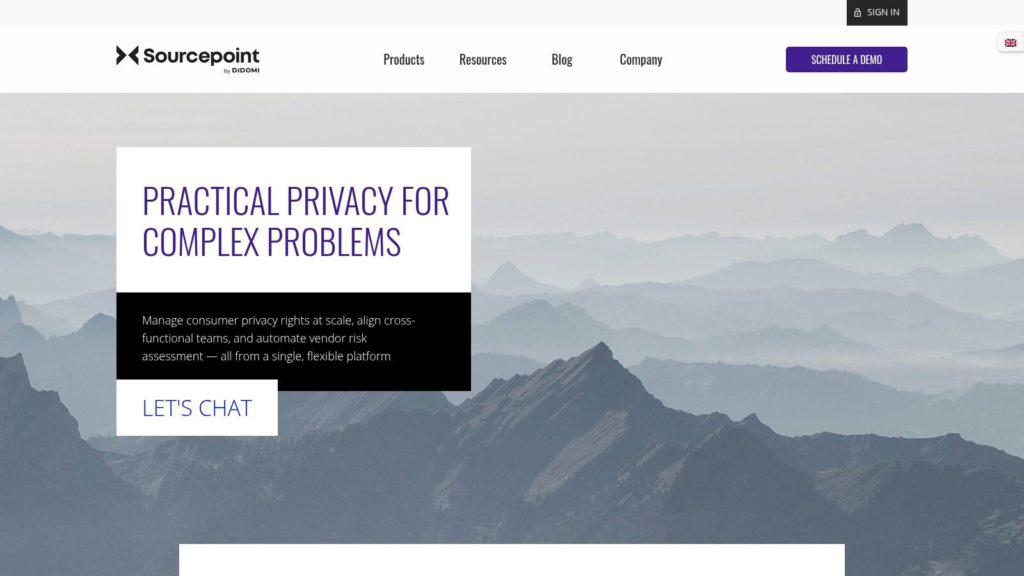
The platform stands out with its publisher-grade compliance monitoring tools, which actively scan properties for unauthorized vendors, pixels, and fingerprinting techniques. For example, a digital news outlet could use Sourcepoint to automatically detect and flag a new, unauthorized data vendor being called by a third-party ad script, preventing potential data leakage and compliance violations. For businesses in the CTV space, its coverage for Roku, Apple TV, and Fire TV provides a unified solution. While its product strategy is evolving post-acquisition, its deep expertise in the publisher ecosystem provides significant value.
Key Features:
- Compliance Monitoring: Actively scans for and detects unauthorized trackers, pixels, and data leakage risks.
- OTT/CTV Coverage: Extends consent management to major connected television platforms for consistent compliance.
- Publisher-Focused Frameworks: Deep support for IAB TCF 2.2, Google Consent Mode v2, and Global Privacy Platform (GPP).
Website: https://sourcepoint.com/
9. InMobi CMP (formerly Quantcast Choice)
InMobi CMP, the platform formerly known as Quantcast Choice, carves out a specific niche as a free, publisher-focused consent management solution. It’s designed for ad-monetized websites and mobile apps that require compliance with industry standards like the IAB TCF 2.2 and Google’s CMP requirements without a budget for subscription fees. Its primary strength is providing a no-cost, standards-aligned banner, making it one of the best consent management platforms for publishers prioritizing ad revenue operations.
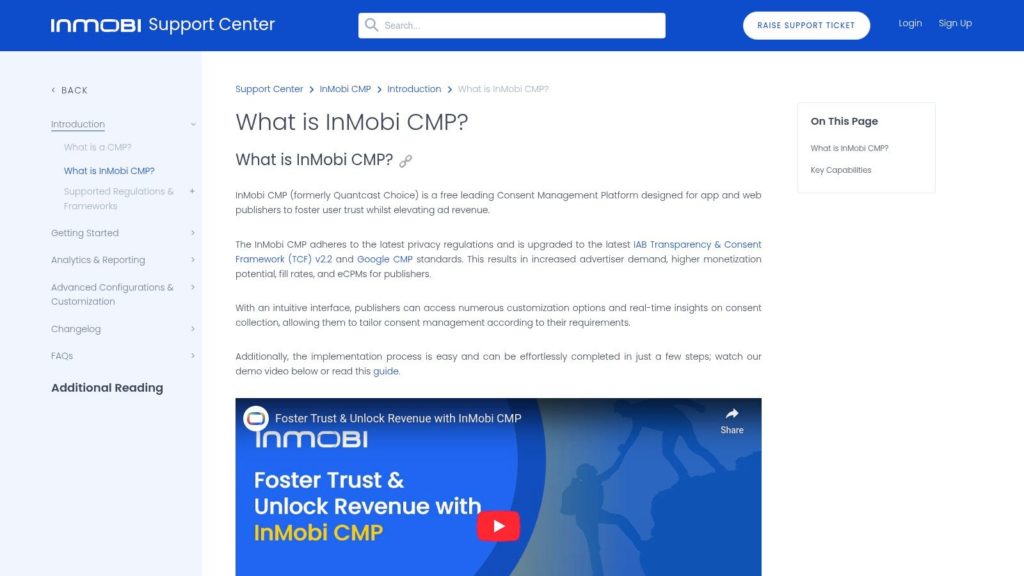
The platform is purpose-built for the programmatic advertising ecosystem, ensuring consent signals are correctly passed to vendors. A practical example is a blogger who relies on Google AdSense; they can implement InMobi CMP to meet Google’s TCF v2.2 requirement for serving ads in the EU, thereby preventing a loss of ad revenue. While it offers UI customization and real-time insights, its feature set is less comprehensive than enterprise-grade tools. The transition from Quantcast to InMobi has also meant some administrative adjustments for long-time users navigating new documentation.
Key Features:
- Standards-Compliant: Fully supports IAB TCF v2.2, IAB Canada TCF, and US Multi-State Privacy / GPP frameworks.
- Google Certified: Officially certified by Google, meeting its requirements for publishers and developers serving ads in the EEA and UK.
- Publisher-Centric: Designed for both web and mobile app publishers with a focus on ad-tech vendor management.
Website: https://support.inmobi.com/choice/choice-overview/what-is-inmobi-cmp
10. Termly
Termly is an all-in-one compliance solution tailored for small and medium-sized businesses, especially those in the U.S. seeking an affordable and straightforward tool. It stands out by bundling cookie consent management with essential policy generators (Privacy Policy, Terms of Service) and Data Subject Access Request (DSAR) form capabilities, making it a practical choice for businesses that need to cover multiple compliance bases without a significant investment. Its simple per-site billing model and transparent US-dollar pricing remove complexity.
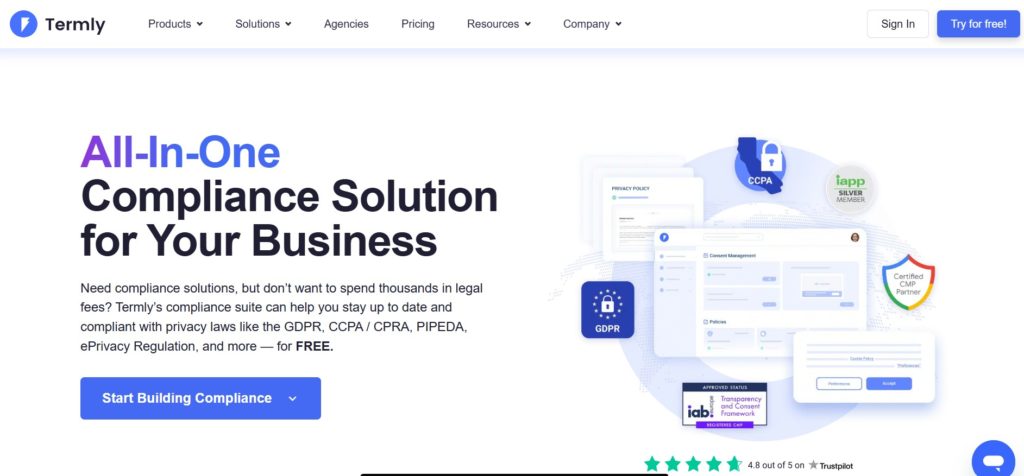
The platform provides scheduled scans, automatic script blocking, and regional banner rules, ensuring foundational compliance is met. A small business owner, for example, can use Termly to generate a legally-compliant privacy policy and simultaneously deploy a cookie banner that automatically blocks marketing cookies until a visitor consents. For more advanced needs, its higher-tier plans support Google Consent Mode v2. However, its strictly per-website licensing can become costly for agencies or businesses managing multiple domains, positioning it firmly as one of the best consent management platforms for the SMB market.
Key Features:
- All-in-One Compliance: Combines a cookie consent banner with generators for privacy policies, terms and conditions, and disclaimers.
- Google Consent Mode v2: Supports Google’s latest consent requirements on its Pro+ plan, essential for maintaining analytics and ad performance.
- Simple Implementation: Offers an easy-to-use WordPress plugin and straightforward setup for most common website builders.
Website: https://termly.io/pricing/
11. iubenda
iubenda offers a unique, all-in-one compliance solution ideal for SMBs and agencies that need more than just a cookie banner. It bundles consent management with legally-vetted, auto-updating privacy and cookie policy generation, simplifying the path to compliance. This integrated approach makes it one of the best consent management platforms for organizations looking to solve multiple legal requirements through a single, streamlined service without needing dedicated legal counsel.
The platform is highly accessible, featuring transparent pricing based on pageviews and clear documentation that simplifies implementation. For instance, a freelance web developer can use iubenda to generate custom, auto-updating privacy policies for multiple clients and manage their cookie consent banners from a single dashboard. While the core offering is robust, covering GDPR and major US state laws, users should note that several advanced features like Internal Privacy Management and advanced consent tracking are available as paid add-ons. This modularity allows businesses to scale their compliance toolkit as needed.
Key Features:
- Integrated Policy Generation: Creates and hosts attorney-level privacy and cookie policies that update automatically.
- Comprehensive Consent Solution: Manages cookie consent, records proof of consent, and handles terms and conditions acceptance.
- Multi-Regulation Support: Provides customizable banners and policies to comply with GDPR, CCPA/CPRA, and other global regulations.
Website: https://www.iubenda.com/p/en/pricing/
12. G2 (Consent Management Platforms category)
While not a CMP itself, G2‘s dedicated Consent Management Platform category is an indispensable resource for research and vendor comparison. It functions as a live marketplace, aggregating dozens of solutions, user reviews, and feature data into one place. This makes it an essential first stop for any organization looking to shortlist potential CMPs, as it allows for filtering by company size, key features, and user satisfaction ratings, providing a powerful snapshot of the market landscape.
The platform’s strength is its crowd-sourced grid rankings and in-depth reviews, which offer an unfiltered look into real user experiences. This peer-to-peer insight is invaluable for cross-checking marketing claims and understanding potential implementation hurdles before committing to a demo. A practical application is for a marketing manager to use G2 to create a shortlist of three top-rated CMPs for mid-market companies, then read recent reviews to identify common complaints or praised features before scheduling demos. However, users should be mindful that sponsored placements can influence visibility.
Key Features:
- Live Category Filters: Narrow down options based on business size, features, user satisfaction, and other specific requirements.
- User Reviews and Ratings: Access detailed feedback from verified users, covering pros, cons, and specific use cases.
- Grid Marketplace Rankings: Visualize market leaders and compare vendors side-by-side based on satisfaction and market presence.
Website: https://www.g2.com/categories/consent-management-platform-cmp
Top 12 Consent Management Platforms Comparison
| Tool | Core features | Key differentiator | Best for | Pricing & setup |
|---|---|---|---|---|
| Salespanel | Server-side tracking, consent mgmt, AI prospecting, identity resolution, lead scoring, customizable analytics | Privacy-first server-side + AI-driven prospecting for identity-resolved visitor intelligence | B2B marketing & sales teams needing high-fidelity leads and privacy compliance | Quote-based; demo required. Server-side setup may need technical resources |
| OneTrust | Automated discovery, geo-aware banners, centralized receipts, cross-channel support | Enterprise-grade governance and broad jurisdiction coverage | Large global enterprises with GRC needs | Quote-based; heavier implementation |
| TrustArc | 100+ jurisdiction support, WCAG accessibility, Google Consent Mode v2, IAB/GPP support | Google-certified CMP path with SLAs and strong accessibility posture | Ad-reliant US businesses needing Google enablement & compliance | Quote-based; enterprise-focused |
| Usercentrics | Tiered plans, consent analytics, IAB & Google support, cross-domain sharing | Published pricing and self-serve trial for quick onboarding | SMBs to enterprises wanting transparent pricing and fast trials | Published pricing; 14-day trial. Session caps on lower tiers |
| Cookiebot (by Usercentrics) | Automated scans, cookie categorization, CMS plugins, free tier | Fast CMS integrations and simple self-serve deployment | Small to mid-sized CMS sites needing quick compliance | Free & paid tiers by page/subpage count |
| Osano | Tracker discovery/blocking, AI cookie classification, consent logs | US-centric guidance and a “No Fines” financial assurance | US organizations seeking simple deployment and assurance | Traffic-based pricing; tag-manager style deployment |
| Didomi | Consent analytics, preference centers, identity-aware consent, enterprise integrations | Strengthened publisher/ad capabilities after Sourcepoint tie-up | Publishers and enterprise brands with ad targeting needs | Quote-based; best for mid-market to enterprise |
| Sourcepoint | IAB/Google support, compliance monitoring, OTT/CTV coverage | Publisher-grade consent & cross-device/CTV focus with visible tiers | Ad-monetized publishers and cross-device properties | Visible packages; higher starting prices |
| InMobi CMP (formerly Quantcast Choice) | IAB & Google-certified CMP, real-time consent insights, web/app UI | Zero-cost, standards-aligned option for publishers | Publishers and apps needing a free, compliant CMP | Free; admin transition from Quantcast to InMobi |
| Termly | Cookie banners, policy generators, regular scans, WordPress plugin | Budget-friendly per-site CMP with clear US pricing | US SMBs wanting low-cost, per-site compliance | Transparent US pricing; per-site licensing |
| iubenda | Consent mgmt + automatic legal policy generation, SDKs, consent logs | Bundles consent management with legally updated policy templates | SMBs wanting combined consent and legal docs | Clear pageview-based pricing; add-ons for advanced modules |
| G2 (CMP category) | Vendor filters, user reviews, grid rankings, pricing snippets | User reviews and market rankings to quickly shortlist vendors | Buyers researching and comparing CMP vendors | Free to use; vendor details may include sponsored content |
From Compliance Checkbox to Strategic Asset: Your Takeaway
Navigating the landscape of the best consent management platforms can feel like wading through a sea of legal jargon and technical specifications. As we’ve detailed with platforms from enterprise giants like OneTrust to more focused solutions like Cookiebot, the market offers a tool for nearly every scale. However, the central theme running through our analysis is a fundamental shift in perspective: effective consent management is no longer a reactive compliance measure. It has evolved into a proactive strategy for building customer trust and creating a resilient data-first marketing engine.
The most crucial takeaway is to move beyond seeing a CMP as a simple, front-end script that blocks or allows cookies. While that is its most visible function, its true potential is unlocked when integrated deeply into your marketing technology stack. A purely client-side approach, where consent signals live and die in the user’s browser, is increasingly fragile. It’s susceptible to browser-level tracking restrictions and ad-blockers, leading to significant data loss even for consented users. This is a technical reality that demands a more robust architecture.
Actionable Steps for Choosing Your Platform
To translate this understanding into action, your selection process should be guided by your unique operational needs. Consider the following framework as your next step:
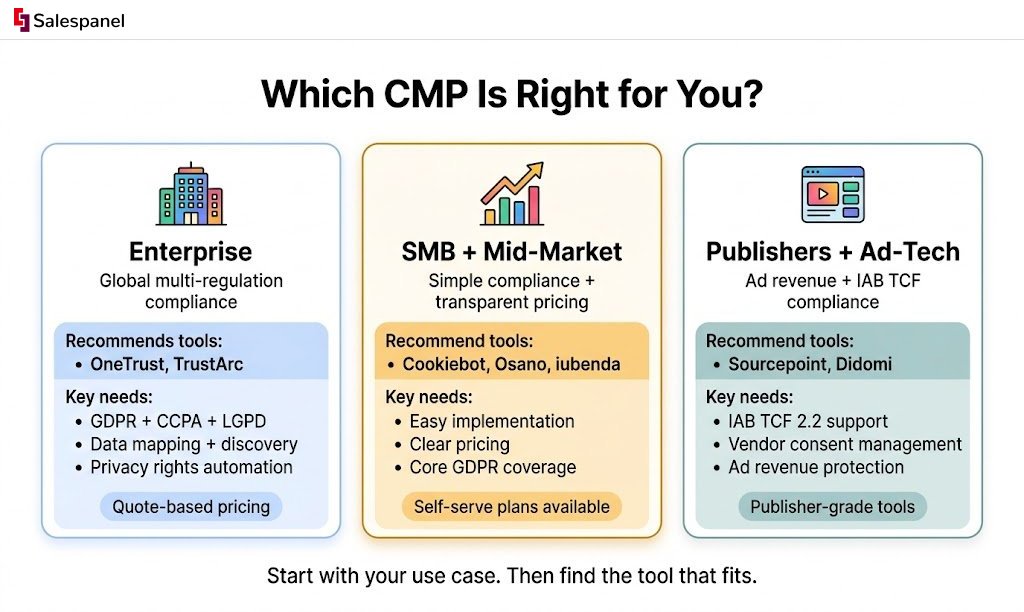
- For Enterprise-Level, Multi-Regulation Compliance: If your organization operates globally and faces a complex web of regulations like GDPR, CCPA, and LGPD, platforms such as OneTrust or TrustArc are built for this scale. Their extensive feature sets for data mapping, discovery, and privacy rights automation justify the investment.
- For SMBs and Mid-Market Focus: If your priority is straightforward compliance, ease of use, and transparent pricing, tools like Cookiebot, Osano, or iubenda offer a strong balance. They provide the core functionalities needed without the overhead of enterprise-level systems.
- For Publishers and Ad-Tech: For those who rely on advertising revenue and need deep integration with frameworks like IAB TCF, Sourcepoint or Didomi are engineered for the publisher ecosystem. They provide the granular controls needed to manage vendor consent and maximize monetization.
The Future is an Integrated, Server-Side Approach
Ultimately, choosing one of the best consent management platforms is the first step. The second, more critical step is integrating it into a modern data architecture. The future of data collection hinges on honoring user consent choices with precision while ensuring data integrity. This is where a hybrid approach becomes essential.
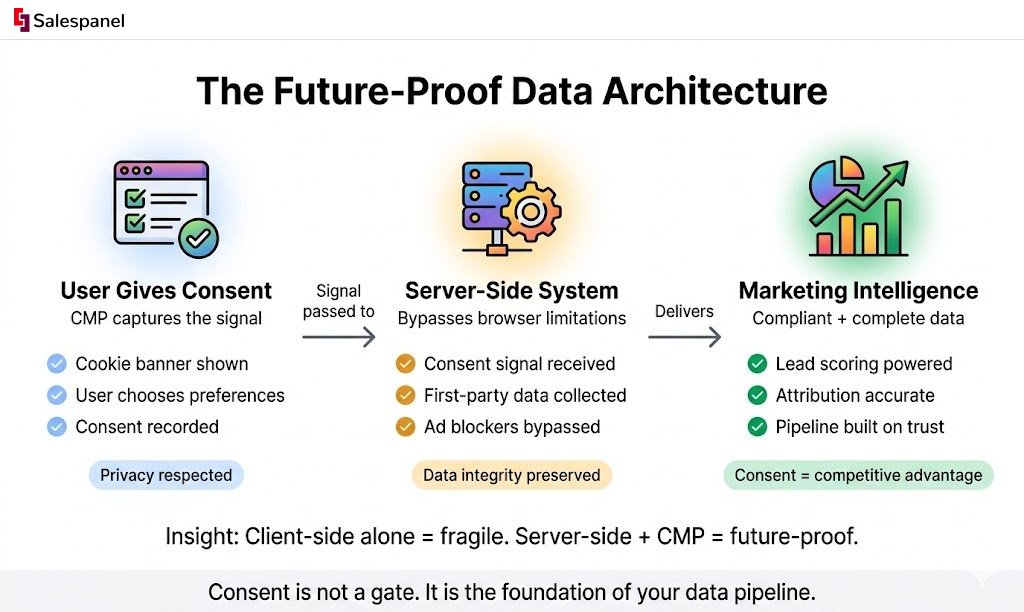
Pairing your chosen CMP with a server-side tracking solution is the key to this future-proof strategy. For instance, consent signals captured by your CMP can be passed to a server-side system. This allows you to collect consented, first-party data directly, bypassing the client-side vulnerabilities that erode your analytics. This integrated model, which is central to Salespanel’s philosophy, transforms consent from a simple ‘yes/no’ gate into a dynamic signal that governs a more sophisticated and reliable data pipeline. It ensures you build marketing intelligence on a foundation of trust and respect for user privacy.
The path forward is clear: align your consent management with your customer journey mapping and behavioral data collection. This creates a seamless, compliant experience where lead scoring and prospect identification happen with full transparency and user trust. Ready to build a resilient data strategy that respects user consent without sacrificing insight? Discover how Salespanel integrates with your consent framework to capture high-fidelity, first-party data through server-side tracking. Explore our resources to learn how you can turn compliance into a competitive advantage.