
The line between digital and physical commerce has irrevocably blurred. In the past, a multichannel approach—having a presence on various platforms—was sufficient. Today, it’s a relic. The future, driven by customer expectations for seamlessness, belongs to omnichannel strategies. The numbers validate this shift: businesses with robust omnichannel customer engagement strategies retain on average 89% of their customers, compared to 33% for companies with weak omnichannel engagement. This transition demands a fundamental change in how we view customer interactions.
This article moves beyond theory, dissecting real-world omnichannel marketing examples that demonstrate this shift in action. We will analyze the technical frameworks, data integration, and strategic execution that define success. By examining these cases, you will gain a blueprint for unifying your customer journey, complete with screenshots and direct links to the platforms discussed.
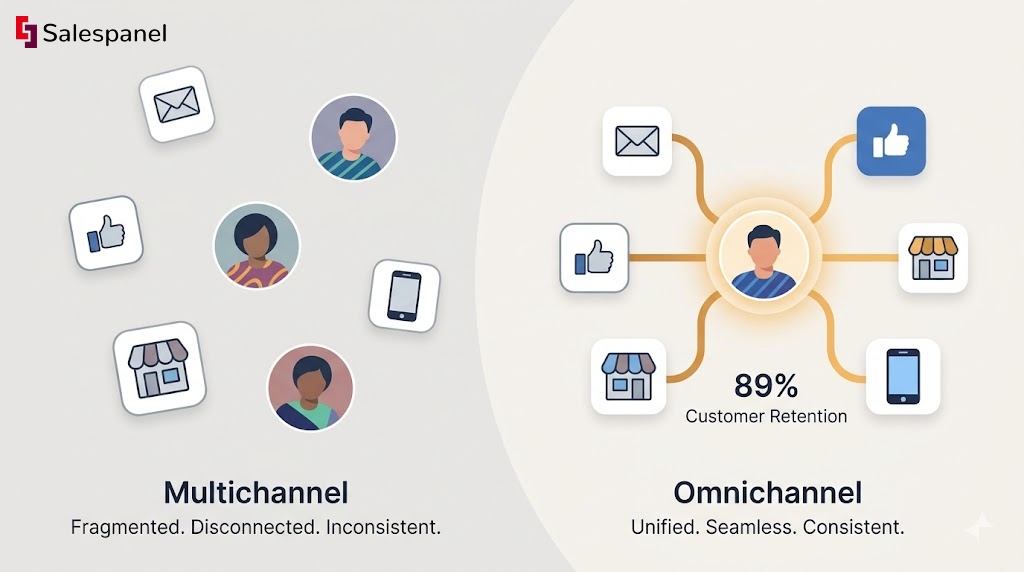
The central theme is this: true omnichannel excellence is not just about being everywhere. It’s about being consistently and intelligently present at every touchpoint. This involves transforming fragmented interactions into a single, cohesive conversation. The goal is to provide you with actionable insights to replicate these successful strategies, turning isolated touchpoints into a unified and powerful customer experience.
1. Shopify: Mastering the Online-to-Offline Transition
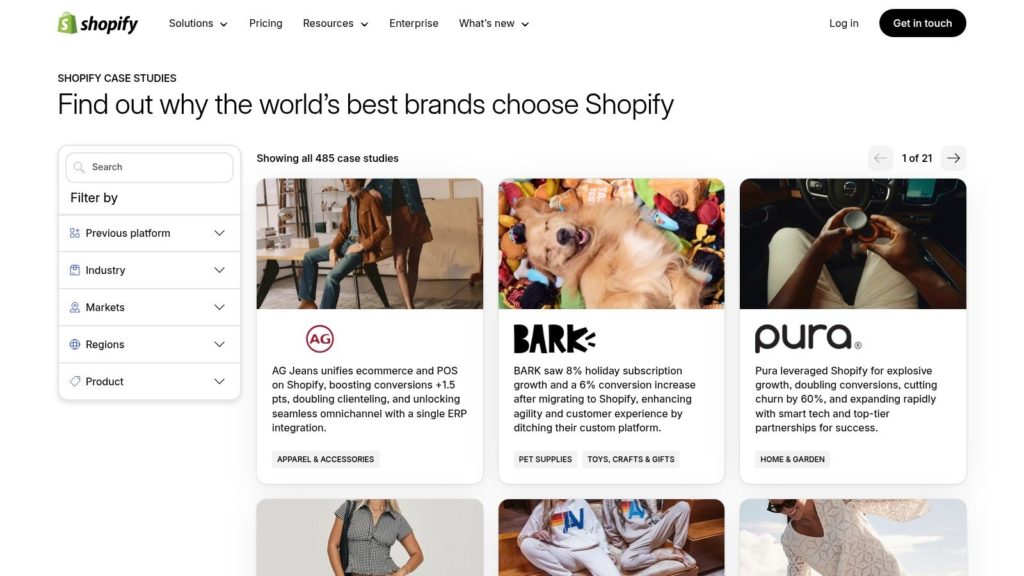
For marketers and operations professionals seeking a blueprint for omnichannel success, Shopify’s collection of case studies and playbooks is an essential resource. It moves beyond high-level theory, offering a tactical look into the technical and operational backbone required to create a seamless customer journey between online and offline worlds. This makes it one of the most practical repositories of omnichannel marketing examples available.
The platform excels at demonstrating how to unify inventory, customer data, and marketing efforts. It provides a free and regularly updated library of real-world scenarios from diverse retail sectors, including apparel, beauty, and sporting goods. The content is invaluable for understanding the critical infrastructure needed for a modern retail experience.
Strategic Analysis & Tactical Insights
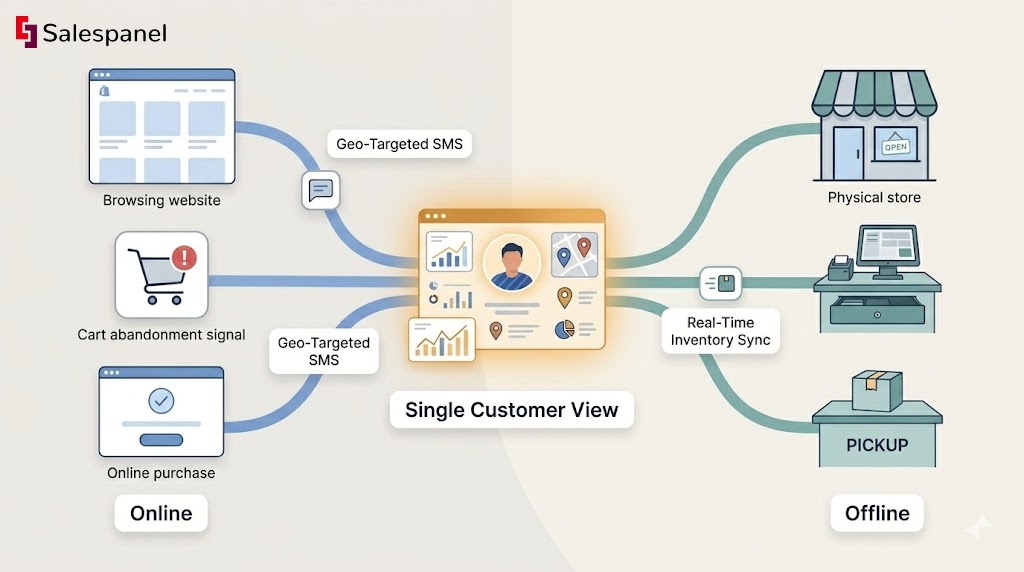
Shopify’s case studies meticulously dissect the integration of ecommerce platforms with physical Point of Sale (POS) systems. This is the core of successful online-to-offline strategies, enabling popular features like ‘buy online, pick up in-store’ (BOPIS) and ‘buy in-store, ship to home’.
- Unified Customer Profiles: The examples show how tracking a single customer profile across digital and physical touchpoints allows for hyper-relevant personalization. A practical application is tracking an online cart abandonment. With a unified profile, this is not just a lost digital sale but an opportunity to engage a potential in-store visitor.
- Data-Driven Retargeting: A customer browsing a product online can be retargeted with precision. Technically, if that customer’s profile is unified, a brand can trigger an SMS with an in-store-only discount when their device is geolocated near a physical branch. This directly bridges the digital-to-physical gap and requires sophisticated visitor tracking and data integration to execute effectively.
Actionable Takeaway
The primary lesson from Shopify’s examples is the necessity of a single source of truth for both inventory and customer data. To replicate these strategies, begin by mapping your current data systems. Identify the synchronization gaps between your website, POS system, and marketing automation tools.
Prioritizing a single view of the customer is paramount. This unified profile ensures marketing messages are always contextually relevant, whether delivered via email, social media ad, or an in-store associate’s tablet. The ultimate goal is to make the channel entirely invisible to the customer, creating one fluid, continuous brand experience.
Website: https://www.shopify.com/case-studies
Pricing: Access to case studies and articles is free.
Pros: Detailed, data-backed examples; covers practical operational details; regularly updated.
Cons: Content is heavily skewed towards brands using the Shopify ecosystem.
2. Think with Google: Bridging Digital Ads and In-Store Sales
For data-driven marketers, Think with Google is an unparalleled resource for understanding the direct line between digital advertising and physical-world outcomes. The platform offers a vast, credible library of research and case studies focused on measuring how online campaigns drive offline sales and foot traffic. It stands out by providing a quantitative, research-backed look at some of the most complex omnichannel marketing examples available today.
Think with Google moves beyond campaign narratives to deliver deep dives into measurement methodologies. It provides free access to global case studies detailing how brands use tools like Performance Max and Local Inventory Ads to connect with nearby shoppers and attribute in-store purchases to specific digital touchpoints. This makes it an essential bookmark for anyone needing to justify digital marketing spend with tangible, offline KPIs.
Strategic Analysis & Tactical Insights
The core strength of Think with Google’s content lies in its focus on attribution and measurement. The examples dissect how to prove the value of online ads, not just for ecommerce, but for driving customers into brick-and-mortar locations. This is crucial for brands where the majority of transactions still happen offline.
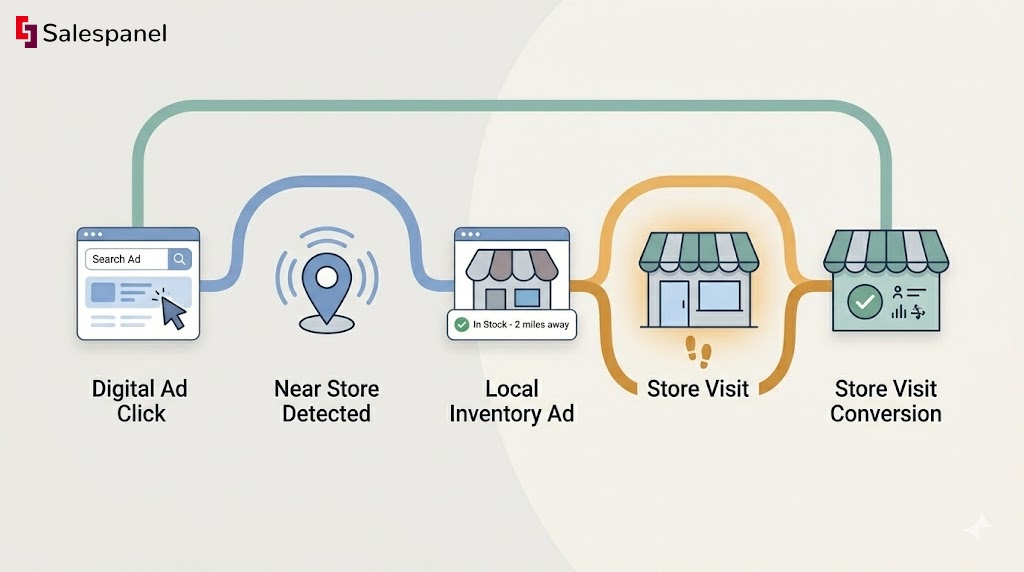
- Store Visit Conversions: The case studies often detail the technical use of store visit conversion tracking, which uses aggregated, anonymized data from users who have opted into Location History. This allows Google to estimate how many people who clicked an ad later visited a physical store, providing a direct metric for evaluating geo-targeted campaigns.
- Local Inventory Integration: Examples showcase how syncing real-time local store inventory with online ads allows brands to show shoppers that a product is available nearby. A practical execution of this is a user searching “running shoes near me” and seeing an ad that specifies “In Stock” at a store two miles away. This tactic addresses consumer immediacy and is proven to increase foot traffic.
Actionable Takeaway
The key insight from Think with Google is the critical importance of establishing a clear measurement framework for online-to-offline activities. To replicate these strategies, start by exploring the store visit conversion capabilities within your ad platforms. Define what a “local” customer is and build campaigns specifically targeting that geographic segment.
Focus on closing the data loop between your digital presence and physical stores. This means ensuring your product inventory is accurate and, if possible, accessible to your digital advertising tools. The goal is to make your physical store an integral, measurable extension of your online marketing funnel, proving that every digital dollar has a real-world impact.
Website: https://www.thinkwithgoogle.com/collections/case-study/
Pricing: All research and case studies are free to access.
Pros: Credible, data-rich content; strong focus on analytics and measurement; bridges the digital-to-physical sales gap.
Cons: Many examples are from EMEA/APAC regions, requiring some effort to translate insights to a US context.
3. Klaviyo: Orchestrating Data-Driven Customer Journeys
Klaviyo’s blog and example library are a vital resource for marketers focused on executing sophisticated omnichannel campaigns that merge digital and physical experiences. The platform offers a contemporary look at how high-growth brands combine email, SMS, mobile app push notifications, and POS data to create cohesive customer conversations. This makes it an essential bookmark for finding current omnichannel marketing examples.
The content stands out by providing detailed breakdowns of campaign orchestration, often with specific metrics and tech notes. Klaviyo showcases how brands with a strong DTC and retail presence use unified data to drive repeat purchases and build loyalty. The examples are invaluable for understanding how to translate a single customer view into automated, multi-channel communication flows.
Strategic Analysis & Tactical Insights
Klaviyo’s examples excel at demonstrating the power of event-triggered marketing across multiple channels. The focus is less on the channel itself and more on the customer’s behavior, using data from various touchpoints to initiate a relevant, timely sequence of messages.
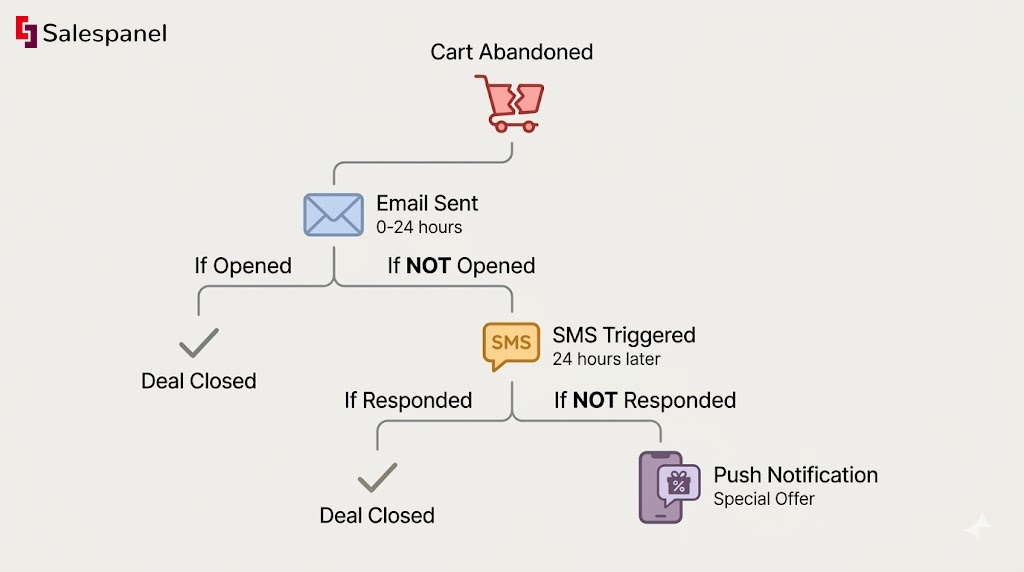
- Cross-Channel Flow Automation: The case studies detail how brands build automated flows that switch between channels based on customer engagement. For example, an abandoned cart can first trigger an email. If unopened after 24 hours, the system can automatically send an SMS message. If the user has the brand’s app, a push notification with a special offer might follow. This requires a platform that can track engagement across these channels in real time.
- POS and Ecommerce Integration: The library shows how in-store purchases can trigger digital follow-ups. A practical example is a first-time in-store buyer providing their email for a digital receipt. This action can trigger a “welcome” email sequence that prompts them to create an online account, immediately connecting their physical transaction to a digital profile for future marketing.
Actionable Takeaway
The key lesson from Klaviyo is that modern omnichannel marketing relies on a robust data infrastructure capable of triggering automated communication based on real-time customer actions. To implement this, start by mapping key customer behaviors (e.g., first purchase, cart abandonment, product view) and define an ideal communication sequence for each.
Your goal should be to create a single, unified customer profile that consolidates data from your ecommerce site, POS system, and mobile app. This allows you to build sophisticated automation flows that deliver the right message on the right channel at the right time, making the customer experience feel personalized and seamless, regardless of how they interact with your brand.
Website: https://www.klaviyo.com/blog/omnichannel-marketing-examples
Pricing: Access to the blog and examples is free.
Pros: Recent and relevant case examples; free, actionable articles; strong focus on integrating email, SMS, and app data.
Cons: Content is heavily skewed towards brands using Klaviyo integrations; less detail on examples outside its ecosystem.
4. Coursera: Building Foundational Omnichannel Expertise
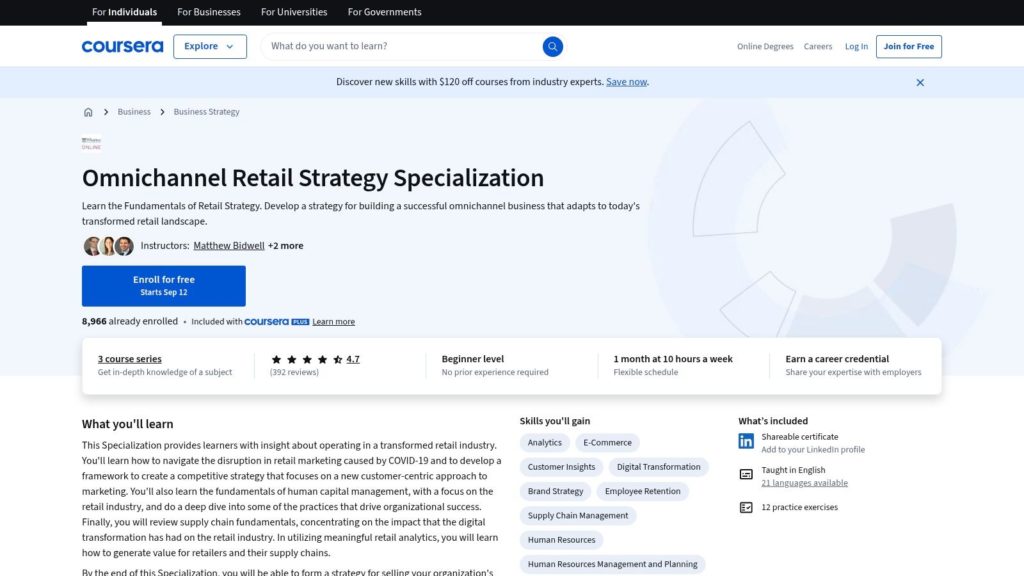
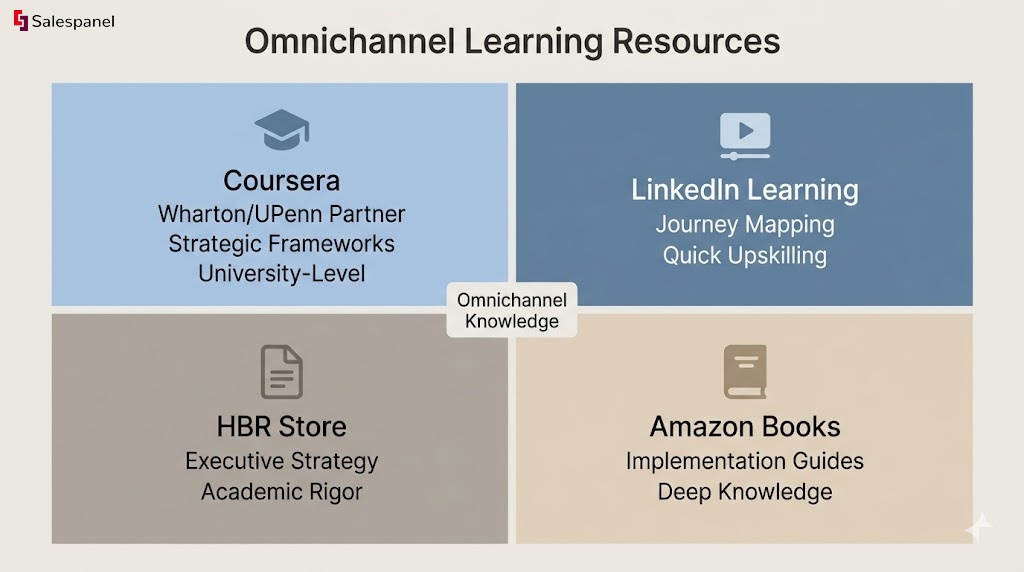
For teams aiming to build a deep, strategic understanding of omnichannel principles from the ground up, Coursera’s Omnichannel Retail Strategy specialization from the University of Pennsylvania is an invaluable academic resource. It shifts the focus from singular campaign breakdowns to the core frameworks and customer behavior models that underpin successful channel integration. This makes it an essential learning platform for those looking to master the theory behind the best omnichannel marketing examples.
The specialization, led by Wharton School faculty, provides a structured curriculum covering customer journey mapping, channel design, and performance measurement. It uses university-level case studies to explore how retailers can effectively measure and influence both online and offline shopper behaviors. This program is ideal for upskilling marketing teams who need a common language and strategic foundation before executing complex omnichannel initiatives.
Strategic Analysis & Tactical Insights
The curriculum excels at teaching the strategic thinking required to design and manage integrated retail channels. It moves beyond just marketing tactics to address the operational and analytical components that are critical for a seamless customer experience, such as inventory management and cross-channel data attribution.
- Customer-Centric Frameworks: The course provides frameworks for analyzing how different customer segments interact with various channels. A practical exercise is to map the journey of a “buy online, return in-store” customer to identify technical and operational friction points, such as mismatched return policies or delayed inventory updates between systems.
- Performance Measurement: A key focus is on defining and tracking the right metrics. Learners explore how to measure the “research online, purchase offline” (ROPO) effect. This involves technical solutions like using unique, single-use coupon codes distributed online that can only be redeemed in-store, creating a direct attribution link between a digital campaign and a physical sale.
Actionable Takeaway
The primary lesson from Coursera’s specialization is that a successful omnichannel strategy is built on a deep understanding of customer behavior, not just technology. To apply these learnings, start by formally mapping your primary customer journeys. Use the frameworks provided to identify every touchpoint, both online and offline, and analyze the data flow between them.
Invest in foundational training for your marketing and operations teams to ensure everyone shares a common strategic vocabulary. This unified understanding is critical before investing in new technologies, as it ensures that tool selection is driven by a clear, customer-centric strategy rather than by features alone. The goal is to build a cohesive team that can design and execute a truly channel-agnostic customer experience.
Website: https://www.coursera.org/specializations/wharton-retail-strategy
Pricing: Requires a Coursera Plus subscription or individual course purchase; auditing options are often available for free.
Pros: High-quality, university-level instruction; provides strong theoretical and strategic frameworks; includes practical retail case studies.
Cons: Less focus on hands-on software practice; full access requires a paid subscription.
5. LinkedIn Learning: Building Your Omnichannel Knowledge Base
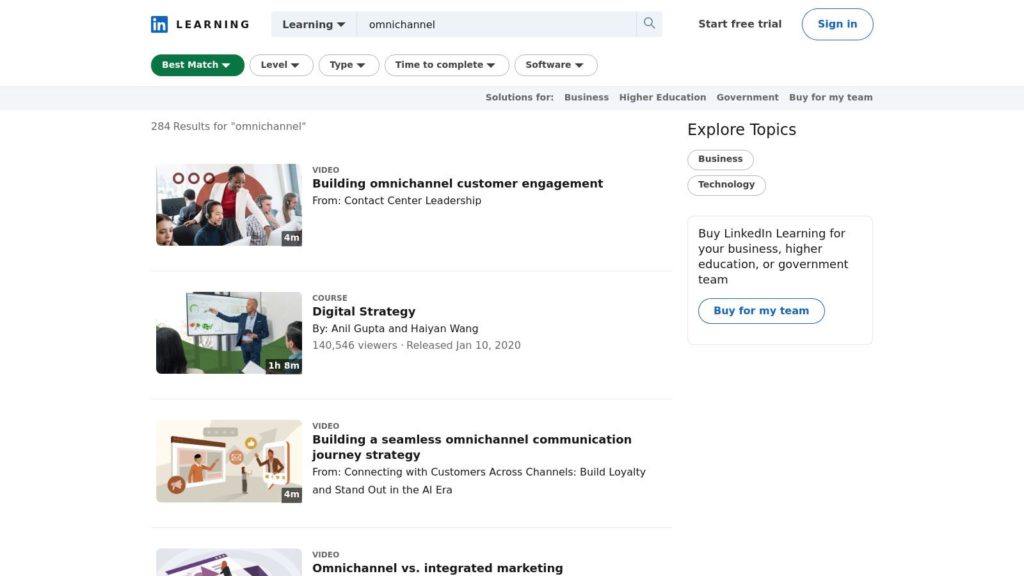
For marketing professionals aiming to upskill their teams or themselves, LinkedIn Learning provides a structured educational pathway into omnichannel strategy. It shifts the focus from analyzing external case studies to internal capability building. The platform offers a curriculum designed to teach the foundational principles and tactical execution of creating seamless customer journeys, making it a valuable resource for developing in-house expertise on omnichannel marketing examples and frameworks.
The course library excels at breaking down complex topics like customer journey mapping, cross-channel attribution, and integrating retail technologies. It provides a curated learning experience with courses from industry experts, offering a blend of theoretical knowledge and practical advice. This makes it an efficient tool for rapidly getting a marketing team aligned on modern customer experience standards.
Strategic Analysis & Tactical Insights
LinkedIn Learning’s courses provide a blueprint for developing a customer-centric mindset, which is the cornerstone of any successful omnichannel initiative. The content focuses on deconstructing the customer lifecycle and identifying key touchpoints where channel integration can have the most significant impact on engagement and loyalty.
- Customer Journey Mapping: The platform offers explicit training on how to map customer journeys across multiple channels. This involves identifying potential friction points, such as a disjointed experience between a mobile app notification and an in-store visit, and designing solutions to create a fluid path to purchase.
- Integrating Loyalty Programs: Courses often detail the technical aspects of integrating loyalty programs across digital and physical environments. For example, a customer should be able to earn points from an online purchase and have them be redeemable instantly at a physical checkout counter. This requires a centralized data system with APIs that connect the ecommerce platform, the POS system, and the loyalty software in real-time.
Actionable Takeaway
The primary lesson from LinkedIn Learning is that successful omnichannel execution starts with education and strategic alignment. Before investing in technology, a team must share a common understanding of what an ideal customer journey looks like and the operational shifts required to achieve it.
Begin by using the platform’s courses to establish a baseline of knowledge across your marketing, sales, and customer service teams. Focus on modules covering customer experience (CX) design and journey mapping. The goal is to build a cross-functional team that speaks the same language and understands that every channel is just one part of a single, continuous conversation with the customer.
Website: https://www.linkedin.com/learning/search?keywords=omnichannel
Pricing: Subscription-based; 1-month free trial for new users. Often accessible for free through many U.S. libraries.
Pros: Quick, digestible lessons for teams; extensive course catalog; certificates enhance professional profiles.
Cons: Some content can become dated; requires a subscription after the trial period.
6. Harvard Business Review Store: The Executive’s Guide to Strategy
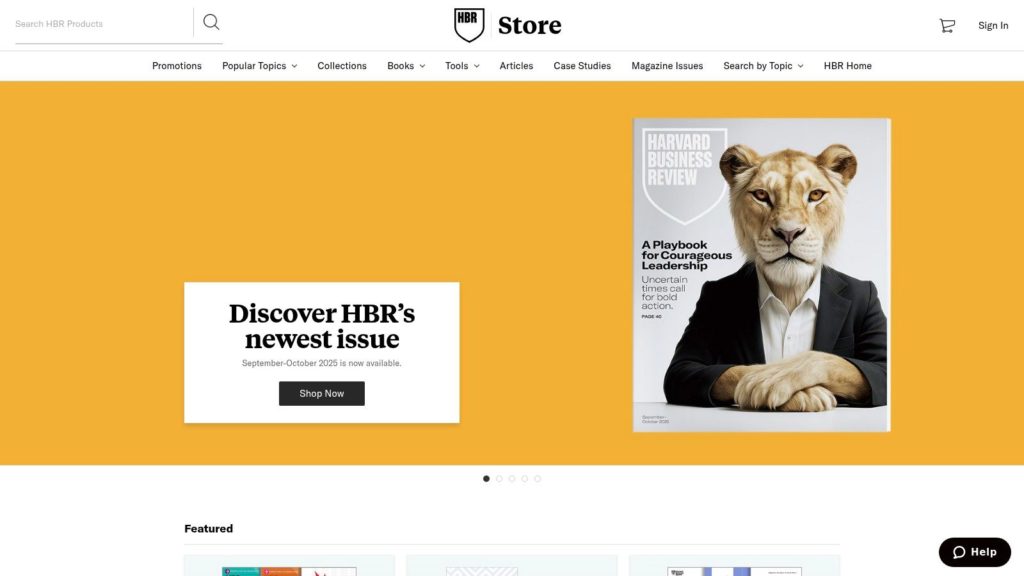
For senior marketers and strategists needing academically sound, deeply researched material, the Harvard Business Review (HBR) Store is an unparalleled resource. It shifts the focus from purely tactical execution to the high-level strategic thinking that underpins successful omnichannel initiatives. The platform offers a library of business cases, articles, and thematic issues that dissect the “why” behind the “how,” making it a premier destination for citable omnichannel marketing examples.
HBR provides rigorously vetted case studies on companies that have navigated complex omnichannel transformations. These are not blog posts; they are detailed analyses complete with data exhibits, contextual background, and often teaching notes, designed for executive education and internal training. This academic rigor ensures the insights are reliable, defensible, and perfect for building a business case for strategic change.
Strategic Analysis & Tactical Insights
The HBR Store excels at connecting omnichannel execution to core business objectives like profitability, customer loyalty, and market positioning. The cases often reveal the organizational and financial challenges that are glossed over in more marketing-focused content.
- Organizational Alignment: HBR cases frequently explore the internal challenges of omnichannel adoption. They detail how companies like Best Buy or Nordstrom had to restructure teams, retrain staff, and realign incentives to break down silos between digital and physical retail operations. A practical example is changing sales compensation so that in-store staff receive credit for online orders shipped from their location, encouraging collaboration rather than channel competition.
- Financial Modeling: The materials provide a framework for understanding the ROI of omnichannel investments. They go beyond simple conversion metrics, examining impacts on customer lifetime value (CLV), inventory carrying costs, and operational efficiency. A tactical insight is calculating the reduced shipping costs from fulfilling online orders from the nearest retail store versus a central warehouse.
Actionable Takeaway
The key lesson from HBR’s repository is that true omnichannel success is a business-wide transformation, not just a marketing project. To apply these insights, leaders must move beyond channel-specific KPIs and develop a unified measurement framework that reflects the customer’s entire journey.
Start by auditing your organizational structure. Are your ecommerce and in-store teams incentivized to collaborate or compete? HBR’s examples consistently show that without shared goals and integrated P&Ls, channel conflict will sabotage even the best technology. The focus must be on creating a seamless customer experience, which requires a seamless internal organization to support it.
Website: https://store.hbr.org/
Pricing: Pay-per-item, with cases typically around $11.95 each.
Pros: High editorial standards and academic rigor; downloadable PDFs licensed for internal team use; excellent for executive education and formal training.
Cons: Content is paywalled for each item; the tone can be heavy and academic.
7. Amazon: Building a Foundational Knowledge Base
For teams looking to build a deep, foundational understanding of omnichannel strategy, Amazon offers a vast library of books dedicated to the topic. It serves as an essential resource for accessing long-form case studies, implementation playbooks, and strategic guides from seasoned practitioners and academics. This collection provides some of the most comprehensive and detailed omnichannel marketing examples available, moving beyond blog posts into structured, in-depth analysis.
The platform provides an unparalleled selection of both print and digital books that cover everything from high-level strategy to the granular details of martech stack integration. User reviews and ratings offer a valuable peer-review system, helping marketers sift through theoretical content to find actionable guides with practical relevance. It’s an ideal starting point for building a shareable, internal knowledge base.
Strategic Analysis & Tactical Insights
The books available on Amazon deconstruct complex omnichannel campaigns into digestible frameworks. They often detail the strategic thinking behind major retail transformations, providing a step-by-step look at how brands unified disparate channels into a single, cohesive customer experience.
- Deep Dive Case Studies: Unlike online articles, these books can dedicate entire chapters to a single company’s omnichannel journey. This allows for a thorough exploration of the initial challenges, the technology chosen, the operational hurdles overcome, and the final results, complete with data. A practical example would be a chapter detailing how a specific retailer re-architected its supply chain to support ship-from-store capabilities.
- Implementation Roadmaps: Many titles offer structured roadmaps for execution. This includes guidance on stakeholder buy-in, selecting the right technology (like CRM and POS systems), and phasing the rollout to minimize business disruption. For instance, a book might provide a sample project plan for a pilot “buy online, pick up in-store” program at a limited number of locations before a national launch.
Actionable Takeaway
The key lesson from using Amazon as a resource is the value of investing in deep, foundational knowledge. Before jumping into tactics, a well-chosen book can provide the strategic framework needed to guide your entire program and prevent common pitfalls. Start by searching for recently published titles with strong reader reviews from verified professionals.
Use these resources to build a shared vocabulary and understanding within your team. A book club-style discussion around a key text can align marketing, sales, and operations on the core principles of your omnichannel initiative. This ensures everyone is working from the same playbook as you begin mapping customer journeys and integrating your tech stack.
Website: https://www.amazon.com/s?k=omnichannel+marketing
Pricing: Varies by book; many Kindle versions are available for under $20.
Pros: Cost-effective, in-depth references; immediate Kindle access and fast Prime shipping; wide variety of content from introductory to advanced.
Cons: Quality and depth can vary significantly by author; some titles may be more theoretical than practical.
Omnichannel Marketing Examples Comparison
| Resource | Implementation Complexity | Resource Requirements | Expected Outcomes | Ideal Use Cases | Key Advantages |
|---|---|---|---|---|---|
| Shopify | Low – content consumption only | Minimal – free online access | Practical omnichannel tactics with metrics | Retailers seeking real-world integration ideas | Detailed, data-backed, free, regularly updated |
| Think with Google | Low – research and case studies | Minimal – free online access | Attribution of digital to offline sales | Benchmarking & linking media to offline KPIs | Credible, data-rich, global examples |
| Klaviyo | Low to Medium – vendor-focused blog | Minimal – free online access | Multi-channel campaign strategies | Brands exploring DTC and multi-touchpoint | Recent, practical, tool-agnostic content |
| Coursera | Medium – structured course | Moderate – subscription or purchase | Deep understanding of omnichannel strategy | Teams and learners needing formal certification | University-level quality, flexible, practical |
| LinkedIn Learning | Low to Medium – concise courses | Subscription required post-trial | Rapid skill acquisition | Professionals needing quick, broad coverage | Updated catalog, professional certificates |
| Harvard Business Review Store | Medium to High – academic cases | Pay-per-case purchase | In-depth, citable business cases | Executives and trainers requiring rigor | High academic rigor, downloadable for teams |
| Amazon | Low to Medium – self-study books | Purchase required | Comprehensive omnichannel knowledge | Readers wanting shareable long-form references | Variety of levels, Kindle/fast shipping options |
From Theory to Action: Building Your Unified Data Foundation
The diverse omnichannel marketing examples we’ve explored, from Shopify’s retail integration to Amazon’s seamless digital-physical ecosystem, all share a common architectural principle: a relentless commitment to a unified data foundation. This isn’t just a strategic preference; it’s a technical prerequisite. Without a single, coherent view of the customer, the seamless journey that defines omnichannel excellence remains an aspirational theory rather than an operational reality.
The central theme weaving through every successful case study is the dismantling of data silos. Every interaction, whether it’s an abandoned cart, a viewed product page, a support ticket, or an in-store visit, must be captured and consolidated into a singular customer profile. This consolidation is the engine that powers personalization, predictive analytics, and context-aware communication across all touchpoints.
The B2B Omnichannel Imperative
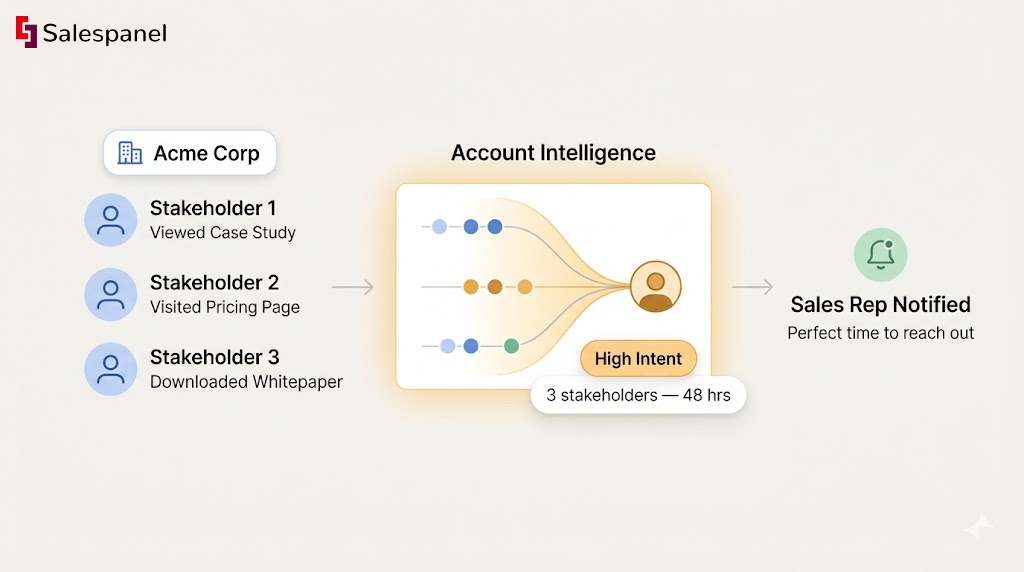
For B2B organizations, this data unification challenge is magnified. The “customer” is not an individual but an entire account, a complex entity with multiple decision-makers and influencers. To execute a true omnichannel strategy, you must move beyond tracking individual leads and start mapping engagement at the account level. Technology that connects anonymous website activity to known leads and their parent companies is no longer a luxury, it’s the bedrock of a modern B2B go-to-market strategy.
The most powerful omnichannel marketing examples in the B2B space are those that empower their sales teams with this unified intelligence. Imagine a sales representative knowing that three different stakeholders from a target account have viewed a specific case study and the pricing page in the last 48 hours. This insight, powered by buying intent tracking, transforms a cold call into a highly relevant, timely conversation.
Actionable Steps to Build Your Omnichannel Engine
Your primary takeaway should be this: omnichannel is not merely a marketing campaign, but a data-centric business philosophy. To transition from theory to action, you must prioritize the technical and operational infrastructure that makes it possible.
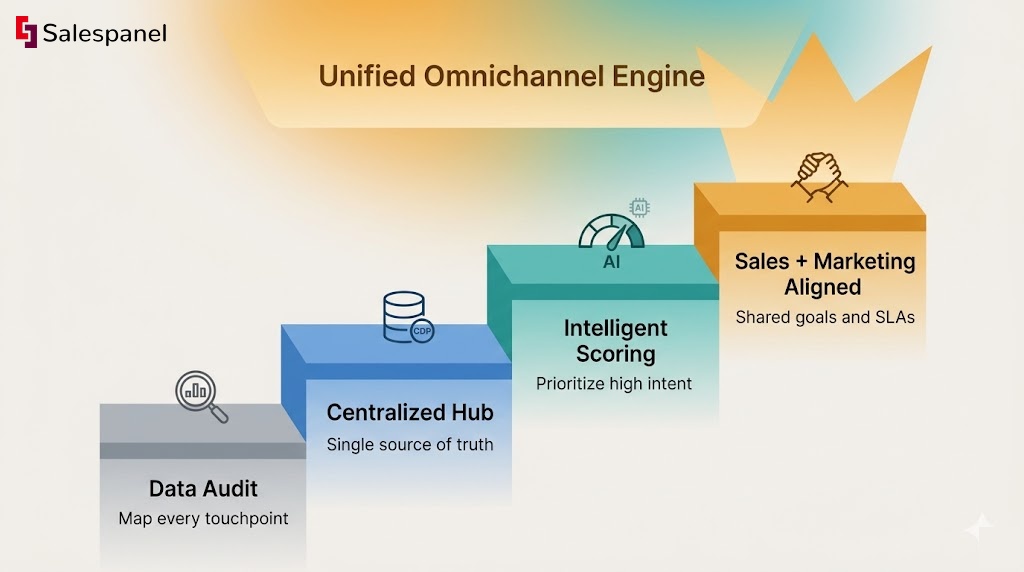
Here are your next steps:
- Conduct a Data Audit: Begin by mapping every customer touchpoint across your organization. Identify where data is being collected and, more importantly, where it is being siloed. Pinpoint the gaps and inconsistencies in your current customer view.
- Invest in a Centralized Hub: Select and implement a platform that can serve as your single source of truth. This could be a Customer Data Platform (CDP), a sophisticated CRM, or a powerful marketing automation tool. The key is its ability to integrate disparate data sources. For B2B, features like Website visitor tracking from Salespanel are critical for identifying anonymous company traffic and linking it to your sales pipeline.
- Prioritize with Intelligent Scoring: Implement a system that goes beyond basic lead qualification. Salespanel’s lead scoring framework, for example, allows you to assign value to activities across your entire digital ecosystem. This ensures your sales and marketing resources are focused on the accounts demonstrating the strongest buying intent, regardless of the channel they use.
- Align Sales and Marketing: True omnichannel success is impossible when sales and marketing operate independently. Use your unified data foundation to create shared goals, service-level agreements (SLAs), and a seamless handoff process between teams.
Ultimately, the most effective omnichannel strategies are built not on creative flair alone, but on a robust, integrated data architecture. By investing in the right tools and processes to unify your customer data, you create the foundation upon which every powerful, personalized, and profitable customer experience is built.
Ready to build the data foundation for your B2B omnichannel strategy? See how Salespanel can help you identify anonymous website visitors, track their entire journey, and score leads based on cross-channel engagement. Start unifying your sales and marketing data today by exploring our resources at Salespanel.