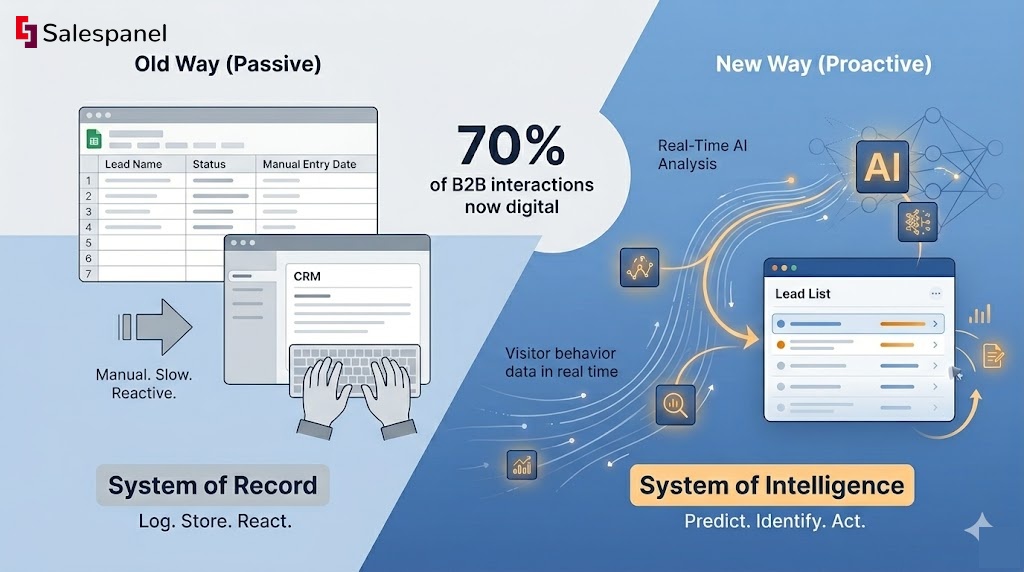
Just a decade ago, sales tracking often lived in siloed spreadsheets, a manual process prone to human error and lagging insights. Today, the landscape is radically different. According to Gartner, 70% of B2B seller-buyer interactions will occur in digital channels by 2026, a monumental shift that demands sophisticated, real-time data analysis. The future isn’t just about logging calls; it’s about predictive forecasting, AI-driven lead scoring, and understanding buyer intent before they ever fill out a form. This evolution from passive data collection to proactive, insight-driven sales execution is the central theme we will explore.
This article cuts through the noise of a crowded market to deliver a technical, journalistic analysis of the premier sales tracking tools available today. We move beyond generic feature lists to provide a clear, structured resource for B2B marketing managers, sales operations teams, and martech professionals. Our goal is to help you select a tool that not only tracks sales but actively accelerates revenue in an increasingly complex digital ecosystem.
You will find a detailed breakdown of each platform, including:
- Practical Use Cases: Real-world scenarios demonstrating how to apply specific features.
- Technical Deep Dives: Validating the capabilities of each tool, from API integrations to data models.
- Honest Limitations: A clear-eyed view of where each solution might fall short.
- Implementation Guidance: Practical advice for integrating a new tool into your existing tech stack.
Each profile is designed for scannability, complete with direct links and screenshots to give you a firsthand look at the user interface and core functionalities. We will examine solutions ranging from foundational CRMs like Salesforce and HubSpot to specialized platforms that excel in areas like website visitor tracking. This guide is your definitive resource for finding the right sales tracking software to adapt your strategy and win.
1. Salespanel
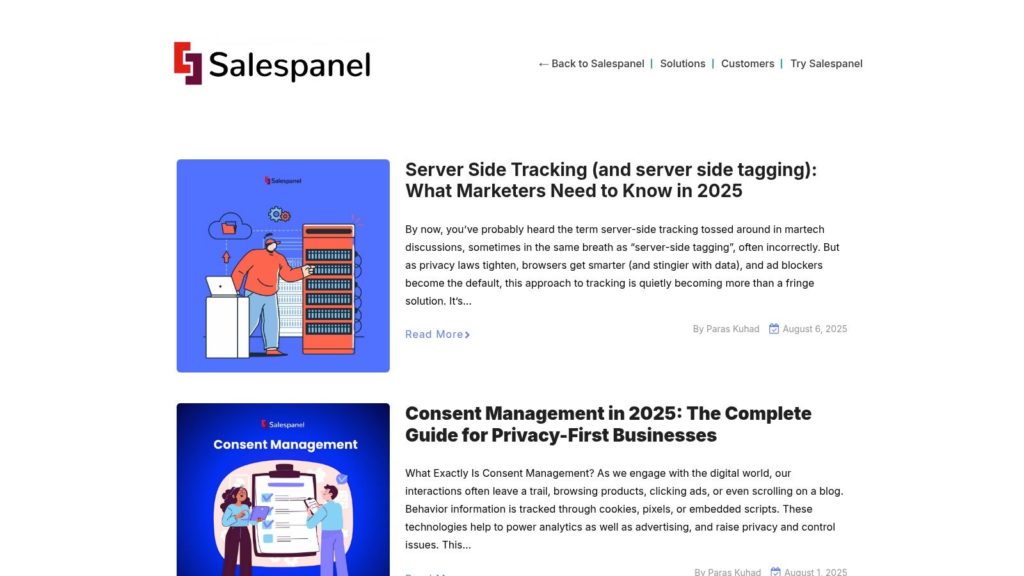
Salespanel positions itself as a forward-thinking leader in the B2B sales intelligence landscape, moving beyond traditional sales tracking tools to address the modern challenges of data privacy and visitor anonymity. Its core strength lies in leveraging advanced server-side tracking to provide a durable and accurate data foundation, effectively bypassing the limitations imposed by ad blockers and browser privacy updates. This approach ensures that sales and marketing teams receive a consistent, reliable stream of visitor data, which is crucial for understanding prospect behavior in today’s digital ecosystem.
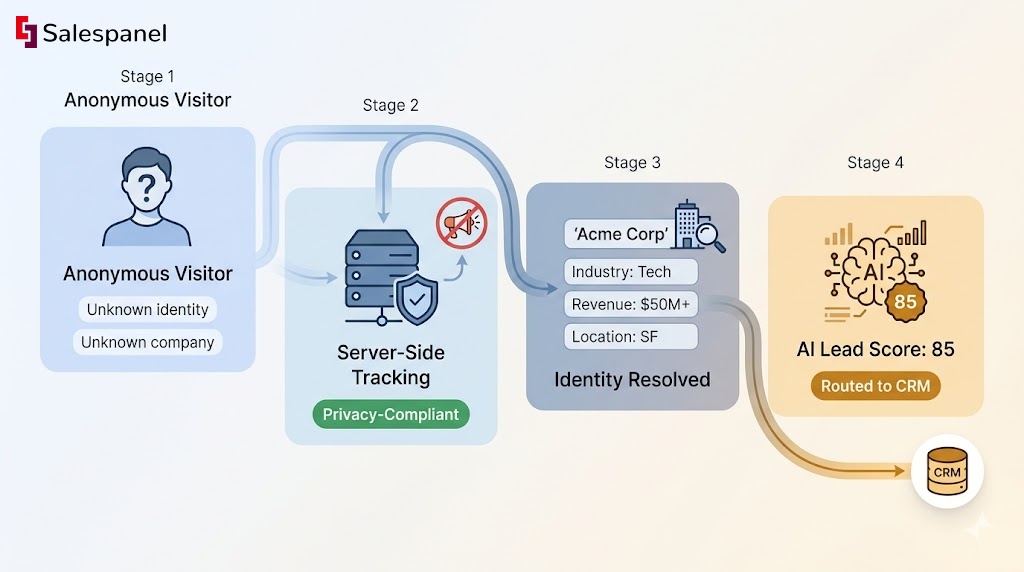
For B2B organizations, this translates into a powerful ability to identify and engage anonymous website visitors who show high purchase intent. The platform’s identity resolution capabilities consolidate fragmented data points from various sources, building a holistic profile of each potential lead. This provides sales teams with a multi-dimensional view of a prospect’s journey long before they ever fill out a form, enabling highly contextual and timely outreach.
Core Capabilities and Use Cases
Salespanel’s feature set is meticulously designed for B2B sales and marketing alignment. Its AI-powered prospecting and lead scoring engine automates the qualification process, allowing teams to focus their efforts exclusively on the most promising opportunities.
A practical use case involves a SaaS company aiming to shorten its sales cycle. Using Salespanel, their marketing team can track which companies are visiting key pages like pricing or integrations. The platform automatically enriches this firmographic data and scores the lead based on behavior. This high-intent, pre-qualified lead is then routed directly to the sales team’s CRM with a complete activity timeline, empowering them to initiate a personalized conversation.
Key features that enable these outcomes include:
- Server-Side Tracking: Ensures robust data collection that is resilient to browser restrictions and ITP (Intelligent Tracking Prevention).
- AI-Driven Lead Scoring: Automatically identifies and prioritizes high-value prospects based on behavioral and firmographic data.
- Comprehensive Identity Resolution: Unifies visitor data from multiple touchpoints into a single, cohesive customer profile.
- Privacy-First Framework: Built with consent management at its core, helping businesses comply with GDPR, CCPA, and other regulations.
Assessment and Implementation
Salespanel stands out as both a powerful tool and an educational hub. Its extensive resource library offers expert guidance on navigating the complex intersection of marketing technology and data privacy. This dual focus makes it an ideal partner for organizations looking to future-proof their martech stack.
| Pros | Cons |
|---|---|
| Advanced, privacy-compliant data collection overcomes modern tracking limitations. | Pricing is not public; requires direct contact, which can be a hurdle for initial evaluation. |
| AI-powered features effectively identify and prioritize the most valuable B2B leads. | May be overly complex for B2C use cases or very small businesses without dedicated sales teams. |
| Robust identity resolution provides deep insights into the anonymous visitor journey. | |
| Rich educational resources help teams adapt to evolving privacy and technology landscapes. |
Best Suited For: B2B marketing managers, sales operations professionals, and compliance officers who need reliable, in-depth sales tracking tools that respect user privacy without sacrificing data quality.
Website: https://salespanel.io/resources
2. Salesforce Sales Cloud
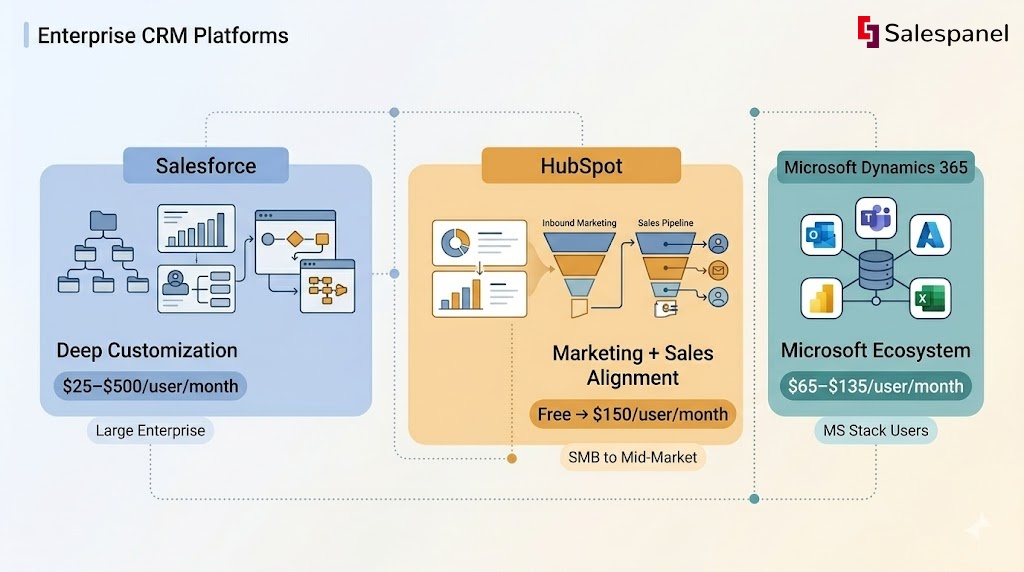
Salesforce Sales Cloud is an enterprise-grade CRM that stands as a behemoth in the sales tracking tools landscape. It’s designed for complex organizations that require deep customization and scalability, offering an extensive suite of features for managing every facet of the sales cycle, from lead generation to revenue intelligence. Its strength lies not just in its feature set but in its ability to be molded into a bespoke solution for almost any business process.
The platform excels at providing a 360-degree view of the customer. Teams can manage leads, opportunities, and sales pipelines with granular detail. Customizable objects and fields allow sales operations to track specific metrics and data points unique to their industry, a level of flexibility not commonly found in more rigid systems. For instance, a medical device company could create custom objects to track clinical trial progress alongside a sales opportunity, linking regulatory milestones directly to sales forecasts.
Key Features and Pricing
Salesforce Sales Cloud’s offerings are tiered, allowing businesses to scale their investment with their needs. Its built-in AI, Revenue Intelligence, provides predictive forecasting and pipeline inspection on higher-tier plans, helping teams identify at-risk deals proactively.
- Opportunity Management: Track deal stages, products, competition, and quotes.
- Pipeline and Forecast Management: Get real-time views of the pipeline and use customizable forecasting.
- Extensive Ecosystem: The AppExchange marketplace offers thousands of integrations, extending functionality significantly.
- Robust Automation: Use Process Builder and Flow to automate complex business processes without extensive coding.
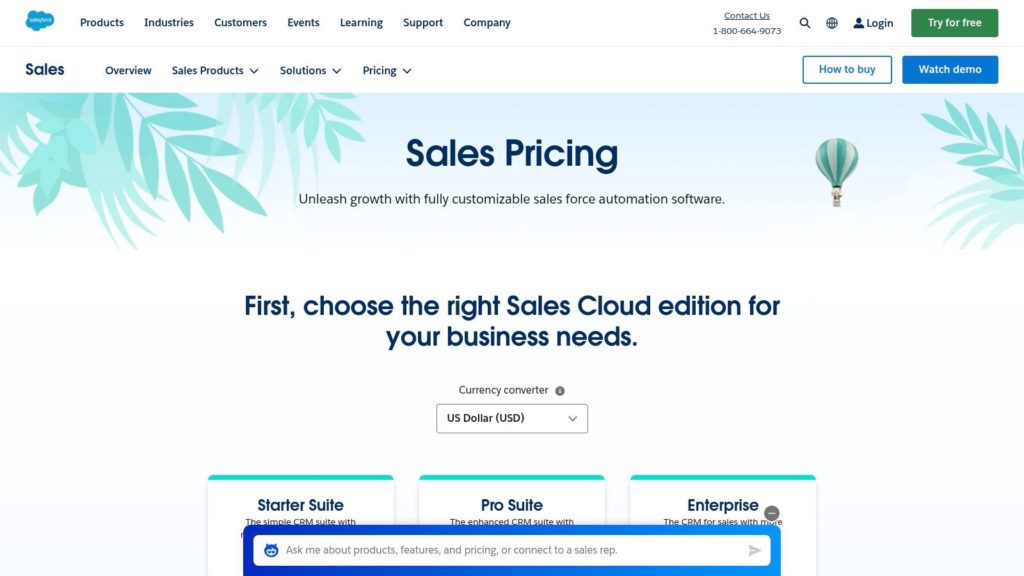
Pricing for Sales Cloud starts with the Starter plan at $25/user/month (billed annually) and scales up to Unlimited at $500/user/month, with advanced features like generative AI and premium support. The platform’s total cost of ownership can be high, as many essential functionalities are add-ons. However, for large teams needing a powerful, all-in-one solution for sales tracking, the investment is often justified.
3. HubSpot Sales Hub
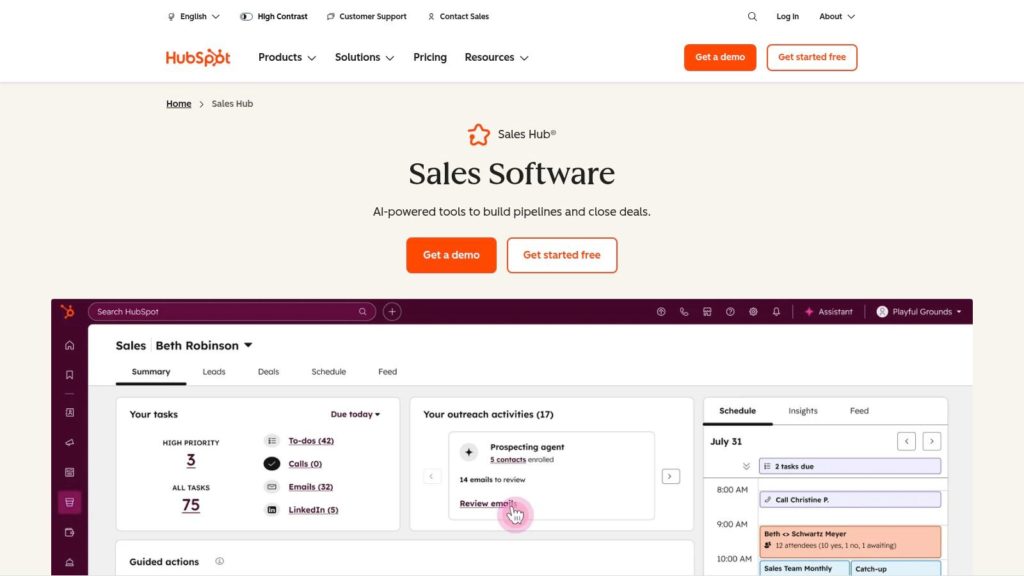
HubSpot Sales Hub has carved out a significant niche by offering a powerful yet incredibly user-friendly CRM platform that excels at aligning sales and marketing teams. It’s designed for small to mid-sized businesses that need a quick setup and an intuitive interface without sacrificing core sales tracking functionalities. Its strength lies in its all-in-one nature, seamlessly integrating email tracking, meeting scheduling, and deal management into a single, cohesive workspace.
The platform is renowned for its smooth user experience and extensive educational resources through HubSpot Academy, making it one of the most accessible sales tracking tools for teams with limited technical expertise. Where complex systems require dedicated administrators, HubSpot empowers sales reps to manage their own pipelines, automate follow-ups with sequences, and create professional quotes with ease. This focus on usability ensures high adoption rates and allows teams to start seeing value almost immediately.
Key Features and Pricing
HubSpot’s freemium model provides a generous entry point, but its true power is unlocked in the paid tiers, which introduce sophisticated automation and reporting. Conversation intelligence and custom objects in higher tiers allow for deeper analysis and tailored data management, catering to growing businesses.
- Deal Pipelines: Visualize and manage your sales process with customizable drag-and-drop deal stages.
- Sequences: Automate personalized email follow-ups to nurture leads without manual effort.
- Integrated Sales Tools: Includes email templates, meeting scheduler, live chat, and quote creation.
- Marketing & Sales Alignment: When used with Marketing Hub, it provides a complete view of the customer journey from first touch to closed deal.
Pricing begins with a robust Free Tools plan. Paid plans start with the Starter tier at $15/user/month (billed annually) and scale to the Enterprise plan at $150/user/month, which includes advanced features like predictive lead scoring and custom objects. Note that mandatory onboarding fees apply to Professional and Enterprise tiers, which can be a significant initial cost.
4. Microsoft Dynamics 365 Sales
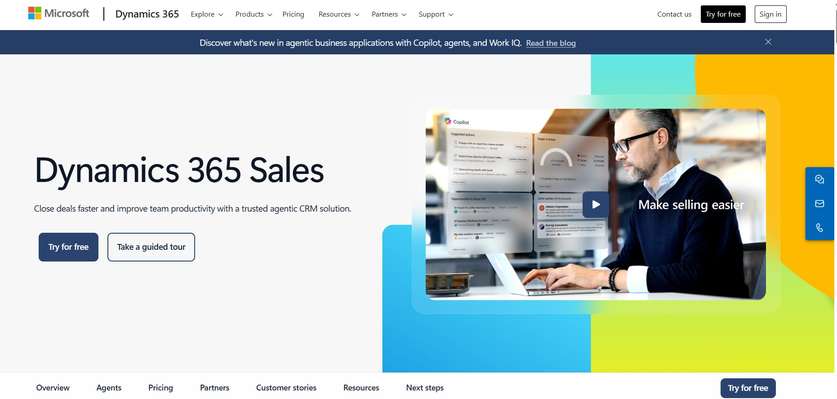
Microsoft Dynamics 365 Sales is a powerful sales tracking tool deeply embedded within the Microsoft ecosystem, making it the premier choice for organizations already invested in Microsoft 365 and Azure. It offers a familiar interface and seamless integrations with tools like Outlook, Teams, and Power BI, creating a cohesive work environment. This native connectivity allows sales teams to manage customer relationships and track deals directly from the applications they use daily, reducing context switching and boosting productivity.
The platform is designed for businesses that require robust security, compliance, and extensive customization. Leveraging the Power Platform, companies can build custom apps, automate complex workflows with Power Automate, and create sophisticated dashboards with Power BI. For instance, a financial services firm can use these tools to build a compliant client onboarding workflow that automatically pulls data from Dynamics 365, triggers background checks, and assigns tasks in Teams, all while maintaining strict data governance.
Key Features and Pricing
Dynamics 365 Sales integrates AI capabilities through Copilot on its higher-tier plans, which provides AI-generated summaries, email drafts, and actionable insights to guide sellers. This focus on intelligent automation and data unification sets it apart as a comprehensive CRM solution.
- Native Microsoft 365 Integration: Work with CRM data directly within Outlook and Teams, streamlining communication and data entry.
- Lead and Opportunity Management: Utilize robust tools for pipeline visualization, sales forecasting, and managing deal progression.
- Power Platform Customization: Extend CRM functionality with custom apps, automated workflows, and advanced business intelligence analytics.
- Copilot AI Assistant: Leverage generative AI for task automation, content creation, and real-time sales insights on Enterprise plans and above.
Pricing starts with the Sales Professional plan at $65/user/month. More advanced plans like Sales Enterprise ($95/user/month) and Sales Premium ($135/user/month) add features like sales forecasting and the Copilot AI assistant. While implementation can be complex, its tight integration and powerful customization make it an ideal sales tracking tool for businesses committed to the Microsoft stack.
5. Pipedrive
Pipedrive is a sales-focused CRM celebrated for its intuitive, pipeline-centric approach. Designed primarily for small to medium-sized businesses, its core strength lies in its simplicity and visual design, which helps sales teams quickly adopt the platform and focus on closing deals rather than battling software complexity. The platform is built around the idea that sales is a series of actions, and it excels at guiding reps through each stage of a deal with clarity and purpose.
The visual, drag-and-drop sales pipeline is the heart of Pipedrive. This interface makes it incredibly easy for users to see where every deal stands, what needs to be done next, and where bottlenecks are forming. This focus on activity-based selling encourages proactive behavior, prompting reps to complete scheduled calls, emails, and meetings to move deals forward. It strips away the enterprise-level complexity found in larger systems, making it one of the most user-friendly sales tracking tools available for teams prioritizing ease of use.
Key Features and Pricing
Pipedrive’s feature set is carefully curated to support the core sales process without overwhelming users. Its workflow automation capabilities handle repetitive tasks, while its reporting provides clear, actionable insights into sales performance and forecasting.
- Visual Sales Pipelines: Customize multiple pipelines with drag-and-drop deal cards.
- Email and Communication Sync: Track emails, calls, and contact history directly within the CRM.
- Workflow Automation: Automate administrative tasks like sending follow-up emails or creating activities.
- Marketplace Integrations: Connect with over 500 third-party apps to extend functionality.
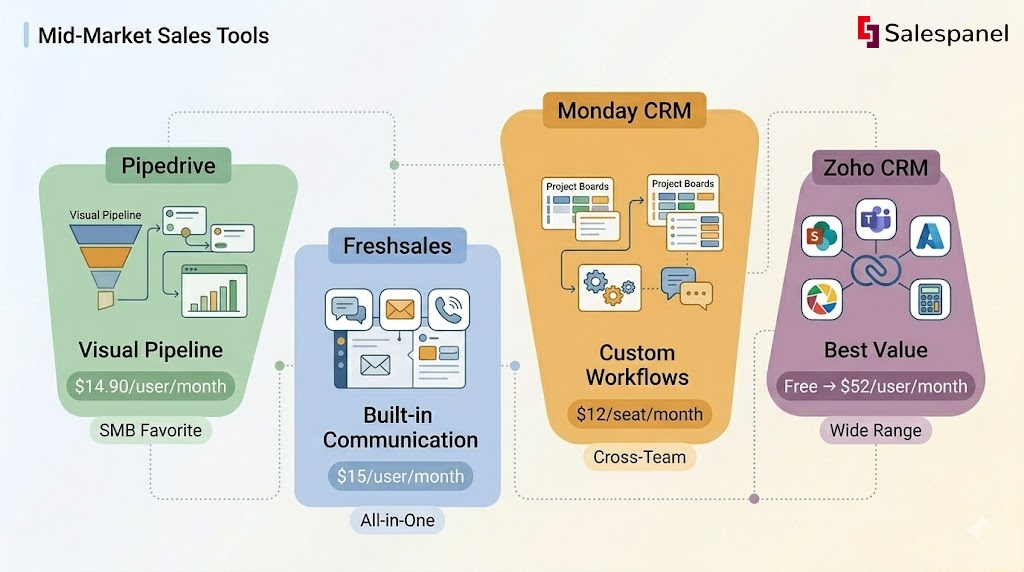
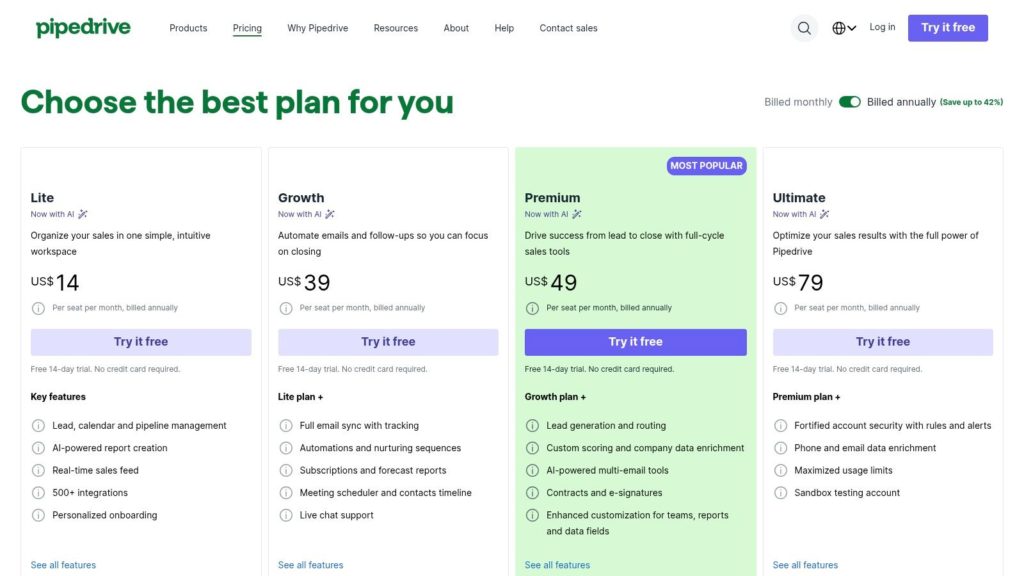
Pricing for Pipedrive is highly accessible, starting with the Essential plan at $14.90/user/month (billed annually) and scaling to the Power plan at $59.90/user/month. While it may lack the native depth of enterprise suites, its straightforward pricing and powerful core features make it an excellent choice for SMBs seeking a dedicated and efficient sales tracking tool that their team will actually enjoy using.
6. monday sales CRM (monday.com)
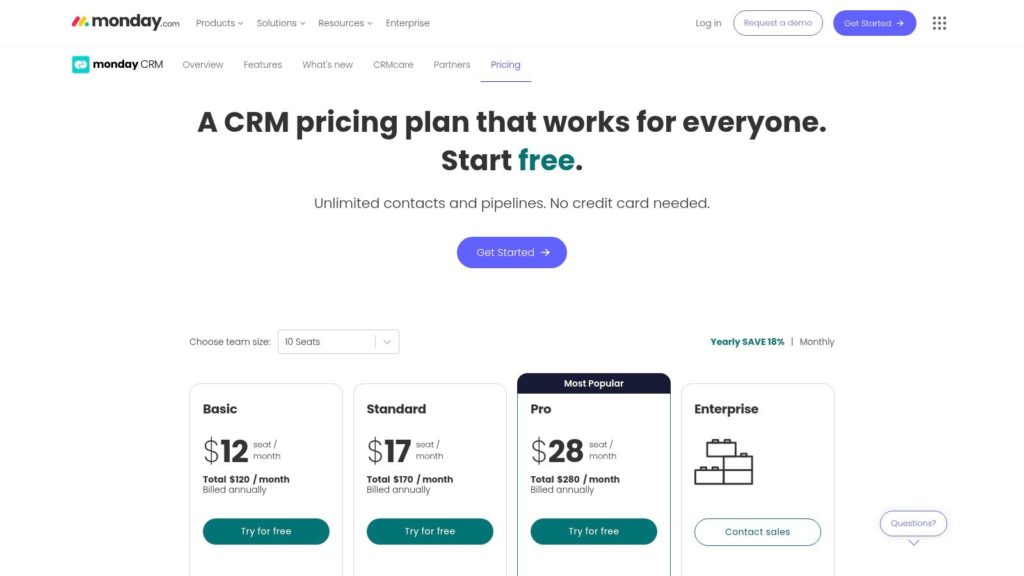
monday sales CRM is a highly visual and customizable sales platform built upon the flexible monday.com Work OS. It stands apart by offering an intuitive, board-based interface that teams can tailor to their exact sales processes without needing developers. This makes it one of the most adaptable sales tracking tools for organizations that prioritize cross-departmental collaboration and bespoke workflow design, moving beyond the traditional CRM structure.
The platform excels at creating a unified workspace where sales, marketing, and project management can coexist seamlessly. Teams can build unlimited visual pipelines, track deals with custom stages, and automate repetitive tasks with a simple “if-this-then-that” logic. For instance, a sales team could automate a task for a legal team member to review a contract as soon as a deal is moved to the “Negotiation” stage, ensuring a smooth handoff and complete visibility for all stakeholders.
Key Features and Pricing
monday sales CRM organizes its features across several tiers, encouraging scalability. Its strength lies in its automation and integration capabilities, which become more robust at higher plan levels, allowing it to serve as a central hub for various business operations.
- Customizable Pipelines: Create and manage an unlimited number of deal pipelines and contacts.
- Workflow Automation: Build powerful automations to handle data entry, notifications, and task assignments.
- Advanced Reporting: Use customizable dashboards to track sales KPIs, performance, and forecasts in real-time.
- Cross-Team Collaboration: Share boards and data with non-sales departments to align on goals and projects.
Pricing starts with the Basic plan at $12/seat/month (billed annually) and requires a 3-seat minimum. The Enterprise plan offers advanced features like multi-level permissions and HIPAA compliance, with custom pricing. While the entry point is accessible, getting the full suite of automation and integration features requires a subscription to higher-tier plans. The platform is ideal for teams that need a flexible, visually-driven sales tracking tool that fosters company-wide collaboration.
7. Freshsales (Freshworks)
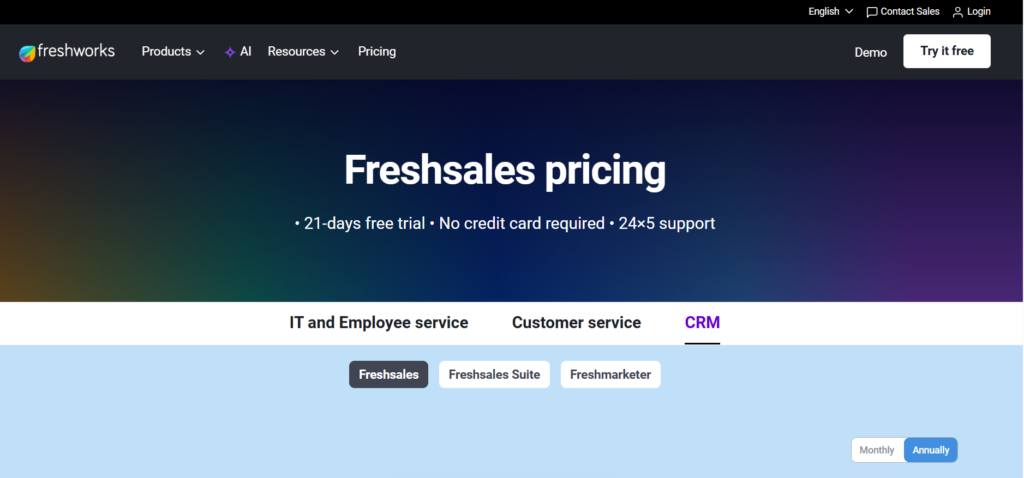
Freshsales positions itself as an all-in-one sales CRM that excels by integrating key communication channels directly into its platform. It’s designed for teams that prioritize streamlined engagement, offering built-in phone, email, chat, and SMS capabilities, which eliminates the need for multiple disparate tools. This focus on unified communication makes it one of the more efficient sales tracking tools for small to mid-sized businesses looking for a powerful yet intuitive solution.
The platform’s strength is its out-of-the-box functionality, allowing sales reps to engage with prospects across multiple touchpoints without leaving the CRM. For example, a rep can initiate a chat with a website visitor, convert that conversation into a lead, call them directly from the contact record, and automate a follow-up email sequence, all from a single screen. This consolidated approach provides a complete chronological history of every interaction, offering valuable context for closing deals.
Key Features and Pricing
Freshsales bundles its features across tiers that cater to growing teams, with its AI assistant, Freddy, providing insights and forecasting on higher plans. Its user interface is clean, featuring Kanban-style views for deals, contacts, and accounts, which simplifies pipeline management.
- Multichannel Communication: Built-in phone, email, chat, and SMS to engage with leads from one place.
- AI-Powered Insights: Freddy AI assists with lead scoring, deal insights, and sales forecasting on Pro and Enterprise plans.
- Workflow Automation: Automate repetitive tasks like sending follow-up emails and updating contact fields.
- Visual Sales Pipeline: Use a drag-and-drop Kanban view to manage deals across different stages.
Pricing offers a limited free-forever plan, while paid plans start with Growth at $15/user/month (billed annually) and scale to the Enterprise plan at $69/user/month. While its feature set is robust for the price, advanced functionalities like a CPQ (Configure, Price, Quote) tool are add-ons, and its integration ecosystem is less extensive than enterprise giants.
8. Zoho CRM
Zoho CRM is a powerhouse among sales tracking tools, offering a comprehensive and highly accessible platform that rivals enterprise-grade systems at a fraction of the cost. It’s particularly known for its deep integration within the extensive Zoho ecosystem, creating a unified business management suite. This makes it an ideal choice for businesses of all sizes, from startups leveraging its robust free plan to large enterprises seeking a customizable, all-in-one solution.
The platform provides a highly flexible environment for managing the entire customer lifecycle. Sales teams can build multiple pipelines, automate workflows, and manage leads and contacts with precision. Its strength lies in its ability to centralize customer interactions across various channels, including email, social media, and live chat, into a single, cohesive timeline. For example, a support ticket raised via a customer portal can be directly linked to an open sales opportunity, giving the account manager full context during negotiations.
Key Features and Pricing
Zoho CRM packs a punch with features typically found in more expensive platforms, including an AI-powered sales assistant on higher-tier plans. The seamless integration with other Zoho apps, like Zoho Books or Zoho Campaigns, eliminates data silos and streamlines operations.
- Lead and Contact Management: Comprehensive tools for tracking leads, contacts, and accounts with customizable pipelines.
- AI-Powered Assistant (Zia): Provides lead scoring, deal predictions, and anomaly detection in upper-tier plans.
- Zoho Ecosystem Integration: Natively connects with over 40 other Zoho applications for a unified business OS.
- Multi-Channel Engagement: Communicate with customers via email, phone, social media, and customer portals from one platform.
Pricing for Zoho CRM is highly competitive, starting with a free-forever plan for up to three users. Paid plans begin with the Standard tier at $14/user/month (billed annually) and go up to the Ultimate edition at $52/user/month, which includes advanced BI and analytics. While the interface can feel dense at first, the platform’s exceptional value and scalability make it a top contender in the sales tracking tools market.
9. Zendesk Sell (formerly Base CRM)
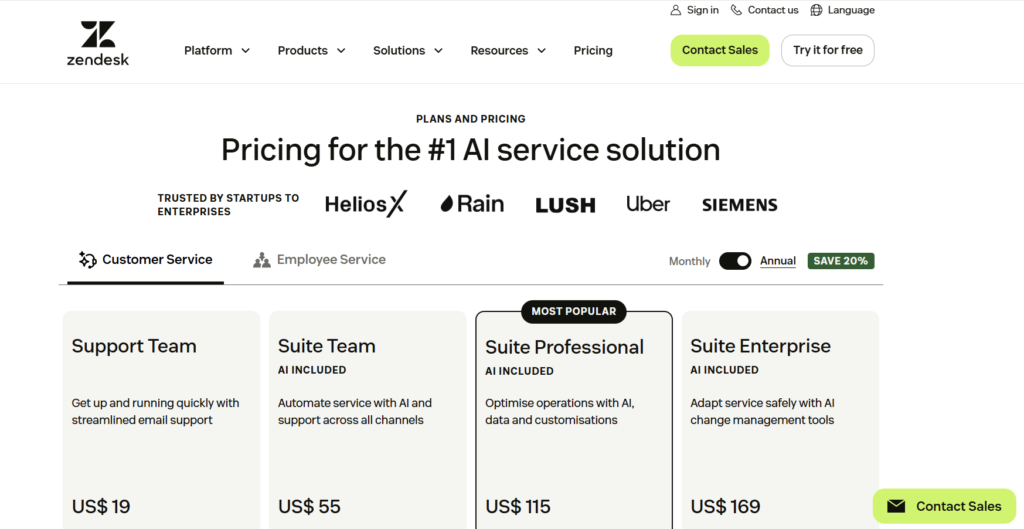
Zendesk Sell is a sales CRM designed for simplicity and speed, making it a strong contender among sales tracking tools for teams that prioritize ease of use and quick adoption. Originally known as Base CRM, its integration into the broader Zendesk ecosystem makes it particularly powerful for businesses already using Zendesk for customer support, creating a unified view of the entire customer lifecycle from initial contact to post-sale service.
The platform excels at providing a clean, intuitive interface for managing sales pipelines and forecasting. Sales reps can easily visualize deal stages, track activities, and communicate with leads without a steep learning curve. For a SaaS company using Zendesk for support tickets, the sales team can see a prospect’s entire support history directly within Sell. This context is invaluable, allowing reps to tailor their pitch based on the prospect’s previous interactions with the company, turning potential service issues into sales opportunities.
Key Features and Pricing
Zendesk Sell’s tiered structure provides core CRM functionalities at lower price points while reserving advanced automation and analytics for higher plans. Its mobile apps are highly rated, enabling field sales teams to manage their pipeline effectively on the go.
- Deal Pipelines and Sales Forecasting: Visual tools to track deals and predict revenue with clarity.
- Sales Sequences and Triggers: Automate email outreach and follow-ups to nurture leads (available on Growth and above).
- Custom Reports and Dashboards: Build tailored analytics to monitor key sales metrics (available on Pro and above).
- Seamless Zendesk Suite Integration: Connects sales activities with support tickets for a unified customer profile.
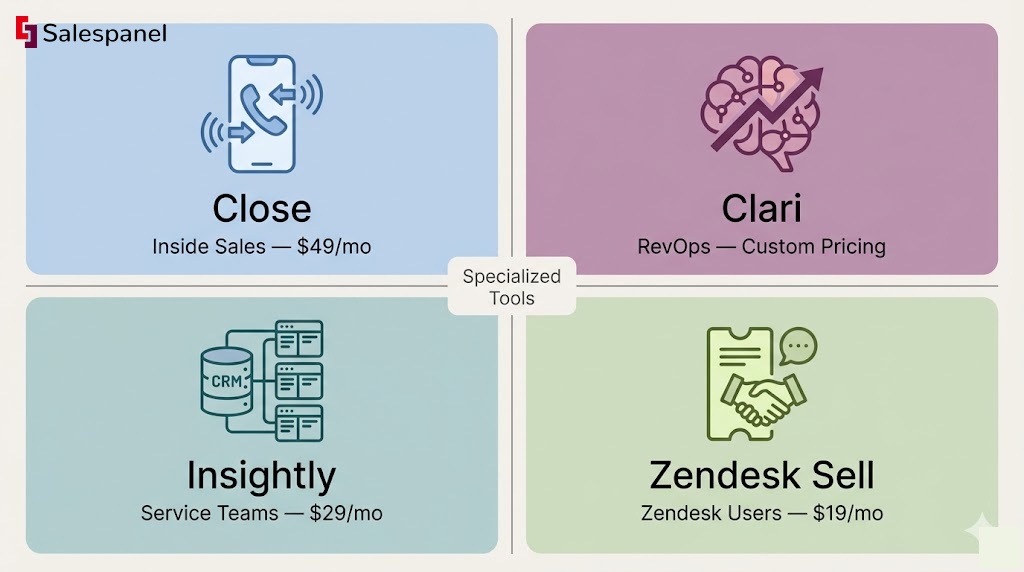
Pricing for Zendesk Sell begins with the Team plan at $19/user/month (billed annually), offering basic pipeline management. The Growth plan at $55/user/month adds forecasting and bulk emailing, while the Professional plan at $115/user/month unlocks sales sequences and advanced analytics. While the initial costs are accessible, scaling with advanced features can increase the overall investment significantly.
10. Close
Close is a high-velocity sales CRM built for inside sales teams that live on the phone and in their email inboxes. It streamlines communication by consolidating calling, SMS, and email workflows into a single, unified interface. This all-in-one approach is designed to eliminate app-switching and empower reps to focus purely on selling, making it one of the most efficient sales tracking tools for outbound-heavy organizations.
The platform’s core strength is its native communication suite. Unlike CRMs that rely on third-party integrations for telephony, Close builds these features directly into its DNA. Sales reps can use power and predictive dialers, send bulk email sequences, and manage SMS conversations without ever leaving the application. This tight integration ensures all activities are automatically logged against the correct contact, providing a crystal-clear, chronological view of every interaction.
Key Features and Pricing
Close packs its plans with features aimed at maximizing rep productivity and simplifying workflows. Its AI helpers can draft emails and summarize leads, while unlimited contacts and leads on all plans provide predictable costs as you scale your outreach efforts.
- All-in-One Communication: Native power and predictive dialers, global calling, call recording, and SMS and email sequences.
- Unified Inbox: Consolidates all emails, calls, and tasks into a single actionable view for each sales rep.
- Pipeline Management: Supports multiple pipelines with custom fields and activities to track deals effectively.
- Productivity Tools: Includes powerful search functionality, smart views for lead segmentation, and a task-focused workflow.
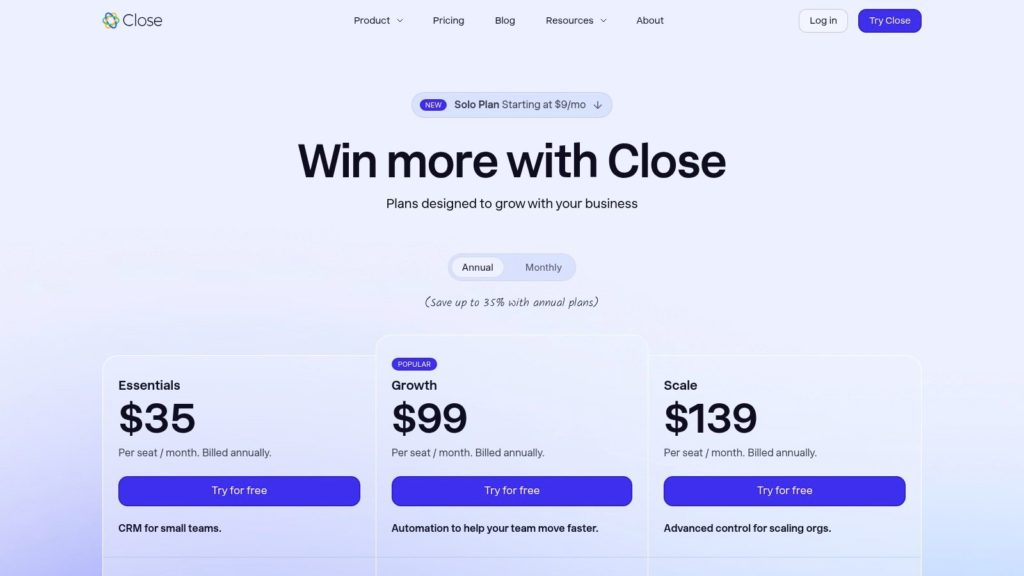
Pricing for Close begins with the Startup plan at $49/user/month (billed annually), moving to Professional at $99/user/month, and Enterprise at $149/user/month. While the base plans are comprehensive, note that telephony usage and AI features incur additional costs, and the advanced predictive dialer is reserved for the top-tier plan. For SMBs focused on pure sales productivity, Close offers a compelling and rapidly deployable solution.
11. Insightly CRM
Insightly CRM stands out by natively combining sales tracking with project management, creating a unified platform for teams that manage post-sale delivery. It’s designed for businesses that need a seamless handoff from winning a deal to fulfilling the service or project, eliminating the data silos that often exist between sales and operations. This integrated approach ensures customer relationships are managed consistently from lead to project completion.
The platform’s strength is its ability to convert closed-won opportunities directly into projects, carrying over all relevant contacts, history, and files. This is particularly valuable for service-based businesses like marketing agencies or consulting firms where the sales process is just the beginning of the customer lifecycle. By linking sales and project pipelines, managers get a holistic view of both revenue generation and resource allocation, making it a powerful tool for forecasting and operational planning.
Key Features and Pricing
Insightly’s platform is tiered to support growing businesses, with optional marketing and service modules that can be added to create an all-in-one suite. Its AppConnect feature offers no-code integrations, simplifying connections to other business tools without requiring development resources. While its native integration ecosystem is smaller than some enterprise giants, it provides essential connectivity for most SMBs.
- Unified CRM & Project Management: Track leads, opportunities, and projects within a single system.
- Workflow Automation: Automate tasks, email alerts, and record updates to streamline sales and delivery processes.
- Customizable Dashboards: Build real-time reports and dashboards to monitor sales performance and project milestones.
- AppConnect Integrations: Use a no-code platform to build custom integrations with hundreds of apps.
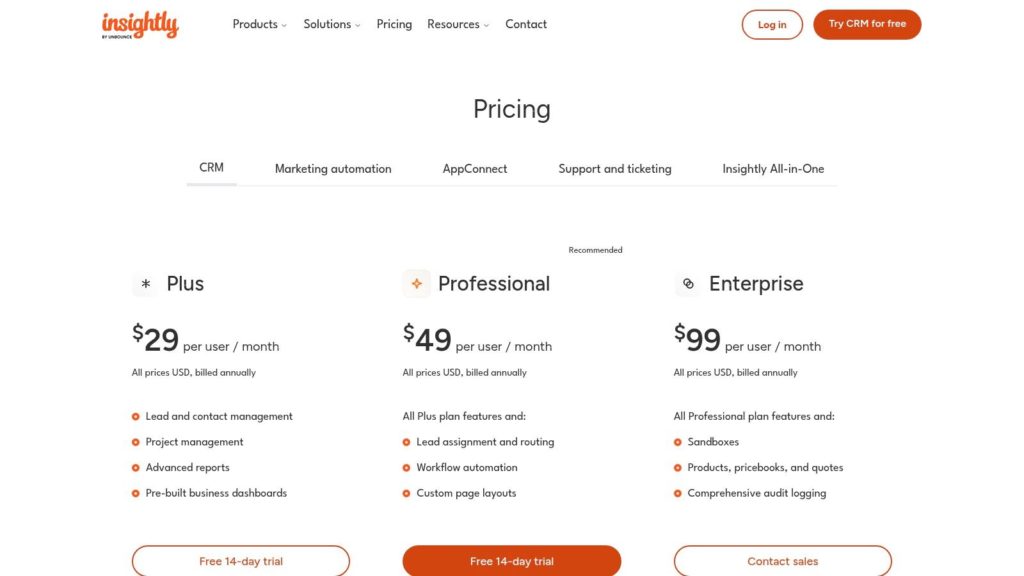
Pricing for Insightly’s CRM starts with the Plus plan at $29/user/month (billed annually). The Professional plan is $49/user/month, and the Enterprise plan is $99/user/month, each adding more advanced features, automation, and customization capabilities.
12. Clari (Revenue Platform)
Clari is not a traditional CRM but a purpose-built revenue platform designed to sit on top of your existing systems, like Salesforce, to provide unparalleled forecast accuracy and pipeline visibility. It moves beyond basic sales tracking tools by using AI to analyze CRM data, communications, and other signals to score deal health and predict outcomes. This makes it an essential tool for revenue operations (RevOps) and sales leaders in mid-market to enterprise companies who need to eliminate guesswork from their forecasting process.
The platform centralizes all revenue-critical data into its Revenue Database (RevDB), creating a single source of truth for the entire revenue team. Instead of manually inspecting deals and interrogating reps, leaders can use Clari’s pipeline inspection workflows to identify at-risk opportunities, understand deal progression, and coach their teams more effectively. For example, a sales manager can quickly see if a “committed” deal has had zero recent engagement, prompting a targeted coaching conversation based on data, not just intuition.
Key Features and Pricing
Clari is engineered for mature revenue organizations that require precision and predictability. Its strength lies in its ability to automate data capture and apply a layer of intelligence that standard CRMs lack, delivering significant time savings for leadership and operations teams.
- AI-Driven Forecasting: Provides predictive forecasting and deal scoring to improve accuracy.
- Pipeline Inspection: Offers clear workflows to identify deal risk and momentum.
- Automated Activity Capture: Syncs emails, meetings, and files to provide a complete picture of deal engagement.
- Centralized Revenue Database (RevDB): Unifies all go-to-market data for consistent analysis.
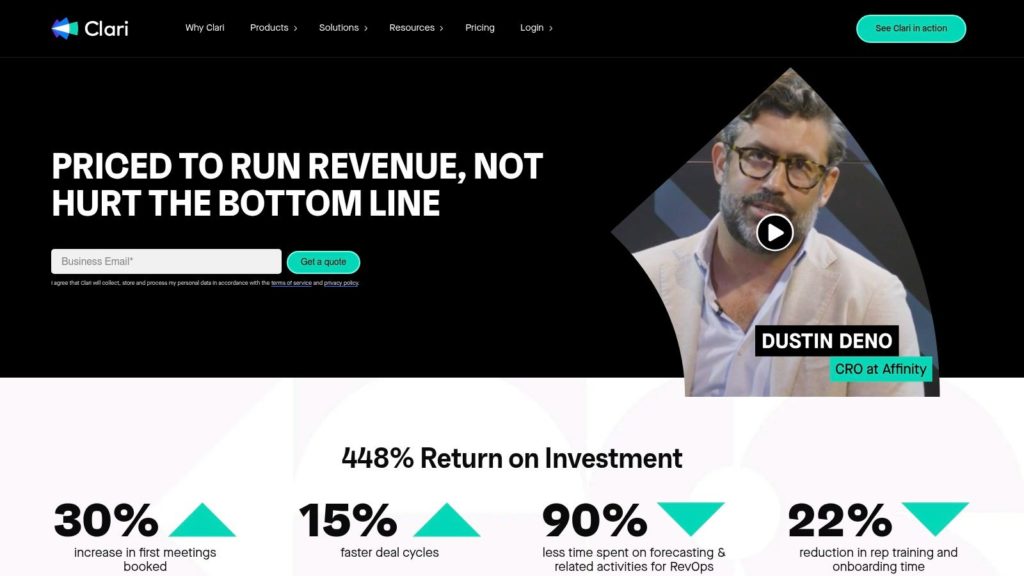
Pricing for Clari is not publicly listed and is customized for enterprise and mid-market teams. The investment is significant, as it’s a premium platform focused on solving high-value revenue challenges. While it requires a commitment to organizational change to maximize its benefit, its ability to drive forecast accuracy makes it a powerful addition for data-driven sales organizations.
Sales Tracking Tools Feature Comparison
| Platform | Core Features | User Experience & Quality | Value Proposition | Target Audience | Price Points | Unique Selling Points |
|---|---|---|---|---|---|---|
| Salespanel | Server-side tracking, AI prospecting, identity resolution | Privacy-first, comprehensive insights | Privacy-compliant, AI-driven lead scoring | B2B marketers, sales ops, compliance pros | Custom quotes, not publicly listed | Advanced privacy compliance, multi-source data, expert resources |
| Salesforce Sales Cloud | Pipeline & forecast management, AI, AppExchange | Highly customizable, powerful analytics | Scalable for complex orgs | Large enterprises | High cost, add-ons increase price | Extensive ecosystem, deep customization |
| HubSpot Sales Hub | Pipelines, sequences, forecasting, CRM free tier | Easy setup, great docs, marketing-sales alignment | Free tier, good education resources | SMBs to mid-market | Free to paid tiers, onboarding fees | Fast ramp-up, integrated marketing-sales platform |
| Microsoft Dynamics 365 Sales | Lead/opportunity mgmt, Outlook & Teams integration, AI Copilot | Seamless MS ecosystem integration | Security and compliance focus | MS tech stack users | Varies, higher for AI/customization | Native MS integrations, Power Platform extensibility |
| Pipedrive | Visual pipelines, email sync, automation | Intuitive UI, quick onboarding | Affordable, pipeline-centric | SMBs | Affordable tiers | Easy drag-and-drop pipeline, solid mobile app |
| monday sales CRM | Customizable pipelines, automations, dashboards | Flexible interface, cross-team visibility | Flexible for bespoke processes | Teams needing customization | Tiered; limited free trial | Highly customizable with enterprise governance |
| Freshsales | Multi-channel engagement, workflow automation, AI | Integrated chat/email/phone | Cost-effective entry plans | Small to mid-sized sales teams | Entry-level pricing, free plan | Built-in communications, AI-powered forecasts |
| Zoho CRM | Lead mgmt, AI Zia assistant, custom dashboards | Broad functionality, flexible customization | Competitive pricing with extensive features | Wide business range | Free to enterprise tiers | Deep Zoho ecosystem integrations |
| Zendesk Sell | Pipelines, forecasting, sales sequences | Simple setup, good reporting | Well integrated with Zendesk support | Zendesk ecosystem users | Tiered pricing | Ease of use with Zendesk integration |
| Close | Native dialers, SMS/email sequences, AI helpers | Communication-focused workflow | Strong outbound sales productivity | SMB inside sales teams | Usage-based telephony costs | All-in-one calling and messaging CRM |
| Insightly CRM | Sales + project tracking, workflow automation | Clear pricing, unified sales & delivery | All-in-one sales and project management | SMBs needing project/sales combo | Tiered pricing | Combines CRM with project management |
| Clari | AI forecasting, deal scoring, pipeline inspection | Enterprise-focused, integrates existing CRMs | Revenue ops efficiency for mid-market to enterprise | RevOps and sales leadership | Custom, enterprise budgets | Purpose-built revenue forecasting and risk management |
Your Next Step: Choosing a System That Unlocks Proactive Growth
We’ve journeyed through a comprehensive landscape of twelve powerful sales tracking tools, from enterprise-grade giants like Salesforce and Microsoft Dynamics 365 Sales to agile, sales-focused platforms like Pipedrive and Close. Each system presents a unique methodology for organizing, managing, and accelerating the sales process. The core takeaway from this deep dive is clear: the era of passive, reactive sales tracking is over. Simply logging calls and updating deal stages is no longer sufficient to create a competitive advantage.
The central theme we’ve explored is the shift from a system of record to a system of intelligence. The most impactful sales tracking tools don’t just store data; they transform it into predictive insights that empower your team to act proactively. This means moving beyond the confines of traditional CRM functionalities and embracing a more holistic view of the customer journey, one that starts long before a lead ever fills out a form.
Synthesizing Your Decision: From Features to Philosophy
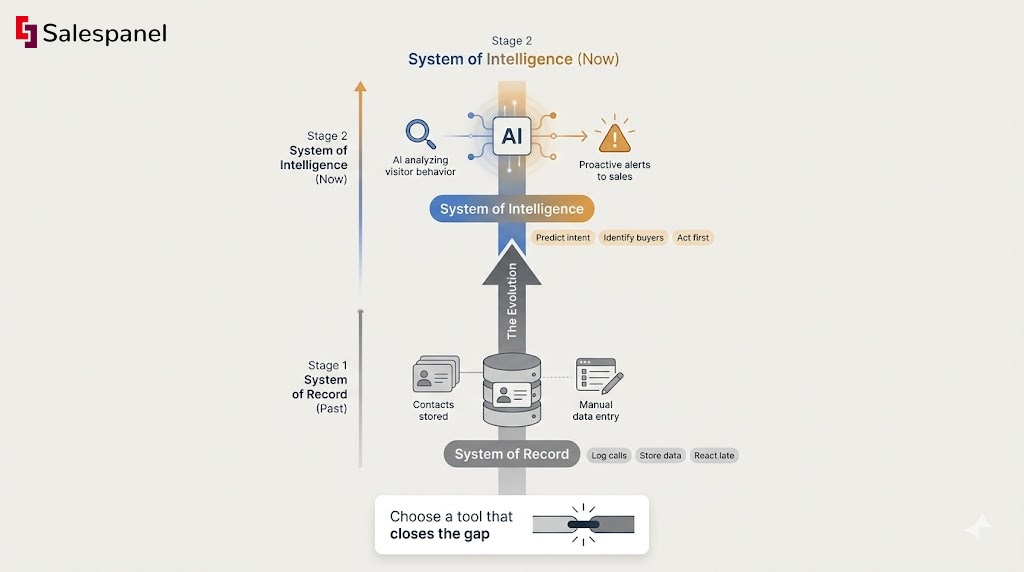
As you weigh your options, resist the temptation to make a decision based on a feature-for-feature comparison alone. Instead, evaluate each platform’s core philosophy on data acquisition and utilization. Does the tool primarily focus on organizing information your reps manually input, or does it actively help you uncover new opportunities by interpreting digital body language?
This is where the distinction becomes critical. While a platform like HubSpot excels at inbound marketing automation and Zoho CRM offers an incredible breadth of business applications, the future of effective sales tracking lies in understanding pre-conversion intent. Your most valuable prospects are exploring your website, pricing pages, and technical documentation right now, and most traditional CRMs are blind to this activity until a contact form is submitted. This data gap is where revenue opportunities are won and lost.
Key Considerations for Implementation
Before you commit, your evaluation process should be grounded in a few practical realities. Consider these crucial factors:
- Scalability vs. Current Needs: Are you a startup that needs a lean, intuitive system like Pipedrive, or an enterprise that requires the robust, customizable architecture of Salesforce? Choose a tool that fits your current team size and process maturity but has a clear path to scale with you.
- Data Integrity and First-Party Tracking: In a world of increasing privacy regulations and the deprecation of third-party cookies, how does your chosen tool capture buyer intent data? Prioritize platforms that leverage robust first-party and server-side tracking. For example, the website visitor tracking from Salespanel is built on this principle, ensuring you own your data and can accurately identify and score anonymous visitor behavior.
- Adoption and Usability: The most feature-rich platform is useless if your sales team finds it cumbersome. A tool like monday sales CRM, with its visual and intuitive interface, might drive higher adoption than a more complex system. Always involve your end-users in the trial and demo process.
- Integration Ecosystem: Your sales tracking tool does not exist in a vacuum. It must seamlessly connect with your marketing automation platform, email client, customer support software, and data analytics stack. Evaluate the native integrations and API capabilities to avoid creating data silos.
Ultimately, the right tool for your organization is the one that closes the gap between your marketing efforts and your sales conversations. It should provide a single source of truth that not only tells you what happened in the past but also provides clear signals about what you should do next. Choose a system that empowers your team with the intelligence to engage the right leads, with the right context, at the perfect moment.
Ready to move beyond basic tracking and start proactively identifying your best leads? Explore how Salespanel uses advanced first-party data and visitor intelligence to reveal high-intent buyers on your website before they ever contact you. Discover a new generation of sales tracking tools designed for proactive growth at Salespanel.