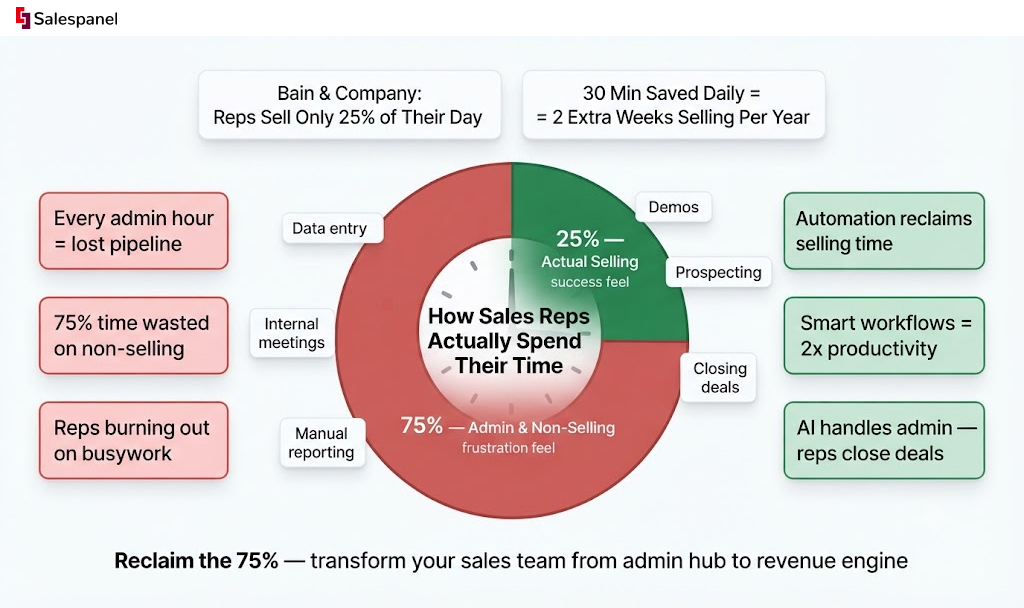
In the last decade, sales has undergone a seismic shift. The old playbook, built on cold calls and charisma, is obsolete. Today, sales productivity hinges not on working harder, but on working smarter—reclaiming the vast swathes of time sales representatives lose to administrative tasks. Research from Bain & Company reveals a startling reality: sales reps spend a mere 25% of their time on direct selling activities. The other 75% is consumed by data entry, internal meetings, and other non-revenue-generating work. This guide provides a technical, journalistic framework for reversing that trend. The central theme is simple yet powerful: to reclaim selling time through strategic process optimization and intelligent automation, transforming your sales floor from a reactive admin hub into a proactive revenue engine.
The Hidden Costs of Unproductive Sales Teams
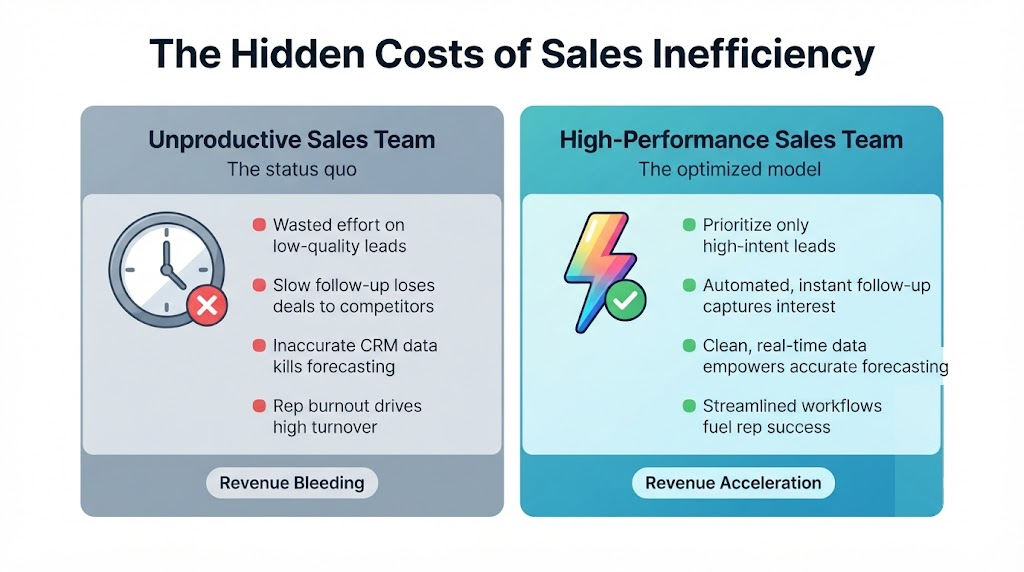
In today’s market, sales productivity isn’t just another KPI on a dashboard. It’s the engine that drives sustainable growth. Yet, there’s a massive disconnect between what sales reps should be doing and how they actually spend their days. The old-school sales model, which ran on charisma and a thick Rolodex, is completely breaking down under the weight of modern demands like data entry, manual reporting, and a mountain of administrative busywork. This inefficiency quietly bleeds revenue and kills your growth potential.
The scale of this problem is staggering. Sales reps are spending a tiny fraction of their day actually talking to customers. As previously mentioned, sellers dedicate only about 25% of their working hours to direct selling activities, with the remaining 75% swallowed by administrative tasks. This productivity gap is a huge opportunity for any company willing to implement solutions that give that time back to customer interactions. For a deeper analysis of this data, consult Bain & Company’s report on the productivity gap.
From Relationships to Data-Informed Strategy
The way sales works today demands a major shift in thinking. In the past, a charming salesperson with a great network could close deals on relationships alone. And while relationships are still vital, the modern buyer’s journey is far more complex. Buyers are more informed than ever, conducting extensive online research before engaging a sales representative. To succeed in this new landscape, a strategy informed by data and enabled by technology is not optional; it is essential.
Without it, sales teams run headfirst into some serious problems:
- Wasted Effort on Low-Quality Leads: Reps burn valuable time chasing prospects who have no real intent to buy or lack the authority to make a decision.
- Delayed Follow-Up: Manual processes mean slow response times, giving your competitors a wide-open door to engage promising leads first.
- Inaccurate Forecasting: When your CRM data is a mess because reps are too bogged down to update it, leadership can’t make reliable strategic decisions.
- Sales Rep Burnout: The constant pressure to hit targets, combined with soul-crushing admin work, leads to low morale and high turnover.
These issues feed on each other, creating a vicious cycle of inefficiency where reps are working harder, not smarter, for worse results.
The Central Theme: Reclaiming Selling Time
Falling behind on sales productivity is a direct threat to your market share. Every single hour a rep spends updating a spreadsheet is an hour they aren’t building their sales pipeline or closing a deal. The core idea of this article is to show you how to reclaim that time through the strategic use of smart processes and intelligent automation.
The ultimate goal isn’t just to make your team busier, but to make them more effective. By eliminating the administrative drag, you empower your sales professionals to focus on the high-value, human-centric activities that technology can’t replace—building trust, understanding customer needs, and negotiating complex deals.
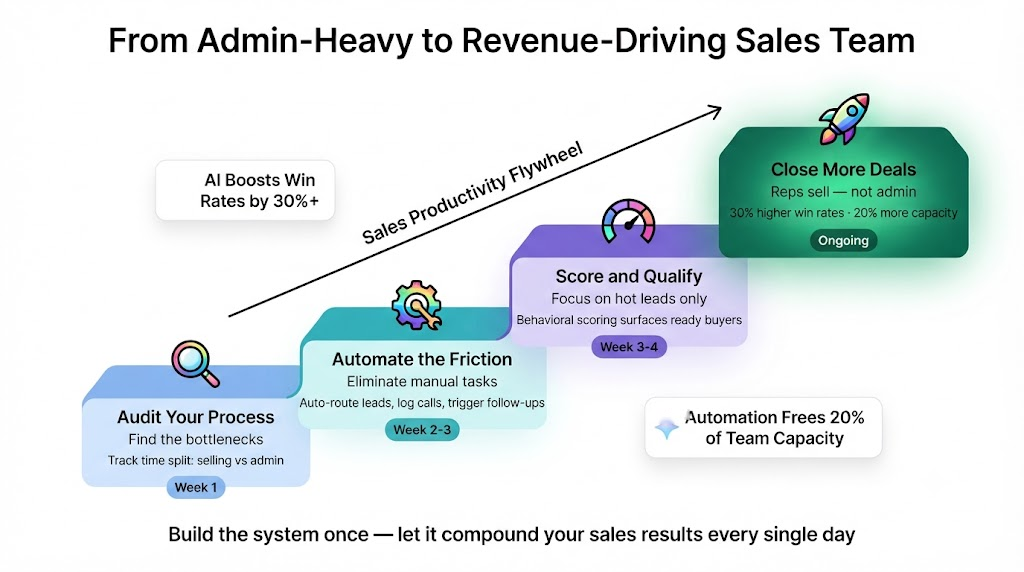
We’re going to move beyond theory and give you a step-by-step guide to diagnosing your process bottlenecks, automating repetitive workflows, and building a system that lets your team focus on what truly matters. By the end, you’ll have a clear playbook to transform your sales operation from a reactive, admin-heavy department into a proactive, revenue-driving powerhouse. This isn’t just about survival; it’s about building the foundation to dominate your market.
Finding the Real Bottlenecks in Your Sales Process
Attempting to boost sales productivity without a proper diagnosis is like performing engine repair blindfolded. You might tighten a few bolts and change the oil, but the root cause of the problem will remain untouched. Before considering solutions—such as automation, new tools, or workflow adjustments—it’s imperative to create a ‘productivity heatmap’ of your sales process to identify precise points of friction.
This is not a high-level review of revenue figures. It is a granular audit of the entire sales funnel, designed to pinpoint exactly where efficiency breaks down. This phase is a data-backed investigation. For example, if your reps are inundated with low-quality leads, that is a clear indicator of a weak qualification process. If deals consistently stall for weeks after a proposal is sent, the follow-up and closing cadences are the likely culprits.
Key Diagnostic Metrics to Analyze
First, you need to dissect the journey a lead takes from initial contact to a closed deal. This requires tracking specific conversion and velocity metrics at each stage. Your CRM is ground zero for this data, but the key is to analyze how the numbers interrelate, not just view them in isolation.
Kick off your audit by focusing on these critical areas:
- Lead Response Time: How long does it take for a sales rep to make initial contact after a new lead enters the system? A slow response time is one of the fastest ways to lose a potential deal. Studies show that contacting a lead within five minutes can increase qualification chances by a staggering 21x. Consistently high response times are a major red flag.
- Stage-by-Stage Conversion Rates: Do not be distracted by the overall lead-to-close rate. Instead, zoom in on the conversion percentage between each specific stage (e.g., MQL to SQL, SQL to Demo Booked, Demo to Proposal). A significant drop-off at any single stage is your most obvious bottleneck.
- Sales Cycle Length: On average, how long does it take to close a deal? Crucially, how does this figure differ for won versus lost deals? If lost deals are dragging on for much longer, it’s a strong indication that reps are wasting precious time on opportunities that were never going to close.
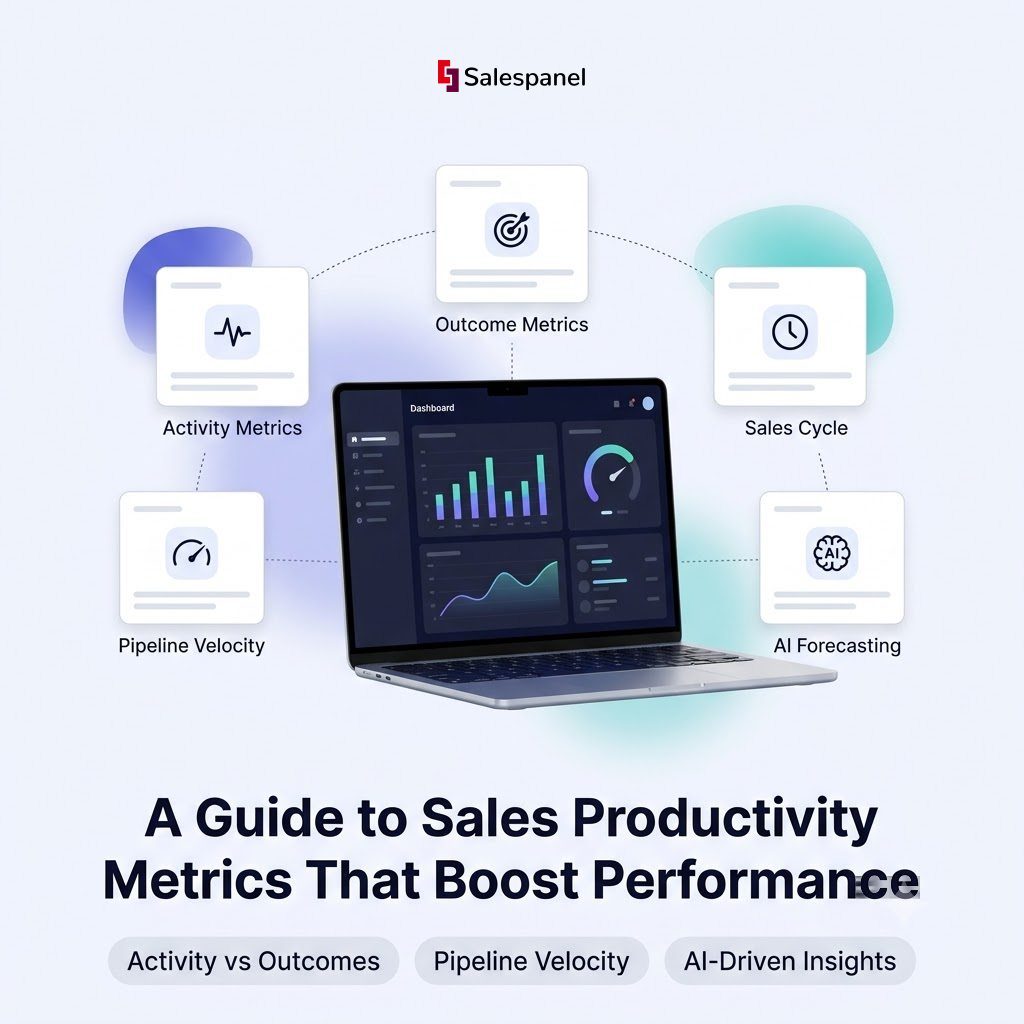
- Activity Metrics vs. Outcomes: Connect the dots between the number of calls, emails, and meetings and actual pipeline movement. If a representative makes 100 calls a day but rarely books a demo, the issue is not their work ethic—it’s their targeting, messaging, or qualification process.
Conducting a Time and Motion Study
CRM data is essential, but it doesn’t tell the full story. A critical component of a thorough diagnosis is understanding how representatives actually allocate their time. We already know a large portion of a rep’s day is often consumed by non-selling tasks. A time and motion study, even an informal one, can provide shocking clarity.
Ask your team to meticulously track their activities for one full week, categorizing everything into two simple buckets:
| Category | Examples of Activities |
|---|---|
| Revenue-Generating Activities | Prospecting calls, conducting demos, negotiating contracts, building relationships, personalized follow-ups. |
| Non-Revenue Activities | Manual CRM data entry, internal meetings, searching for content, building reports, generic administrative tasks. |
The results will yield a hard percentage of time lost to administrative drag. For instance, if you discover your team spends 10 hours per rep per week on manual CRM updates, you have just identified a high-impact area ripe for automation.
It’s easy to assume low productivity comes from a lack of effort. More often than not, it’s a symptom of a broken process. The goal here isn’t to place blame; it’s to identify the systemic flaws that are holding back even your best performers.
Pinpointing the Root Cause
Once you have this data, you can connect the dots and get a crystal-clear picture of what’s really going on.
If lead response time is slow, is it because leads aren’t being routed correctly, or are reps just completely overloaded? If deals are dying on the vine after the proposal, are your reps armed with the right follow-up materials, or is the value proposition just not hitting home?
This kind of deep-dive analysis gives you the evidence you need to make smart, informed decisions. It changes the conversation from a vague “we need to sell more” to a specific, actionable “we need to fix our demo-to-proposal conversion rate, which is costing us $50,000 in pipeline value every single month.” With that level of clarity, you can confidently move forward and start implementing solutions that will actually work.
Automating Repetitive Tasks to Reclaim Selling Time
Once you’ve dug into the data and diagnosed the real bottlenecks holding your sales team back, it’s time for tactical improvements. This is where you claw back a huge amount of selling time by handing off the repetitive, soul-crushing work to technology.
Smart workflow automation isn’t about replacing your salespeople. It’s about unshackling them from the administrative quicksand that keeps them from what they do best—building relationships and closing deals. Every minute a rep spends on manual data entry is a minute they aren’t on a call. Saving each rep just 30 minutes per day through automation adds up to over two full weeks of pure selling time regained per year, for each rep. The goal is to identify repetitive, rule-based tasks and build a machine to handle them, allowing your team to focus their energy on activities requiring a human touch: strategy, negotiation, and rapport-building.
Finding the Best Tasks to Automate
You cannot—and should not—automate everything. The optimal candidates for automation are tasks that are predictable, frequent, and do not require complex, nuanced decision-making. These are the small time-sinks that collectively create a massive drag on your team’s day.
Start by looking at these high-impact areas first:
- Lead Routing and Assignment: Stop manually assigning every new lead. A practical example is setting up rules to automatically route them based on territory, industry, or company size. This not only saves time but also slashes response time, ensuring hot opportunities are actioned immediately.
- CRM Data Entry: This is a major area. Use tools that automatically log calls, emails, and meeting notes directly into your CRM. This saves a significant amount of time and dramatically improves data accuracy, leading to better forecasting and reporting.
- Trigger-Based Follow-Ups: Create automated email sequences or task reminders that initiate based on prospect behavior. For instance, if a prospect visits your pricing page for the second time, an automated task can be created for the assigned rep to follow up within the hour. This transforms reactive follow-up into a proactive, timely engagement.
- Post-Demo Nurturing: After a great demo, don’t let the momentum die. An automated sequence can drip out relevant case studies, answer common questions, and keep your solution top-of-mind without the rep having to manually send a single email.
This whole process is about finding the friction and smoothing it out with smart systems. It really boils down to a simple, three-step cycle.
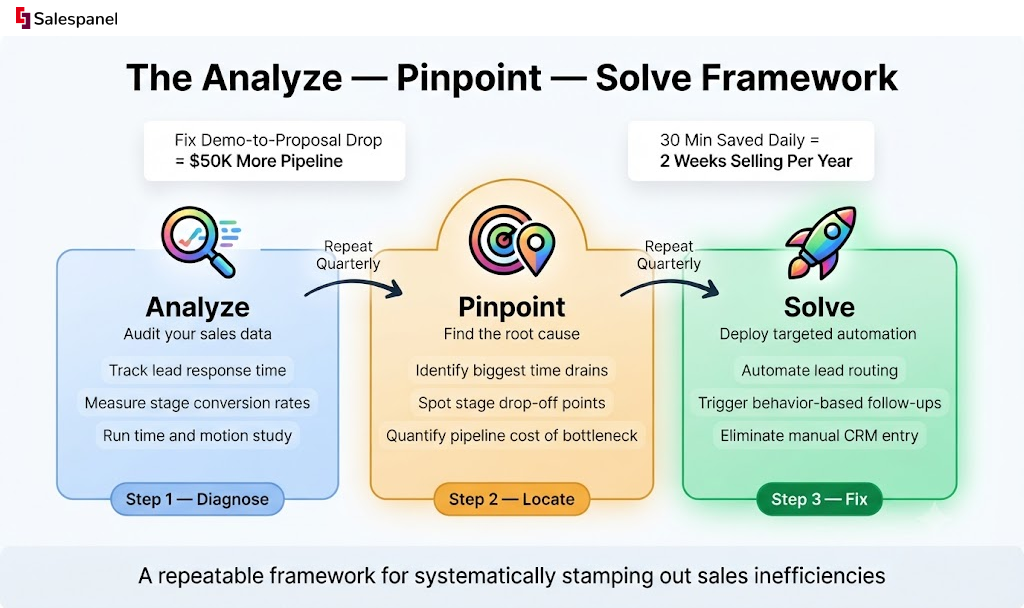
This Analyze, Pinpoint, and Solve framework gives you a clear, repeatable process for systematically stamping out inefficiencies with targeted automation.
High-Impact vs. Low-Impact Automation Tasks
To get the most out of your efforts, you need to be strategic about what you automate. Some tasks offer massive productivity gains, while others might be risky or provide minimal return.
Here’s a quick comparison to help you prioritize:
| Task Category | High-Impact Automation Example | Low-Impact (or Risky) Automation Example | Productivity Gain |
|---|---|---|---|
| Lead Management | Automatically routing new leads to reps based on territory or industry. | Automatically disqualifying a lead based on a single, minor data point (e.g., a free email domain). | High |
| Data Entry | Syncing call logs, emails, and meeting notes directly to the CRM. | Auto-populating CRM fields with unverified third-party data that could be inaccurate. | High |
| Prospect Outreach | Triggering a personalized, multi-step email sequence after a demo. | Sending a generic, fully automated cold outreach sequence to a purchased list without any personalization. | Medium |
| Internal Communication | Automatically notifying a channel in Slack when a new deal closes. | Sending automated, non-critical notifications for every minor update in the CRM. | Low |
| Scheduling | Using a tool like Calendly to let prospects book meetings directly on a rep’s calendar. | Automatically sending meeting invites without giving the prospect any choice in time or attendees. | High |
Focusing on the “High-Impact” column ensures you’re tackling the tasks that will give you the biggest boost in efficiency and free up the most time for your sales team.
The Real-World Impact of Smart Automation
This isn’t just theory; the strategic use of AI and automation in sales workflows has a direct, measurable impact on the bottom line. Early adopters are already seeing substantial wins.
For example, some analyses show that early AI deployments have boosted win rates by more than 30%—a massive jump that translates directly into revenue. Beyond just winning more deals, these tools are collectively freeing up around 20% of a sales team’s total capacity. That’s one full day per week, per rep, given back to them.
Automation is a force multiplier for your sales team. It handles the mundane so your reps can focus on the meaningful—the conversations, negotiations, and relationships that actually close deals.
When you automate tasks like data entry and lead management, you’re not just making your team faster; you’re making them smarter. They get to operate with cleaner data, lightning-fast response times, and more context for every single interaction. For a broader look at this, it’s worth exploring ways to improve team efficiency through routines and automation to see how these principles apply across the business.
Ultimately, effective automation is the bridge between spotting a process problem and actually solving it. It turns the insights from your audit into a tangible system that gives your reps their most valuable resource back: time to sell. This shift is essential for building a modern, high-performance sales organization.
Mastering Lead Qualification to Focus on High-Value Deals
If there’s one surefire way to boost sales productivity, it’s this: stop wasting time. More specifically, your team needs to stop investing energy into leads that have zero genuine potential to convert. A team spending half its day chasing prospects who were never a good fit is a team running at a fraction of its real capacity.
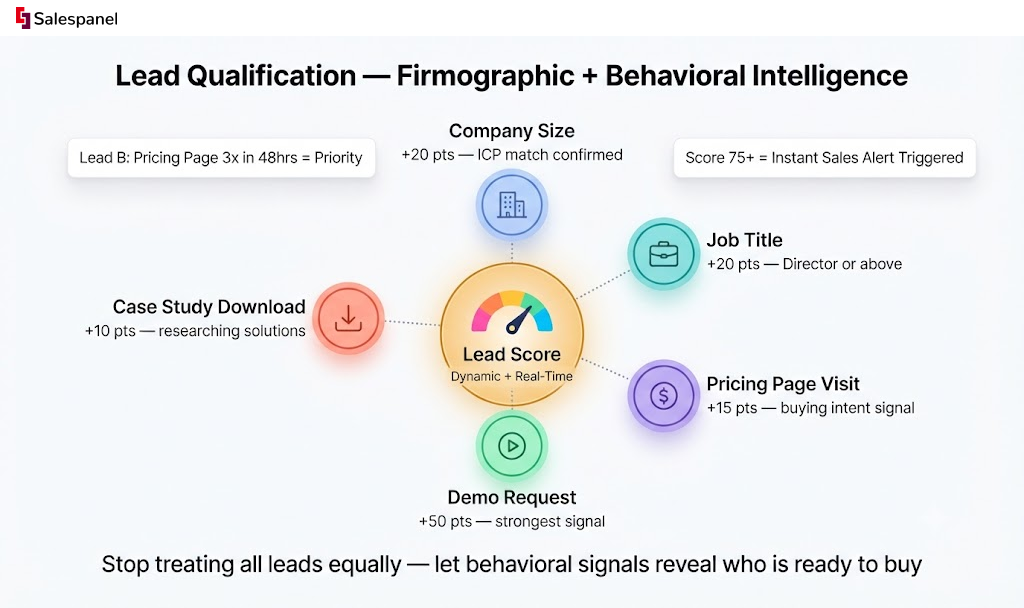
This is where a solid lead qualification and lead scoring system becomes an absolute non-negotiable. The whole point is to automatically surface the best opportunities so your reps can engage with precision at the perfect moment. Instead of treating every lead as equal, you begin prioritizing based on their firmographic profile and real-time buying signals.
Beyond Demographics: Understanding Buying Signals
An effective qualification framework analyzes two distinct types of data: firmographic and behavioral.
Firmographic data tells you who the lead is. Consider it their business card information:
- Company size and annual revenue
- Industry or vertical
- Geographic location
- The prospect’s job title or seniority
This information is crucial for validating if a lead aligns with your Ideal Customer Profile (ICP). It answers the fundamental question, “Is this the right type of company for us?”
However, firmographics alone are insufficient. A perfect ICP match might have no current buying intent. This is where behavioral data becomes critical. Behavioral data reveals what a lead does. It’s their digital body language, packed with indicators of buying intent, such as visiting your pricing page, requesting a demo, or downloading an in-depth case study.
The Power of Behavioral Intelligence
Consider a practical example. Imagine two leads, both VPs of Operations at 500-person tech companies—a perfect fit based on firmographics.
- Lead A downloaded a top-of-funnel whitepaper two weeks ago and has not returned to your site.
- Lead B visited your pricing page three times in the last 48 hours, watched a product demo, and reviewed a case study from a similar company.
The clear priority is Lead B. Their actions signal active consideration and urgency. Without a system to capture and weigh these behaviors, both leads might appear identical in a CRM queue. This is precisely why a tool like Website visitor tracking from Salespanel is indispensable. It captures these critical buying signals as they happen, providing the raw data to differentiate casual browsers from serious buyers.
Implementing a Lead Scoring Framework
Once you begin tracking these behaviors, the next step is to assign a quantitative value to them. This is the function of lead scoring—a methodology for assigning points to leads based on their profile and their actions.
A simple scoring model might look like this:
| Action or Attribute | Points Assigned | Rationale |
|---|---|---|
| Firmographic: Job Title | +20 (Director or higher) | Decision-maker authority |
| Firmographic: Industry | +15 (Matches ICP) | Ideal target vertical |
| Behavioral: Demo Request | +50 | Strong buying signal |
| Behavioral: Pricing Page Visit | +15 (per visit) | Interest in budget/cost |
| Behavioral: Case Study Download | +10 | Researching solutions |
| Behavioral: Unsubscribe | -100 | Clear lack of interest |
This system is dynamic. A lead’s score constantly updates as they interact with your brand. A prospect who initially seemed cold can rapidly rise in priority after a series of high-intent activities.
A well-implemented lead scoring system acts like an automated triage nurse for your sales team. It ensures the most critical cases (hot leads) are seen immediately, while less urgent ones are nurtured until they show stronger signs of readiness.
This data-driven approach removes guesswork from the sales process. Reps no longer have to manually sift through hundreds of leads, trying to determine who is worth their time. Salespanel’s lead scoring framework, for instance, automates this entire process. It assigns points, performs the calculations, and pushes the hottest, sales-ready leads directly to the top of the queue in your CRM. This empowers reps to engage at the optimal moment, ensuring their most valuable asset—time—is consistently spent on deals most likely to close.
Building Your High-Performance Sales Tech Stack
The right tools are a massive force multiplier for any sales team. The wrong ones? They just create friction, data silos, and a whole lot of chaos. Building a high-performance sales tech stack isn’t about collecting the most impressive logos for your slide deck. It’s about creating a cohesive, integrated ecosystem where every single tool works together to make your reps smarter, faster, and more effective.
The primary objective is to create a system where each piece of software enhances the others, transforming your technology investment into a genuine competitive advantage. This requires that every tool communicates with every other tool, eliminating manual data entry and establishing a single source of truth for every prospect interaction.
The Foundational Pillars of a Modern Stack
A winning tech stack really boils down to three core pillars. They each do something different, but their real power is unlocked when they operate as a single, well-oiled machine.
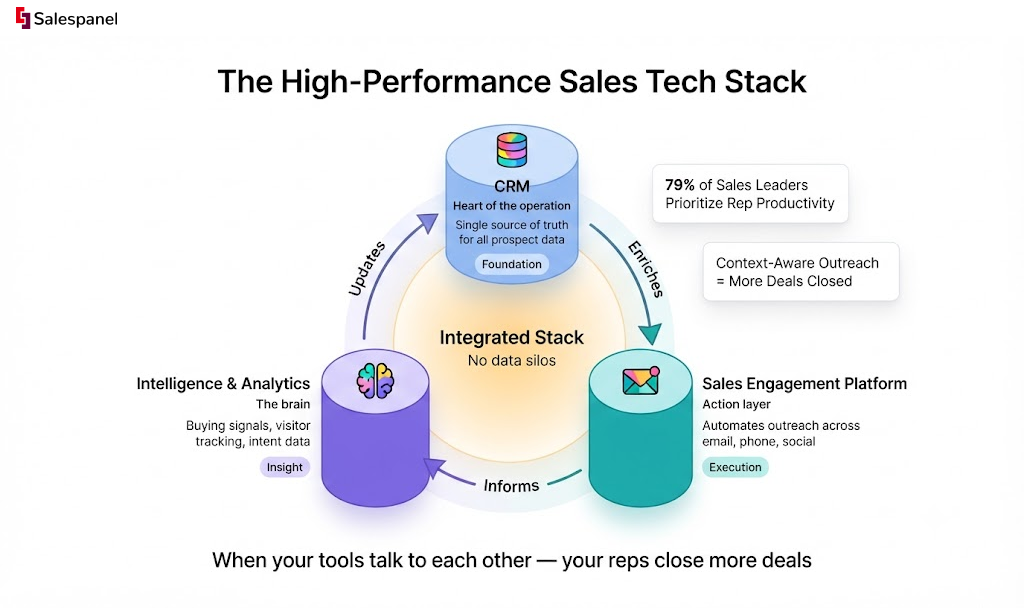
- Customer Relationship Management (CRM): This is the heart of your entire sales operation. Non-negotiable. Your CRM is the central nervous system, housing every scrap of customer and prospect data. Every other tool should read from it and write back to it.
- Sales Engagement Platform (SEP): Think of this as the action layer. SEPs are what your reps use to automate and manage outreach across email, phone, and social media. They help reps execute personalized communication at a scale that would be impossible manually, handling the “how” and “when” of every touchpoint.
- Intelligence and Analytics Tools: This is the brain. These are the tools that provide the crucial context and buying signals that turn a good outreach into a great one. This category is broad, covering everything from conversation intelligence to buyer intent data.
When this stack isn’t integrated properly, you force your reps to live in a world of endless tab-switching and copy-pasting. They’re making calls based on incomplete data, which is a massive drain on productivity and a perfect recipe for letting good opportunities slip through the cracks.
Integrating for Context and Performance
Seamless integration is what separates a merely functional tech stack from a high-performance one. When your tools are connected, data just flows. It automatically enriches your CRM and gives your reps the context they need to have conversations that actually land.
Here is a practical example. A prospect lands on your website. Without integration, it’s just an anonymous hit in your analytics. But with a connected stack, you see the whole story unfold.
A tool like Website visitor tracking from Salespanel can identify that visitor, capture their entire journey on your site—from the blog posts they read to the case studies they download—and sync all of that rich behavioral data right into their profile in your CRM.
That one integration completely changes the game. A cold call is instantly transformed into a warm, context-aware conversation. Your rep isn’t starting with, “Have you heard of us?” They’re opening with, “Hey, I saw you were looking at our case study on [Industry X]—what specific challenges are you running into that we might be able to help with?” That level of preparation makes a world of difference.
This relentless focus on efficiency is quickly becoming a top priority for sales orgs everywhere. The pressure to perform is intense, with a staggering 79% of sales leaders pointing to enhanced rep productivity as a key driver for hitting their growth targets. This makes sense, especially when you look at recent data showing that only a fraction of reps are actually hitting their quotas, a sharp drop from just a few years ago. You can explore more sales performance statistics to really grasp the urgency here.
The Synergistic Effect of a Cohesive Stack
Ultimately, the goal is a system where the whole is far greater than the sum of its parts. Your sales engagement platform pulls data from the CRM to personalize outreach. At the same time, your intelligence tools are feeding new behavioral insights back into the CRM, which then triggers new automated sequences in your SEP.
It creates a virtuous cycle of data enrichment and intelligent action. Reps are no longer just banging out calls; they’re executing highly informed plays based on what prospects are doing in real-time. This is how you transition a team from just working hard to working smart, turning your tech stack from a necessary cost into a powerful engine for revenue growth.
Still Have Questions About Sales Productivity?
You’re not alone. When you start digging into sales productivity, a lot of practical questions pop up. Let’s tackle some of the most common ones I hear from teams trying to put these ideas into action.
Where Do I Even Start With Improving Sales Productivity?
Before you buy any new software or tear up your existing process, you need to do a simple productivity audit. Seriously, just track what your reps are doing for one full week.
You need to draw a hard line between active selling (calls, demos, negotiating) and all the other stuff that fills up the day (non-selling tasks like admin, data entry, and internal meetings). This one exercise will shine a massive spotlight on your biggest time-wasters. Once you have that data, you’ll know exactly which fix—whether it’s CRM automation or a new email sequencer—will give you the biggest bang for your buck and score a quick win for the team.
How Can I Actually Measure the ROI of a New Sales Tool?
Gut feelings don’t cut it when you’re trying to justify a new expense. You need cold, hard data. The key is to measure a few specific metrics before and after you roll out a new tool.
Here’s what to track:
- Time Saved Per Rep: How many hours of manual work is the tool actually eliminating?
- Increase in High-Value Activities: Are your reps booking more demos or making more calls now that they have more time?
- Shorter Sales Cycles: Are deals closing faster? Measure the average time from first touch to closed-won.
- Better Win Rates: Is the percentage of deals you’re winning going up?
Let’s say a new lead scoring tool helps your team’s win rate climb from 20% to 25%. That’s a tangible 5% revenue increase you can directly tie back to your investment. That’s how you build a rock-solid case for any tool.
Will This Stuff Work for a Really Small Sales Team?
Absolutely. In fact, these strategies are often a lifeline for smaller teams. Think about it: when you only have three reps, one person wasting an hour on admin work hurts way more than it would on a team of thirty. Every minute is precious.
For a small team, things like lead scoring aren’t a “nice-to-have”; they’re critical for survival. It stops you from burning your limited time chasing unqualified leads. Automation tools can act like a virtual sales assistant, helping a lean team punch way above its weight and compete with much larger organizations. The trick is to start small with an affordable tool that solves your single biggest bottleneck first.
How Do I Get My Reps to Actually Adopt a New Process?
This is the million-dollar question, isn’t it? Adoption all comes down to one thing: making their lives easier. If your team sees a new process as just more admin work, they’ll fight you every step of the way.
To get buy-in, you have to frame every new tool or workflow around this one question: “How does this help me hit my quota and do less tedious work?” If your answer isn’t crystal clear, forget about it.
Get them involved in picking the tools so they feel some ownership. Start with a pilot program with a few of your most tech-savvy reps and let them become your internal champions. But most importantly, the new way has to be genuinely better. If a new tool adds more clicks than it saves, your team is right to reject it.
At Salespanel, our philosophy centers on giving sellers back their time. Our platform is engineered from the ground up to automate the tedious work of identifying and qualifying high-intent buyers. This frees up your team to do what they do best: engage in the meaningful conversations that close deals.
Ready to see how much more your team can accomplish? Check out our resources.