The role of the Data Protection Officer (DPO) has undergone a seismic shift. Born from the regulatory crucible of GDPR in 2018, the DPO was initially seen as a compliance gatekeeper, a necessary legal hurdle in a new era of data privacy. Fast forward to today, and that perception is dangerously outdated. As data breaches become more sophisticated and fines for non-compliance skyrocket—with the EU alone issuing over €2.1 billion in GDPR fines in 2024—the DPO has evolved from a reactive legal function into a proactive, strategic business advisor. This guide unpacks the modern DPO’s responsibilities, moving beyond the legal jargon to provide a clear, in-depth framework for turning data protection from a business cost into a competitive advantage. This is not just about avoiding penalties; it’s about architecting trust in an economy that runs on data.
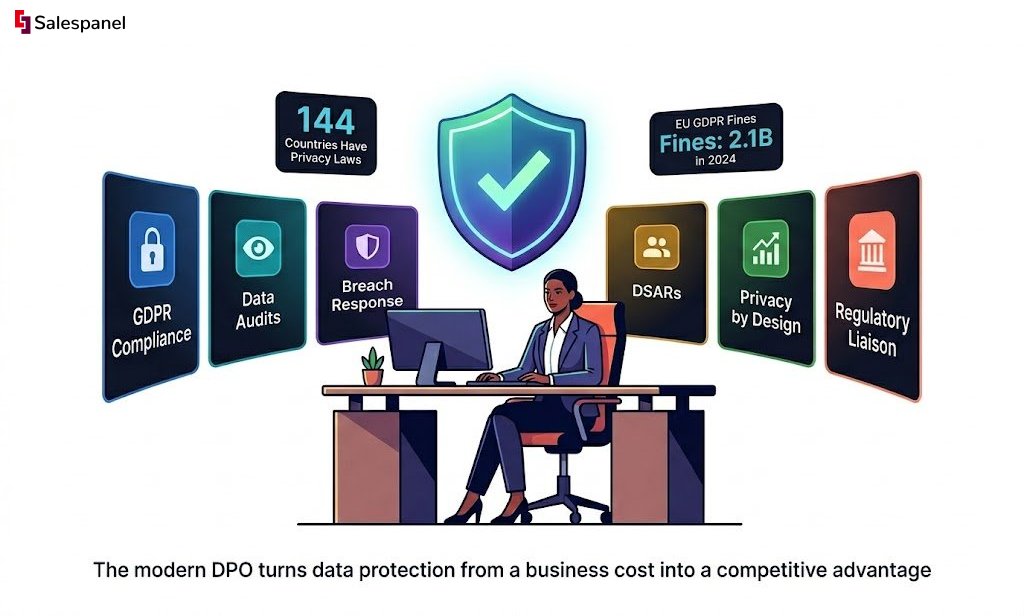
The DPO: From Compliance Cop to Strategic Advisor
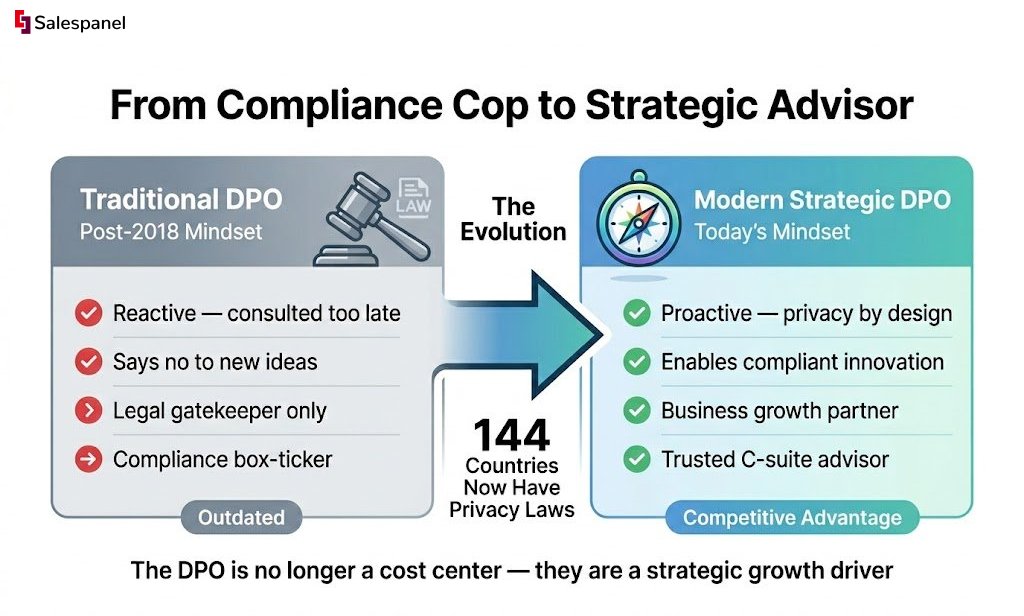
The central theme for the modern DPO is clear: transform data protection from a business roadblock into a powerful engine for sustainable growth and customer loyalty. What began as a purely administrative function—a legal box to tick after GDPR landed—has matured into a vital strategic role. This evolution mirrors a much broader shift in the business world, where data privacy is no longer a niche legal issue but a cornerstone of corporate strategy and customer trust.
The stakes have never been higher. A wave of privacy legislation across the globe confirms it. By early 2025, 144 countries had put data and consumer privacy laws in place. The numbers highlight the very real financial and reputational damage that comes from getting it wrong. You can learn more about these critical data privacy statistics and what they mean for businesses today.
Shifting from Reactive to Proactive
The DPO of yesterday was often a reactive figure. They were the person you called after a data breach happened or when a new regulation was just around the corner. That model is now completely obsolete. Today’s DPO is proactive. They embed “privacy by design” right from the beginning, whether it’s in new product development, a marketing campaign, or the adoption of new tech. This means their guidance helps businesses navigate tricky areas like implementing AI or monetizing data without losing customer trust. The modern DPO’s responsibilities have broadened to include:
- Strategic Guidance: Advising leadership on how data protection can be a competitive edge, not just a line item on the budget.
- Ethical Oversight: Ensuring new technologies, especially AI, are developed and used in ways that respect individual rights.
- Business Enablement: Collaborating with teams like marketing and sales to find compliant ways to hit their targets, all while building a culture of data responsibility.
This evolution is best captured by looking at how the role has transformed over the last few years.
The DPO Role Then and Now
The table below breaks down the key shifts in the DPO’s focus, moving from a rigid, compliance-first mindset to a more integrated, strategic approach that aligns privacy with core business objectives.
| Area of Focus | Traditional DPO (Post-2018) | Modern Strategic DPO |
|---|---|---|
| Primary Goal | Achieve and maintain legal compliance. | Drive business growth through trust and ethical data use. |
| Involvement | Reactive; often consulted late in projects. | Proactive; involved from the initial stages (“privacy by design”). |
| Mindset | “No, you can’t do that.” (Risk avoidance) | “Here’s how we can do that compliantly.” (Business enablement) |
| Key Skillset | Deep legal and regulatory knowledge. | Legal expertise plus business acumen and technical understanding. |
| Relationship with Teams | Seen as a gatekeeper or auditor. | A collaborative partner and strategic advisor. |
| Technology Focus | Focused on GDPR-specific tools (e.g., consent banners). | Advises on privacy implications of AI, MarTech, and new data models. |
This table illustrates a fundamental change: the DPO is no longer just preventing bad things from happening. They are now actively helping good things happen in a responsible, sustainable way. This shift is non-negotiable. As companies gather more and more data to personalize experiences and boost sales, the DPO’s job is to ensure it’s all done responsibly. They are the essential link between legal mandates, technical execution, and business goals, making their strategic input a must-have for long-term success.
Understanding the Core DPO Responsibilities
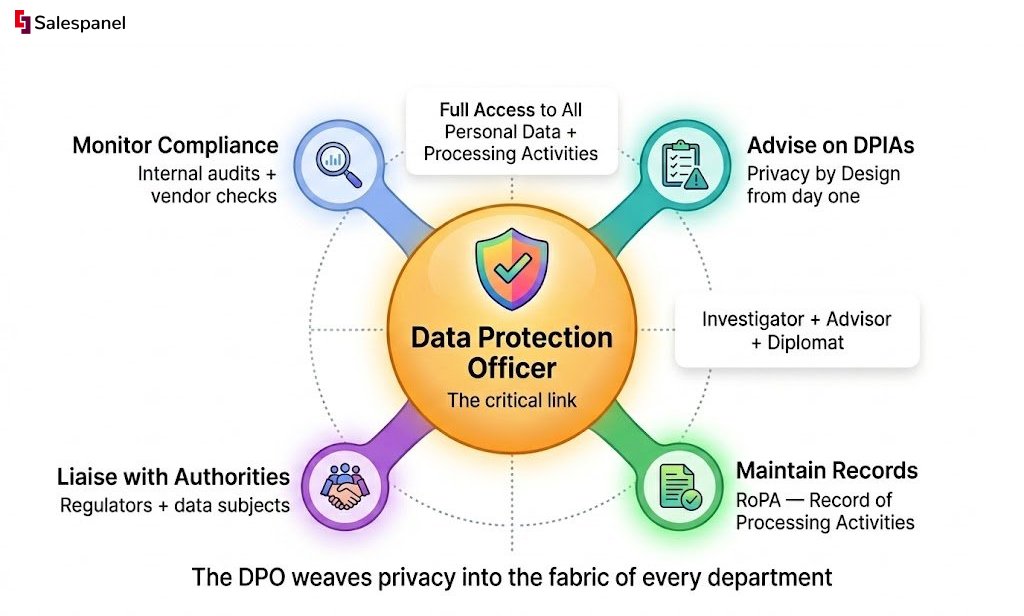
To truly understand what a Data Protection Officer does, we must look past the job description. The core data protection officer responsibilities aren’t a static checklist; they are about weaving privacy deep into the fabric of a company. These duties, first codified by GDPR, are now a global standard for handling data legally, ethically, and securely. A DPO is part investigator, part advisor, and part diplomat—the critical link between legal jargon, technical execution, and business goals.
The DPO role took center stage after the EU’s General Data Protection Regulation (GDPR) came into force in May 2018. Since then, their job has crystallized around ensuring all data processing is lawful, guiding the company on complex regulations, and maintaining detailed records. A 2024 report from the EDPS highlighted that DPOs in EU bodies now have full access to all personal data and processing activities, enabling them to conduct thorough, independent audits. You can find a great overview of the DPO’s function within the EU’s framework to see its legal roots.
Monitoring Compliance and Conducting Audits
A primary responsibility of a DPO is the constant monitoring of an organization’s compliance with data protection laws. This is not a passive role; it demands active, continuous oversight through internal audits and regular check-ins with various departments. The DPO functions as an internal quality control specialist for data privacy, scrutinizing how teams—from marketing to HR—collect, handle, store, and eventually delete personal data.
This process involves a deep dive into data processing agreements with vendors and ensuring the company’s own privacy policies accurately reflect operational practices. The DPO’s work also requires staying abreast of global regulations, such as ensuring POPIA compliance in South Africa, which mirrors many GDPR principles. The ultimate goal is to identify potential risks and compliance gaps before they escalate into costly data breaches or regulatory fines, thereby building a resilient data protection program.
Advising on Data Protection Impact Assessments
Whenever a new project involves processing personal data in a way that could pose a high risk to individuals, a Data Protection Impact Assessment (DPIA) is typically mandatory. The DPO serves as the lead advisor in this process, guiding teams to ensure they are building “privacy by design” from the project’s inception. A DPIA is a systematic risk assessment that compels an organization to evaluate the potential impact of a project on individuals’ privacy before any data is collected.
Practical Example: A DPIA for a New Analytics Platform
Imagine a B2B marketing team wants to implement a new analytics platform to better understand website visitor behavior. The DPO’s involvement would be structured as follows:
- Scoping the Project: The DPO collaborates with the marketing team to precisely map out the personal data to be collected (e.g., IP addresses, user IDs, browsing history), its intended use, and access controls.
- Identifying Risks: They systematically identify potential privacy risks. Could the data be used for overly invasive profiling? Is the data storage mechanism secure? What is the contingency plan for a data breach?
- Proposing Solutions: The DPO then recommends specific measures to mitigate these risks. This could involve anonymizing certain data points, establishing strict data retention policies, or verifying that the platform’s vendor holds robust security certifications.
This collaborative process ensures the marketing team achieves its analytical goals without compromising compliance or eroding customer trust.
Acting as a Liaison with Authorities and Individuals
Finally, the DPO serves as the official point of contact for two critical groups: regulatory bodies (known as Supervisory Authorities under GDPR) and the individuals whose data is being processed (data subjects).
- For Supervisory Authorities: In the event of a data breach or an official inquiry, the DPO manages all communications with regulators, provides necessary documentation, and cooperates with any investigations.
- For Data Subjects: When an individual wishes to exercise their privacy rights—such as requesting a copy of their data or its deletion—the DPO ensures these requests are handled correctly and within legal deadlines.
This dual-facing communication role is vital for maintaining transparency and accountability with regulators while demonstrating to customers that their rights are respected and taken seriously.
How a DPO Actually Impacts B2B Marketing and Sales
In B2B, data is the engine of growth, fueling everything from lead generation to personalization. However, this engine carries significant legal and reputational risks if not managed by a skilled navigator. This is where a Data Protection Officer (DPO) becomes indispensable, as their responsibilities directly intersect with the daily operations of revenue teams. A proficient DPO acts not as a roadblock but as a strategic partner, helping marketing and sales achieve their targets without exposing the company to regulatory penalties. Their guidance can transform compliance from a burdensome requirement into a tangible asset for building trust—the bedrock of any lasting business relationship.
From Lead Forms to a Lawful Basis
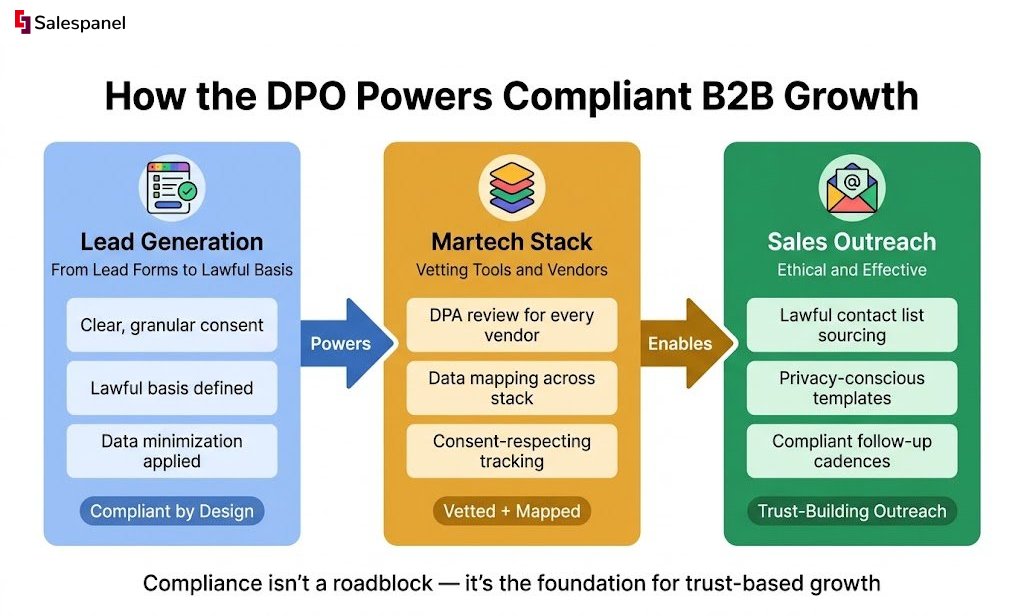
Lead generation is one of the first areas where a DPO’s influence is felt. Every form, webinar registration, and content download is a data collection point under intense regulatory scrutiny. The DPO’s responsibility is to ensure these activities are not only effective but also legally sound. This involves a technical analysis of key areas:
- Consent Management: The DPO works with marketing to ensure consent is clear, specific, and freely given. This means eliminating pre-checked boxes and ambiguous language. They help design forms that explicitly state why data is being collected and how it will be used, ensuring the consent obtained is valid under laws like GDPR.
- Lawful Basis for Processing: Consent is not the only legal ground for processing data. A DPO helps determine the most appropriate lawful basis for specific activities. For many B2B marketing functions, “legitimate interest” may be a more suitable basis, but this requires a meticulous balancing test. The DPO provides the legal framework to justify this approach.
- Data Minimization: DPOs challenge teams to collect only the data that is absolutely necessary. For a newsletter signup, for example, is it essential to collect a prospect’s phone number, job title, and company size? Likely not. The DPO helps streamline data collection, which respects user privacy and reduces the company’s overall risk profile.
Practical Example: A marketing team wants to gate a new whitepaper. The DPO advises them to implement two distinct checkboxes: one for the whitepaper download itself and another for opting into ongoing marketing communications. This granular consent mechanism is not only compliant but also provides a superior user experience, building trust from the very first interaction.
Navigating the Modern Martech Stack
Today’s B2B technology stack is a complex ecosystem of CRMs, automation platforms, and analytics tools, all processing vast amounts of personal data. A core part of a DPO’s responsibilities is to vet these tools and their vendors to ensure they adhere to the company’s privacy standards. The DPO collaborates with Martech and Sales Ops teams to conduct thorough due diligence, scrutinizing vendor contracts for robust Data Processing Agreements (DPAs) that clearly define security measures and data handling protocols.
The DPO also spearheads data mapping initiatives, creating clear diagrams that illustrate how lead data flows through the entire tech stack—from initial capture on the website to its final destination in the CRM. This map is crucial for managing data subject requests and identifying potential security vulnerabilities. For instance, when integrating a tool for Website visitor tracking from Salespanel, a DPO ensures it is configured to respect user consent and adhere to data minimization principles, transforming it into a powerful and compliant tool for identifying high-intent accounts.
Enabling Ethical (and Effective) Outreach
Sales and marketing outreach, particularly via email, is another area where a DPO’s guidance is critical. Cold outreach is a staple of B2B prospecting, but it must be conducted within legal guardrails. A DPO helps establish the rules of engagement to prevent the company from being blacklisted for spam or violating privacy laws. They provide advice on the lawful acquisition of contact lists and help shape privacy-conscious email templates and compliant follow-up cadences. This ensures prospecting efforts are not only effective but also build a reputation for professionalism and respect. For teams seeking to refine their approach, a DPO can help evaluate various email outreach tools and their integrated compliance features. By embedding data protection into marketing and sales operations, a DPO does more than manage risk; they empower revenue teams to build stronger, more authentic prospect relationships, turning compliance into a true competitive advantage.
Navigating a Data Privacy Crisis: Breach Response and DSARs
When a data privacy crisis hits, the Data Protection Officer is the one in the command chair. Two of their most high-stakes responsibilities are navigating the chaos of a data breach and orchestrating responses to Data Subject Access Requests (DSARs). These aren’t just items on a legal checklist; they are defining moments for a company’s reputation.
How you respond in those first critical hours after a breach can be the difference between maintaining customer trust and facing crippling fines. Likewise, handling people’s requests for their own data efficiently and transparently shows you’re serious about privacy. A skilled DPO turns these potential disasters into structured, compliant processes.
Commanding the Data Breach Response
The moment a breach is suspected, the clock starts ticking. Loudly. The DPO immediately steps in to lead the incident response, coordinating across legal, IT, and communications to execute a plan that should already be in place. The mission is to move from discovery to containment and notification with speed and precision.
A breach isn’t just a technical problem—it’s a legal one with a brutal deadline. Under GDPR, you have just 72 hours from the moment you’re aware of a breach to notify the relevant supervisory authority, unless it’s unlikely to risk people’s rights. That tight window leaves zero room for fumbling.
The DPO’s role here is hands-on and action-oriented:
- Immediate Assessment: First things first, the DPO works with the security team to figure out the blast radius. What data was hit? How many people are affected? What’s the potential for harm?
- Containment Strategy: While IT is scrambling to plug the hole, the DPO is right there advising on the legal side of things. Every action taken to contain the breach has to be done carefully so you don’t accidentally destroy crucial evidence.
- Regulatory Notification: The DPO is on the hook for preparing and filing the official notification. This document has to detail the nature of the breach, its likely consequences, and the steps you’re taking to fix it.
- Individual Communication: If the breach poses a high risk to individuals, the DPO also oversees getting the word out to them directly. This means explaining what happened in clear, human language—no jargon—and telling them how to protect themselves. This is all about building trust, not eroding it further.
A meticulously maintained Record of Processing Activities (RoPA) is a DPO’s secret weapon during a breach. This isn’t just paperwork; it’s a living map of all your data flows. When a system is compromised, a good RoPA instantly shows what personal data was in there, who had access, and where it was going. That insight is gold when you’re racing to meet that 72-hour notification deadline.
Fulfilling Data Subject Access Requests
Beyond full-blown crises, a DPO oversees the routine—but equally critical—process of handling requests from people exercising their privacy rights. The most common one is the Data Subject Access Request (DSAR), where someone asks for a copy of every piece of personal data you hold on them.
This process sounds simple, but it can get complicated fast. A single person’s data is often sprinkled across a dozen different systems: your CRM, email marketing platform, analytics tools, customer support tickets, you name it. The DPO’s job is to make sure the company can actually find all of it, pull it together, and deliver it accurately within the legal timeframe (usually one month).
This is where a privacy-first approach to your tech stack really pays off. At Salespanel, we design our solutions with data retrieval in mind, recognizing that knowing where customer data lives is half the battle. For example, data captured through Website visitor tracking from Salespanel needs to be easily accessible to fulfill a DSAR. The DPO works with marketing and sales ops to ensure systems are configured not just for generating leads, but for compliant data management, turning a legal obligation into a streamlined workflow.
By building out documented processes for both breach response and DSARs, the DPO transforms these legal obligations from chaotic fire drills into predictable, manageable operations that protect both the individual and the organization.
The DPO as a Strategic Value Driver
Let’s reframe the conversation around the Data Protection Officer. Too often, the DPO is seen as a mandatory line item, a cost center dictated by compliance. But that view is outdated. In an economy where trust is the new currency, a DPO’s role is much bigger than legal box-ticking. They are the chief architects of a company’s data strategy, and that’s a massive competitive advantage.
The modern DPO is a strategic partner who weaves “privacy by design” into the fabric of your digital projects. When they advise on anything from a new AI tool to smart data minimization practices, they aren’t just steering you clear of multimillion-dollar fines. They are actively boosting your brand’s reputation, building rock-solid customer loyalty, and even spotting ways to run more efficiently.
From Risk Mitigation to Value Creation
The smartest organizations get it: a DPO isn’t there to shut down new ideas but to help them launch safely. When a DPO is in the room from the very beginning—whether you’re rolling out a new CRM or an AI-powered analytics platform—they ensure privacy is a cornerstone, not a last-minute patch. This proactive approach saves you from costly redesigns and builds trust with your customers from day one.
Strong data governance, with the DPO at the helm, delivers real, tangible benefits. Take data minimization, for example. A disciplined strategy means you only collect and hold onto what’s absolutely necessary. This not only shrinks the potential blast radius of a data breach but also slashes your data storage and management costs, directly impacting the bottom line.
A strategic DPO gets their hands dirty in the design and rollout of new tech, making sure privacy is baked in from the start. As businesses go all-in on digital, this guidance is indispensable. By 2026, global spending on security and risk management is expected to climb to USD 212 billion, a 15% increase from 2024. That number alone shows just how central this function has become to corporate strategy. You can discover more insights about the DPO as a value creator and see how their influence is growing.
Architecting a Privacy-First Culture
One of the DPO’s most critical jobs is to build a company-wide culture that truly values data protection. This doesn’t happen with a few memos or a mandatory training session. It’s about showing every single department why privacy is good for business. The DPO’s gift is translating dense legal jargon into practical, actionable advice for the teams on the front lines.
- For Marketing Teams: The DPO shows them how to run killer campaigns that respect user consent, turning privacy into a brand asset that wins over savvy customers.
- For Product Development: They sit with engineers to build features that are both cool and privacy-conscious, slashing the risk of a regulatory headache later on.
- For Sales Teams: Guidance from a DPO helps sales pros use prospecting data ethically, building stronger, trust-based relationships from the very first handshake.
This infographic breaks down the critical process a DPO oversees during a data breach, from the moment of discovery to containment and proper notification.
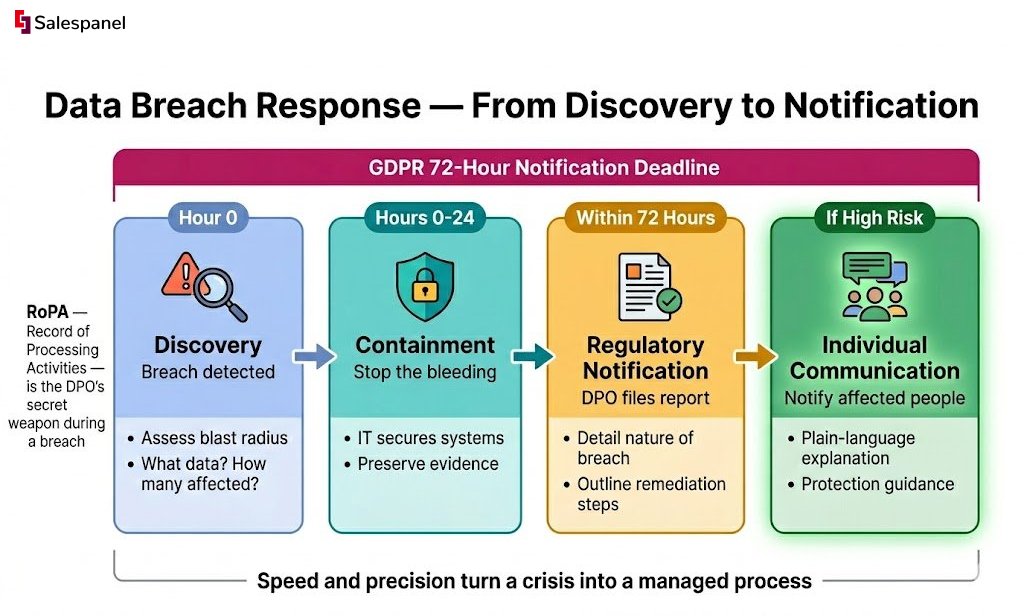
What this shows is how a DPO’s structured, calm approach can turn a potential crisis into a manageable, compliant process, protecting both the company and its customers.
The following table connects the dots between a DPO’s core duties and the concrete value they bring to the business. It’s a clear look at the ROI of investing in a strong data protection program.
DPO Activities and Their Business Value
| DPO Responsibility | Compliance Outcome | Strategic Business Value |
|---|---|---|
| Monitoring Compliance | Avoids fines and legal penalties under GDPR, CCPA, etc. | Enhances brand reputation and builds customer trust. |
| Advising on DPIAs | Ensures new projects are “privacy by design.” | Prevents costly project redesigns and accelerates innovation. |
| Data Breach Response | Manages incidents efficiently, meeting notification deadlines. | Minimizes financial and reputational damage from a breach. |
| Staff Training | Creates a privacy-aware workforce, reducing human error. | Strengthens the “human firewall” and fosters a security-first culture. |
| Vendor Contract Review | Ensures third-party vendors meet data protection standards. | Reduces supply chain risk and protects against partner-induced breaches. |
As you can see, these aren’t just compliance tasks; they are strategic actions that drive sustainable growth and resilience.
Ultimately, the DPO is the one connecting robust data protection to long-term business health. In a world where customers are more aware of their data rights than ever, a solid privacy program isn’t just a legal shield—it’s a bold declaration of your company’s values and a powerful magnet for customer loyalty. The DPO is the strategic leader who makes it all happen.
Your Go-To Checklist for DPO Responsibilities
Alright, let’s move from the high-level strategy to the day-to-day reality of the DPO role. Think of this checklist as a practical framework to either benchmark your current data privacy efforts or build the job description for a new DPO from scratch.
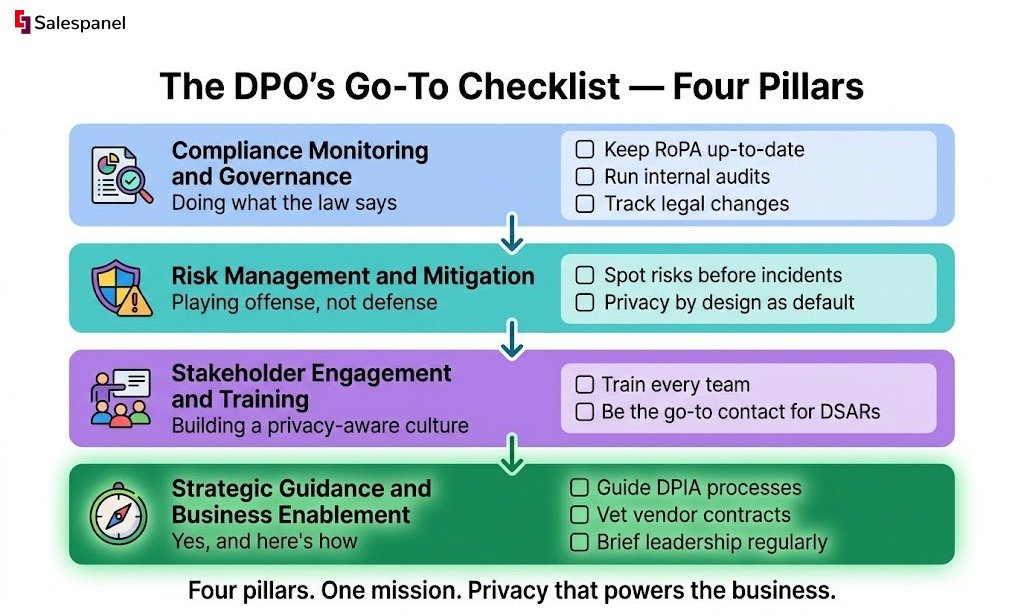
This isn’t just another summary. It’s built around the core functions of a modern DPO: keeping a watchful eye on compliance, managing risk, getting everyone on the same page, and steering the business in the right direction. Every item here is a tangible action.
Compliance Monitoring and Governance
At its heart, the DPO’s job is to make sure the company is actually doing what the data protection laws say it should. This is about more than just having policies on a shelf; it’s about seeing them in action every single day.
- Keep Your RoPA Up-to-Date: Maintain a “Record of Processing Activities.” This is a non-negotiable legal must-have and your best friend for transparency. It needs to be a living document that accurately shows how personal data flows through the organization.
- Run Internal Audits: Don’t wait for regulators to find problems. Schedule regular data protection check-ups with different departments to spot compliance gaps and fix them before they become bigger issues.
- Stay on Top of Legal Changes: Privacy laws are always shifting (think GDPR, CCPA, POPIA). A big part of the job is tracking these changes and turning complex legal updates into clear, actionable advice for the business.
Risk Management and Mitigation
One of the most critical data protection officer responsibilities is to spot and neutralize privacy risks before they turn into full-blown incidents. It’s all about playing offense, not defense, to protect both the company and its customers. For any DPO looking to build a rock-solid program, using a comprehensive GDPR compliance checklist is a great way to ensure nothing falls through the cracks.
The real win in risk management is when ‘privacy by design’ becomes the default for every new project, process, and piece of tech. When that happens, compliance isn’t an add-on; it’s just the natural result of doing things right from the start.
Stakeholder Engagement and Training
A DPO can’t be a lone wolf. Success hinges on building a company-wide culture where everyone understands their role in protecting data. That takes solid communication and education.
- Train Your Team: Develop and regularly refresh data protection training for all employees. Make it relevant by tailoring the content for specific teams—what marketing needs to know is different from what HR or IT needs.
- Be the Go-To Contact: Act as the main point of contact for individuals exercising their data rights (like DSARs). You’re also the person who talks to the supervisory authorities during an inquiry or, if it comes to it, a data breach notification.
Strategic Guidance and Business Enablement
Finally, a great DPO doesn’t just say “no.” They act as a strategic partner, showing the business how to innovate and grow while keeping data protection at the forefront.
- Guide DPIA Processes: For any high-risk project, you’ll need to walk teams through a Data Protection Impact Assessment. The goal is to spot and address privacy risks right at the beginning, not after the project is already built.
- Vet Your Vendor Contracts: You need to put on your detective hat and scrutinize the data processing agreements (DPAs) with all third-party vendors. Make sure they meet your company’s standards for data protection—your compliance is only as strong as your weakest link.
- Keep Leadership in the Loop: Provide regular, clear reports to the C-suite and the board. They need to understand the company’s data protection status, the biggest risks you’re facing, and your recommendations for moving forward.
Digging a Little Deeper: Common DPO Questions
Even with a solid guide, the day-to-day realities of the Data Protection Officer role can stir up a few questions. Let’s tackle some of the most common ones we hear to clear up any lingering confusion.
Think of this as the practical side of the coin, covering everything from whether you really need a DPO to how the role differs from your CISO.
So, Is a Data Protection Officer Mandatory for Every Company?
Not necessarily, but it’s a question you should definitely be asking. Under the GDPR, you’re legally required to appoint a DPO only under specific circumstances. The big triggers are if your main business activities involve large-scale, systematic monitoring of people or processing huge volumes of sensitive data. Public authorities also get no choice in the matter.
However, even if you’re not legally on the hook, appointing a DPO is widely seen as a best practice. It sends a powerful signal that you’re serious about data protection and helps you stay ahead of compliance risks in a world where data rules are only getting stricter.
Can We Just Outsource the DPO Role?
Absolutely. You can bring in an external expert or service provider through a contract. This model is often called “DPO as a Service,” and it’s a really popular option for small and medium-sized businesses that might not have the specialized knowledge or budget to hire a full-time DPO internally.
Just remember, the core requirements don’t change. Whether they’re on your payroll or not, your DPO must have expert-level knowledge of data protection law, be completely free from any conflicts of interest, and have the independence to do their job without someone looking over their shoulder.
What’s the Difference Between a DPO and a CISO?
It’s easy to get these two mixed up, especially since they work together so often. But their focus is fundamentally different.
A Chief Information Security Officer (CISO) is your digital fortress manager. Their primary job is protecting all of the company’s information and systems from cyber threats. They’re focused on the firewalls, the encryption, and the technical defenses.
The DPO, on the other hand, has a legally-defined role centered specifically on how you process personal data. They’re the compliance expert, advising on legal duties and the rights of individuals. The CISO builds the secure walls; the DPO ensures everything you do with personal data inside those walls is legal and ethical. One is about technical security for all data; the other is about legal compliance for personal data.
At Salespanel, our philosophy is that strong data privacy practices and high-performance marketing go hand in hand. Our platform is built to help you navigate compliance complexities while identifying and engaging your most valuable prospects. Explore our extensive library of guides and articles to future-proof your data and marketing strategies at https://salespanel.io/resources.