Sales prospecting has undergone a seismic shift. The era of high-volume, low-quality cold calls and generic email blasts that defined the previous decade is officially over. Today’s B2B buyers are more informed, more insulated, and more resistant to interruption than ever before. Research indicates that it now takes an average of 8-10 touchpoints to even secure a prospect’s attention, a stark contrast to the 3-4 touches required just a few years ago. This escalation in effort without a corresponding evolution in strategy is a recipe for diminishing returns.
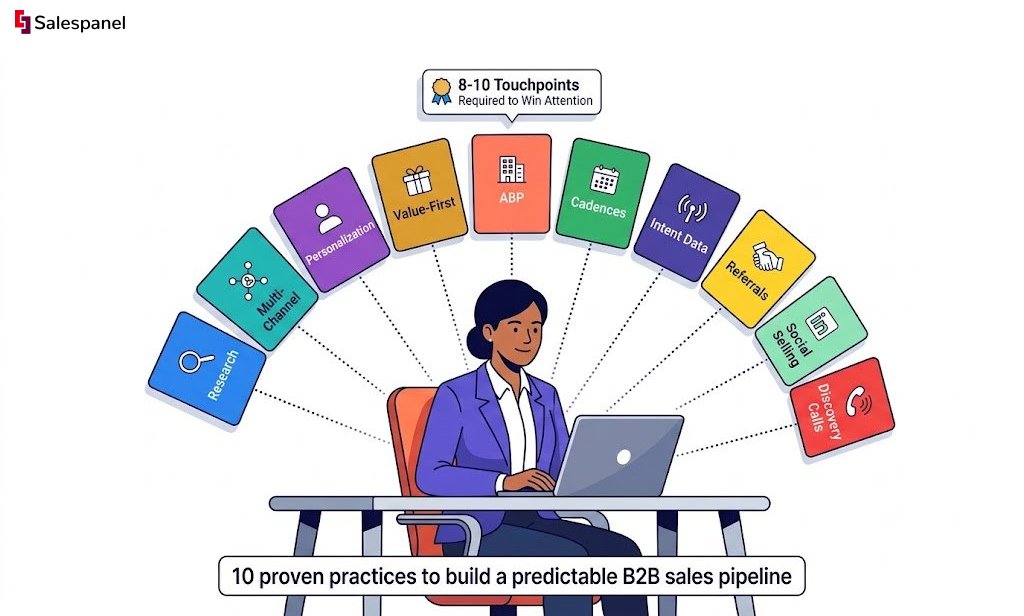
This article provides a comprehensive roadmap for navigating this new landscape. We will explore the technical and strategic sales prospecting best practices that separate top-performing teams from the rest. The focus is on actionable intelligence, moving beyond generic advice to provide a detailed playbook for modern revenue generation. You will learn how to implement consent-aware identity resolution, leverage server-side tracking for accurate data collection, and master multi-channel cadences that deliver personalization at scale.
The central theme is this: success in modern sales hinges on a value-first, data-driven approach that respects the buyer’s journey and intelligence. We’ll cover everything from advanced research and qualification techniques to recognizing buying signals with intent data and structuring problem-centric discovery calls. Reading this is not just about learning new tips; it’s about fundamentally re-architecting your prospecting engine to build a predictable, scalable pipeline generation system. Let’s begin.
1. Research and Qualification Before Outreach
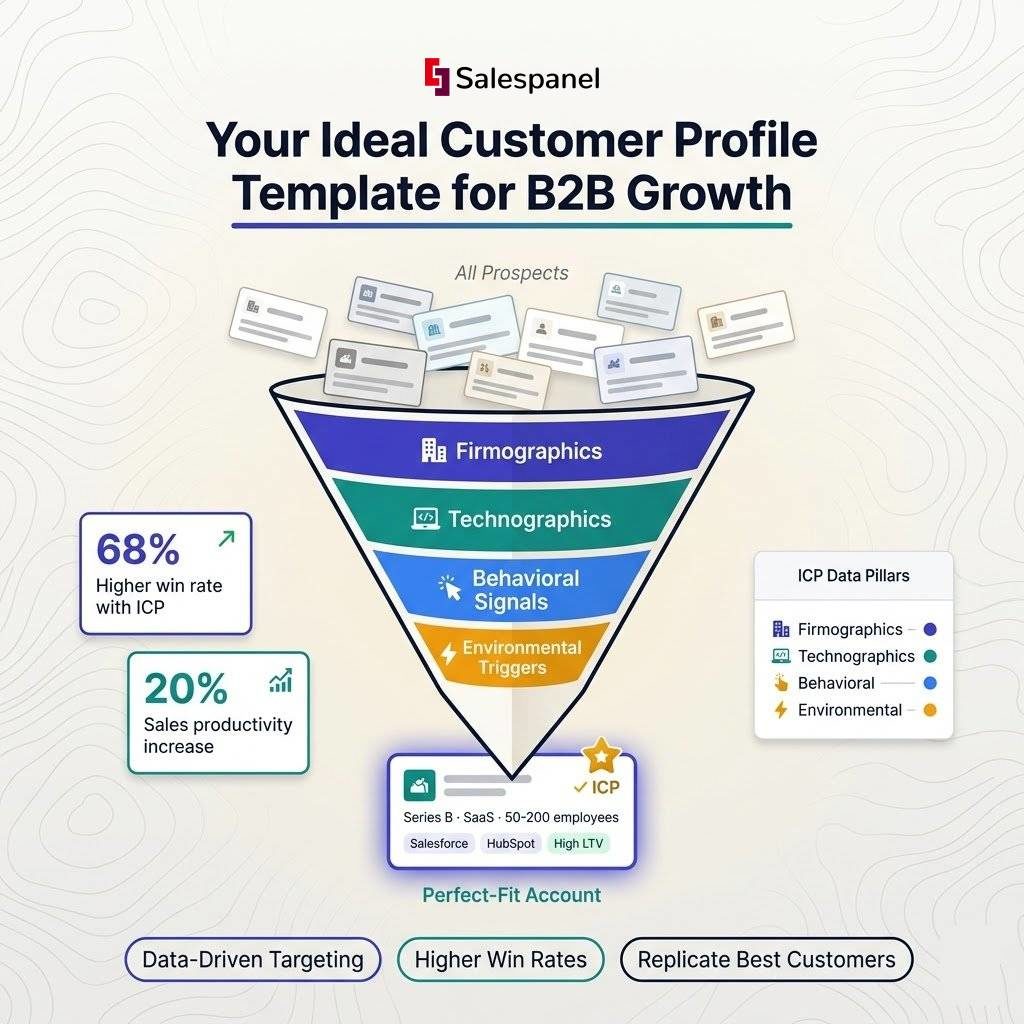
Effective sales prospecting in the modern B2B landscape is less about casting a wide net and more about precision spearfishing. The foundational best practice is to conduct thorough research and qualification before a single email is sent or call is made. This strategic foresight prevents teams from wasting resources on ill-fitting leads and ensures that every interaction is relevant and impactful. It involves a systematic analysis of a prospect’s company, their role, recent industry trends, and potential pain points to confirm alignment with your Ideal Customer Profile (ICP).
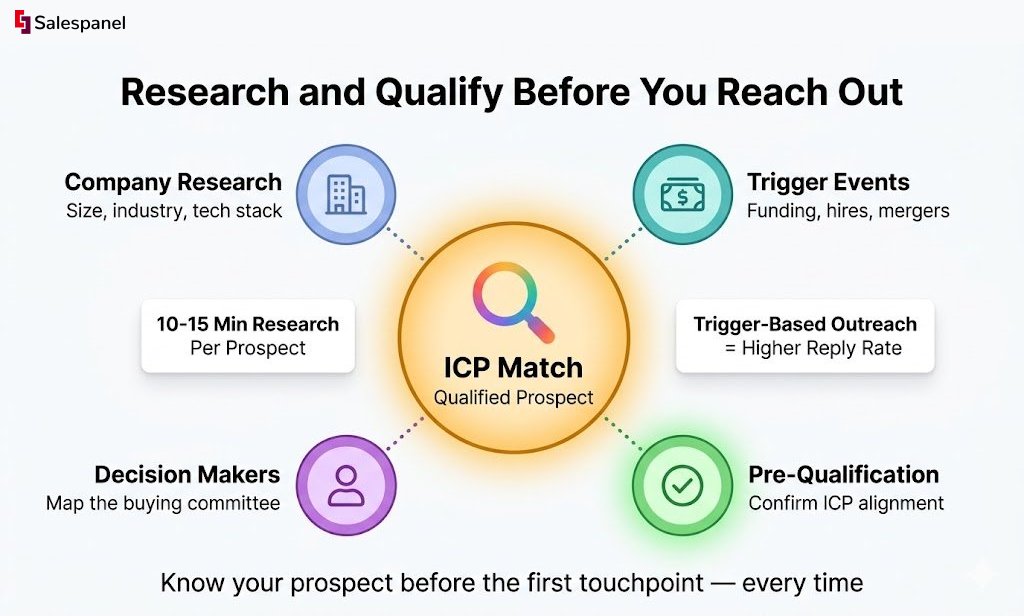
The technical execution of this practice involves moving beyond basic firmographics to understand the strategic context of a potential account. Practical Example: A Salesforce account executive identifies a target account, then uses LinkedIn Sales Navigator to map the key decision-makers. They cross-reference this with data from ZoomInfo to find direct contact details and recent company news, such as a new funding round. This initial data provides a trigger for a highly personalized outreach message, such as: “Saw your recent Series B funding announcement for expanding into the EU market. Companies at this stage often struggle with scaling their CRM infrastructure to handle multi-region compliance. Is this a challenge on your radar?”
Why This Approach is Crucial
Without pre-qualification, sales teams risk a high volume of low-quality interactions, leading to low conversion rates and demotivated reps. By investing time upfront, you dramatically increase the probability of connecting with prospects who have a genuine need for your solution. This method transforms a cold outreach into a warm, context-aware conversation, establishing credibility and building trust from the first touchpoint. An enterprise B2B team, for instance, would use this process to map out an entire buying committee, researching the unique challenges and priorities of the CFO, CTO, and Head of Operations to tailor their value proposition for each stakeholder.
Actionable Tips for Implementation
- Standardize Your Process: Create a research checklist or template in your CRM. This should include fields for company size, industry, technology stack, recent trigger events (e.g., new hires, funding), and key personnel.
- Leverage Technology: Use data enrichment tools like Clearbit or Cognism to automate the collection of firmographic and technographic data, freeing up reps to focus on strategic insights.
- Time-Box Your Research: Set a strict time limit (e.g., 10-15 minutes) for researching each prospect to maintain prospecting velocity and avoid analysis paralysis.
- Look for Triggers: Prioritize prospects whose companies have recently announced news that signals a need for your product, such as executive changes, mergers, or new product launches.
2. Multi-Channel Prospecting Strategy
Relying solely on one channel, like email, is a common pitfall in modern sales. A multi-channel prospecting strategy recognizes that today’s B2B buyers operate across diverse platforms, and the most effective way to engage them is by orchestrating touchpoints across email, phone, and LinkedIn. This approach is about creating a persistent, yet non-intrusive, presence in the prospect’s ecosystem. It’s a core tenet of effective sales prospecting best practices, as it adapts to individual communication preferences and significantly increases the odds of cutting through the noise.
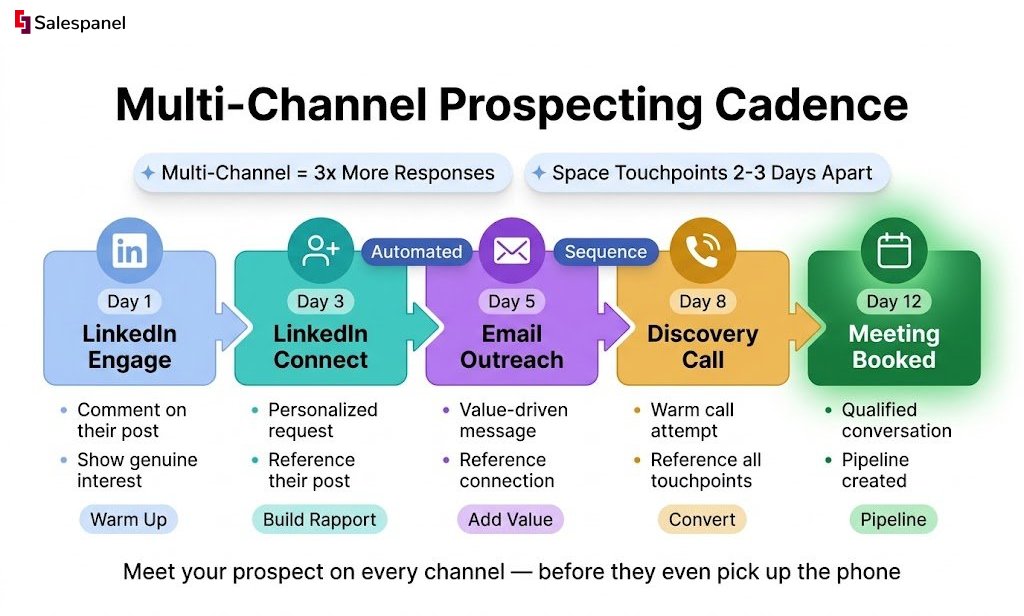
The technical goal is to create a seamless and context-aware journey for the prospect. Each touchpoint should build on the last, making the outreach feel more like a developing conversation than a series of disconnected cold attempts. Practical Example: A sales development representative (SDR) might start by engaging with a prospect’s LinkedIn post (a thoughtful comment). Two days later, they send a personalized connection request mentioning that post. A few days after connection, they send a value-driven email referencing that interaction, and finally, they place a call. This cadence makes the final call feel significantly warmer than a standard cold call.
Why This Approach is Crucial
Prospects are inundated with messages on every platform. A single-channel approach has a high probability of being ignored. By diversifying your outreach, you meet prospects where they are most active and receptive. This method significantly boosts response rates because it demonstrates persistence and thoughtfulness. An SDR targeting a tech-savvy CTO in a startup might combine a traditional email sequence with a targeted message in a relevant Slack community, recognizing that this buyer spends more time in collaborative tools than in their inbox. This adaptability is what separates high-performing sales teams.
Actionable Tips for Implementation
- Map Your Cadence: Design outreach sequences that strategically alternate between channels. Create a cadence matrix in your CRM that specifies the channel, timing, and message for each touchpoint (e.g., Day 1: LinkedIn View, Day 3: Email 1, Day 5: Call 1).
- Tailor the Message to the Medium: Keep LinkedIn messages concise and conversational. Emails can be more detailed, and phone calls should be focused on discovery. Avoid a simple copy-paste approach across channels.
- Space Out Touchpoints: Leave 2-3 business days between interactions on different channels to avoid overwhelming the prospect. The goal is to be persistent, not pestering.
- Track Channel Effectiveness: Use UTM parameters in links and specific call-to-action tracking in your CRM to analyze which channels and combinations generate the most qualified meetings, helping you optimize your strategy over time.
3. Personalization at Scale
In today’s saturated B2B market, generic outreach is the fastest route to the spam folder. Personalization at scale is a critical best practice that moves beyond simple [First Name] mail merges to deliver customized, relevant messages based on individual prospect data. This approach uses data enrichment, dynamic content, and intelligent segmentation to craft outreach that resonates. It involves referencing company-specific insights, role-relevant challenges, and recent professional activities to make every message feel like a one-to-one conversation.
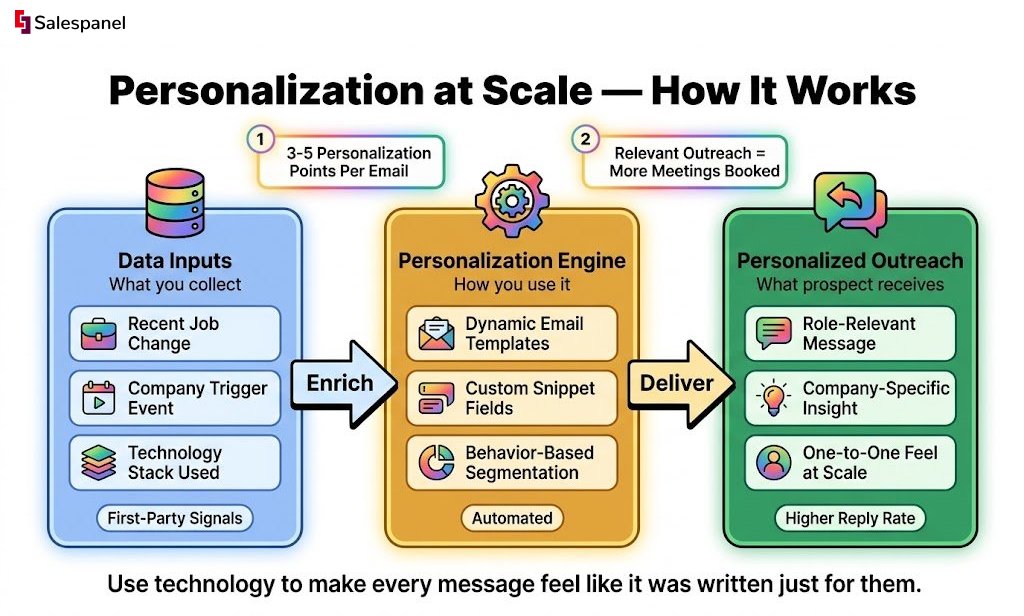
The core principle is leveraging technology to automate the inclusion of unique details that signal genuine research and relevance. Practical Example: A HubSpot user creates an email sequence targeting VPs of Marketing. They create a custom text snippet field in their template called [RecentInitiative]. For each prospect, they spend two minutes finding a recent marketing initiative (e.g., a new product launch, a podcast series). The opening line then becomes: “I was impressed with your team’s recent launch of the [RecentInitiative] campaign. Initiatives like that often create challenges around tracking cross-channel attribution.” This combines automation with manual, high-impact personalization.
Why This Approach is Crucial
Personalization at scale directly addresses prospect fatigue and the “noise” of automated, impersonal campaigns. By tailoring the value proposition to a prospect’s specific context, such as their industry’s challenges or their company’s recent expansion, you immediately elevate your message above the competition. This builds rapport and credibility, significantly increasing response and meeting-booking rates. To effectively implement this, sales and marketing teams must develop a deep understanding of mastering personalization in email marketing, as the principles of relevance and value apply across all outreach channels.
Actionable Tips for Implementation
- Start with Key Variables: Begin by incorporating 3-5 high-impact personalization points, such as a recent job change, a mutual connection, a piece of content they engaged with, or a specific technology they use.
- Leverage First-Party Data: Prioritize information found on LinkedIn profiles, company “About Us” pages, and recent press releases. This data is public, relevant, and demonstrates authentic research.
- Test Personalization Elements: Use A/B testing in your sales engagement platform to identify which personalization variables (e.g., mentioning a competitor vs. referencing a trigger event) drive the highest engagement.
- Maintain Authenticity: Avoid “creepy” personalization. Referencing overly specific or obscure personal details can backfire. Keep the focus professional and tied to business challenges and goals.
4. Value-First Prospecting Approach
In a marketplace saturated with generic sales pitches, the most effective sales prospecting best practices prioritize delivering value before asking for anything in return. This value-first approach shifts the focus from your product’s features to the prospect’s world. It’s about leading with insights, data, and perspectives that are directly relevant to their challenges and goals, thereby earning their attention and establishing your credibility from the first interaction.
This method requires a deep understanding of the prospect’s business context and delivering an immediate takeaway. Practical Example: A B2B SaaS rep targeting a Director of Operations wouldn’t open with a product demo request. Instead, they might send an email with the subject “Quick thought on your logistics stack.” The body could read: “I analyzed public data on your key shipping partners and noticed a potential 15% cost-saving opportunity based on a benchmark report we just published for the retail sector. The report is attached. Happy to walk you through the specific data points if you find it relevant.” This offers immediate, tangible value with no strings attached.
Why This Approach is Crucial
A value-first mindset transforms the sales dynamic from a transactional pitch to a consultative partnership. Prospects are inundated with messages focused on the seller’s needs. By offering a valuable insight, a piece of relevant data, or a helpful resource with no immediate strings attached, you differentiate yourself from the competition. This builds trust and positions you as a knowledgeable advisor rather than just another vendor. A cybersecurity firm might use this by alerting a potential client to a newly discovered vulnerability relevant to their industry, offering a brief on mitigation strategies before ever mentioning their own software.
Actionable Tips for Implementation
- Lead with an Insight: Start your outreach with a compelling statistic, a relevant trend, or an observation about their company or market (e.g., “I noticed your competitor just launched a new initiative; companies in this situation often face challenges with X…”).
- Focus on Business Outcomes: Frame your value proposition in terms of business impact. Instead of saying “our software has feature A,” say “our clients in your industry use our platform to reduce customer churn by an average of 12%.”
- Arm Yourself with Data: Use industry reports, case studies, and internal data to quantify the potential value. Referencing concrete numbers makes your claims more believable and impactful.
- Ask for Permission: Instead of pushing for a meeting, create a low-friction next step. End your message with a simple, respectful question like, “Is this a priority for you right now?” or “Would you be open to exploring this idea further?”
5. Account-Based Prospecting (ABP)
Account-Based Prospecting (ABP) flips the traditional lead-generation funnel on its head. Instead of casting a wide net to capture individual leads, ABP focuses sales and marketing resources on a predetermined set of high-value target accounts. This methodology treats each target account as a “market of one,” requiring a coordinated, multi-stakeholder engagement strategy. It’s a strategic shift from volume to value, ensuring that your most intensive efforts are directed where they can yield the greatest returns.
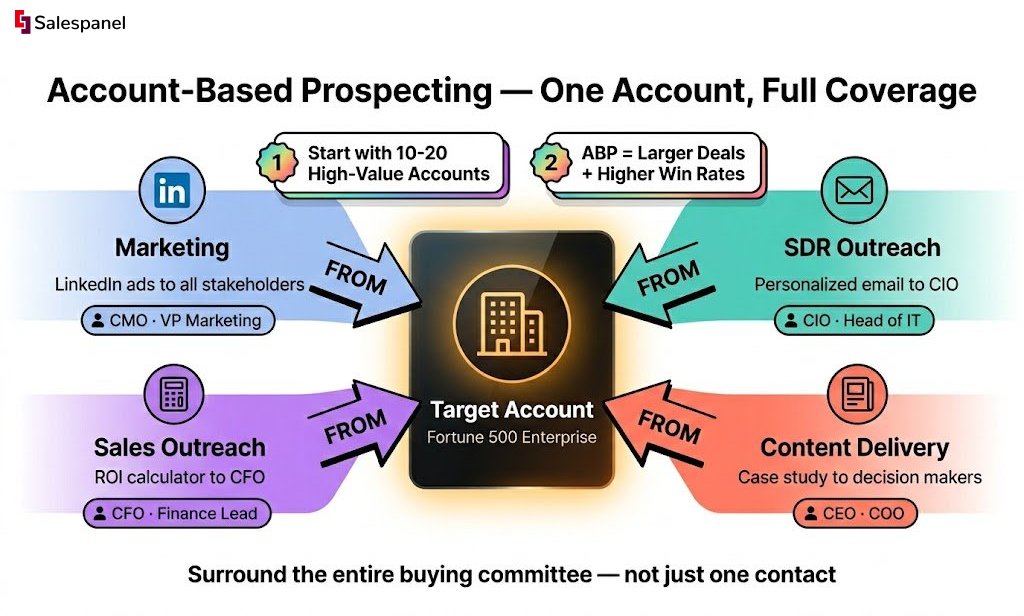
This approach is particularly powerful in complex B2B sales cycles where multiple decision-makers are involved. Practical Example: A tech company using ABP to target a Fortune 500 enterprise won’t just email a single contact. Instead, they will orchestrate a multi-channel campaign. Marketing runs targeted LinkedIn ads to the account’s key stakeholders. Simultaneously, an SDR sends a personalized email to the CIO about security and scalability, while another SDR contacts the CFO with an ROI calculator. This creates a surround-sound effect, building internal consensus and accelerating the sales process.
Why This Approach is Crucial
In a world of information overload, generic outreach is easily ignored. Account-Based Prospecting cuts through the noise by delivering highly relevant, personalized messages to the entire buying committee. This unified approach prevents deals from stalling because a key stakeholder was left out of the conversation. It aligns sales and marketing teams on a common goal: penetrating and winning specific, high-potential accounts. Success is measured not by the quantity of leads generated, but by the quality of engagement and progression within these target accounts, leading to larger deal sizes and higher win rates.
Actionable Tips for Implementation
- Start Small and Focused: Begin with a pilot list of 10-20 high-value accounts that closely match your Ideal Customer Profile (ICP) rather than trying to target hundreds at once.
- Map the Buying Committee: Use tools like LinkedIn Sales Navigator to identify and map all key stakeholders, influencers, and decision-makers within each target account.
- Align Sales and Marketing: Hold regular account-planning meetings to coordinate outreach sequences, content delivery, and ad campaigns. Ensure both teams are using the same messaging.
- Leverage Intent Data: Use platforms that provide intent data to identify when target accounts are actively researching solutions like yours, allowing you to time your outreach for maximum impact.
6. Sales Cadence and Follow-up Sequences
Systematic persistence is a cornerstone of modern sales prospecting best practices. A sales cadence, or follow-up sequence, provides this structure. A cadence is a pre-planned series of touchpoints across multiple channels (email, phone, social media) designed to engage a prospect over a specific period. This methodical approach ensures consistent follow-up, preventing promising leads from slipping through the cracks due to disorganized outreach efforts.
The core principle is to maintain top-of-mind awareness without becoming a nuisance. Practical Example: A typical B2B cadence might involve an 8-touch sequence over 21 days.
- Day 1: Personalized email addressing a specific pain point.
- Day 3: LinkedIn connection request with a personalized note.
- Day 5: Cold call focused on discovery.
- Day 8: Follow-up email sharing a relevant case study.
- Day 12: Engage with their content on LinkedIn.
- Day 15: Second call, referencing the case study.
- Day 18: “Break-up” email offering one last piece of value.
- Day 21: Final touch on LinkedIn. This multi-threaded strategy significantly increases the probability of connecting with a busy decision-maker.
Why This Approach is Crucial
Without a structured cadence, follow-up becomes arbitrary and inconsistent. Reps may give up too early or cluster their outreach ineffectively, leading to missed opportunities. A well-designed sequence ensures every prospect receives the optimal level of attention needed to nurture them from initial contact to a qualified meeting. Within your sales cadence, optimizing your booking step with efficient tools ensures a smooth transition from interest to confirmed meeting, preventing drop-offs. It transforms prospecting from an art based on guesswork into a science driven by a proven process.
Actionable Tips for Implementation
- Mix Your Channels: A strong cadence includes at least three different communication channels. A common mix is email (4-5 touches), phone calls (2-3 touches), and social media engagement (1-2 touches).
- Space Touches Appropriately: Balance persistence with professionalism by spacing touchpoints 2-5 days apart. This prevents you from overwhelming the prospect while keeping your solution on their radar.
- Vary Your Message: Each step in the sequence should offer a new piece of value or a different angle. For example, your first email might address a pain point, the second could share a relevant case study, and a third could reference a recent company trigger event.
- Test and Optimize: Continuously analyze your cadence performance. Track open rates, reply rates, and meeting conversion rates for each sequence and use A/B testing on subject lines and call scripts to refine your approach. You can also explore different email outreach tools to find the best fit for managing these sequences.
7. Intent Data and Buying Signal Recognition
One of the most powerful shifts in B2B sales prospecting best practices is the move from reactive to proactive outreach, powered by intent data. Instead of guessing who might be in-market, this strategy involves monitoring digital “buying signals” that indicate a prospect is actively researching solutions like yours. This approach allows sales teams to prioritize and engage accounts that are already in the buying cycle, dramatically improving timing and relevance. It’s about identifying prospects who are raising their hands digitally through their online behavior.
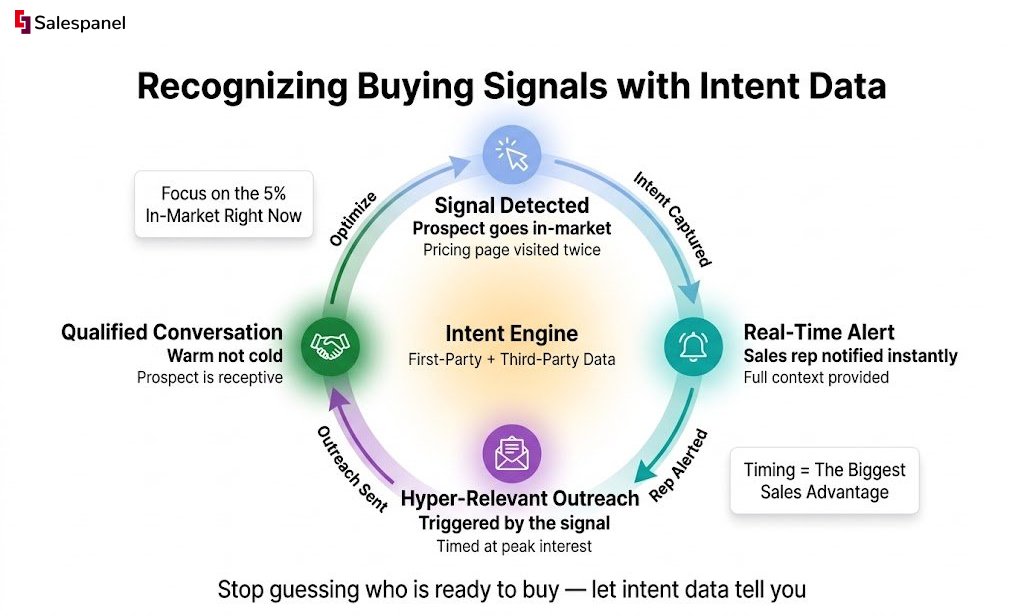
This methodology works by aggregating and analyzing vast amounts of data points, such as website visits, content downloads, and competitor comparisons on review sites. Practical Example: A sales rep at a cybersecurity firm receives an alert from their intent data platform. It shows that multiple stakeholders from a tier-1 target account have started researching “endpoint security solutions” and visited competitor pricing pages in the last 48 hours. This signal transforms a cold call into a timely, consultative conversation about a challenge the prospect is actively trying to solve right now. The outreach can be hyper-specific: “Noticed some activity from your team around endpoint security. We recently helped [Similar Company] navigate this evaluation and found…”
Why This Approach is Crucial
Timing is everything in sales. Reaching out to a company that isn’t actively looking for a solution is often a waste of resources. By leveraging intent data, you focus your efforts on the small percentage of your total addressable market that is in-market at any given time. This not only increases connection and conversion rates but also ensures your brand is top-of-mind at the most critical stage of the buyer’s journey. It allows you to enter the conversation when the prospect is most receptive, positioning your solution as the answer to their immediate need.
Actionable Tips for Implementation
- Layer Multiple Intent Signals: Don’t rely on a single data source. Combine third-party intent data (topic surges) with first-party signals, such as repeat visits to your pricing page tracked with website visitor tracking from Salespanel, for a more accurate picture of buying intent.
- Set Up Real-Time Alerts: Configure your intent data platform or CRM to send immediate notifications to account owners when a tier-1 target account shows a spike in intent. Speed is a critical advantage.
- Customize Outreach Based on the Signal: Your outreach should reflect the signal you observed. If a prospect downloaded a competitor comparison guide, your message can address key differentiators. If they researched a specific problem, lead with a solution to that pain point.
- Define Your Intent Topics: Work with your provider to define the specific keywords, topics, and competitor names that are most relevant to your business to ensure the signals you receive are high-quality.
8. Referral and Warm Introduction Generation
The coldest outreach will never outperform a warm introduction. This principle is the core of referral-based sales prospecting best practices. It involves systematically leveraging your existing network of satisfied customers, strategic partners, and professional contacts to generate qualified introductions. This approach shifts the dynamic from a cold interruption to a trusted recommendation, dramatically improving connection rates and accelerating the sales cycle.
The technical aspect is about systemizing the process rather than waiting for referrals to happen organically. Practical Example: A sales rep at a SaaS company identifies a target account. On LinkedIn, they see that one of their happiest customers is a first-degree connection to the key decision-maker. Instead of a cold approach, they email their customer with a pre-written, forwardable template: “Hi [Customer Name], hope you’re well. I’m trying to connect with [Prospect Name] at [Target Company]. I’ve drafted a brief, no-pressure intro below that you can copy/paste or edit if you’re comfortable making an introduction. Let me know!” This makes the process frictionless for the referrer.
Why This Approach is Crucial
Relying solely on cold outreach is an inefficient, numbers-driven game with a notoriously low success rate. Warm introductions, however, come with built-in social proof and trust. According to research, referred leads convert 30% better than leads generated from any other channel. For many professional services, like law firms, referrals often account for over 40% of new business. This strategy builds a powerful, self-sustaining pipeline where your best customers become your most effective marketers, reducing customer acquisition costs and shortening sales cycles.
Actionable Tips for Implementation
- Formalize Your Program: Create a structured referral program with clear, tiered incentives (e.g., gift cards, service credits, or commission-based rewards) to motivate advocates.
- Make It Effortless: Arm your advocates with a pre-written email template or a one-page value proposition they can easily forward. The less work they have to do, the more likely they are to refer.
- Be Specific in Your Ask: Instead of a generic “Do you know anyone who could use our service?”, ask for an introduction to a specific person or role at a target company you’ve already researched.
- Train and Systematize: Integrate the “referral ask” into your customer success process, such as during quarterly business reviews or after a positive customer support interaction.
- Close the Loop: Always thank your referral source and keep them updated on the outcome of the introduction, regardless of whether it results in a sale. This reinforces their value and encourages future referrals.
9. Social Selling and LinkedIn Prospecting
Modern sales prospecting has moved beyond traditional cold outreach to embrace the digital spaces where buyers actively seek information and build professional networks. Social selling is the practice of leveraging social platforms to find, connect with, and nurture sales prospects. It’s about building relationships and establishing credibility by providing value long before making a direct sales pitch. This approach transforms the sales process from a transactional interruption into a welcome, consultative conversation.
The core of this strategy lies in using platforms like LinkedIn to become a trusted resource within your target industry. Practical Example: An SDR at a SaaS company uses LinkedIn Sales Navigator to create a lead list of prospects fitting their ICP. For a full week, instead of sending InMails, the SDR only engages with their posts. They leave thoughtful comments (not just “great post!”) that add to the conversation. On the second week, they send a connection request with a message like: “Hi [Prospect Name], I’ve been following your insights on [topic] and really appreciated your recent post on X. Would be great to connect.” This establishes familiarity and context before any pitch.
Why This Approach is Crucial
In a world saturated with generic sales emails, social selling cuts through the noise by building genuine human connections. It allows reps to understand a prospect’s professional personality, priorities, and pain points before the first direct outreach. This insight makes personalization natural and effective, dramatically increasing response rates. When prospects already recognize your name and associate it with valuable insights, they are far more receptive to a connection request or message. This method effectively “warms up” a cold lead, making the sales cycle smoother and more efficient.
Actionable Tips for Implementation
- Optimize Your Profile: Your LinkedIn profile should function as a resource hub, not a resume. Use a professional headshot, a benefit-driven headline, and a summary that speaks directly to your ideal customer’s challenges.
- Share Value Consistently: Post relevant third-party articles, company blog posts, and personal insights 3-4 times per week to build thought leadership and stay top-of-mind with your network.
- Engage Before Connecting: Dedicate 15-20 minutes daily to thoughtfully comment on posts from key prospects and industry leaders. Your goal is to add to the conversation, not just to be seen.
- Personalize Your Outreach: When you do send a connection request or InMail, reference a specific post they shared, a comment they made, or a mutual connection to show you’ve done your homework.
10. Discovery Calls and Problem-Centric Qualification
Once initial interest is established, the focus of sales prospecting best practices must shift from outreach to understanding. A masterful discovery call is not a pitch; it is a structured, problem-centric qualification process designed to uncover a prospect’s core challenges. This approach prioritizes deep listening and targeted questioning to diagnose pain points before ever presenting a solution. It’s about collaboratively exploring the prospect’s world to see if a genuine fit exists, transforming the sales rep from a vendor into a trusted advisor.
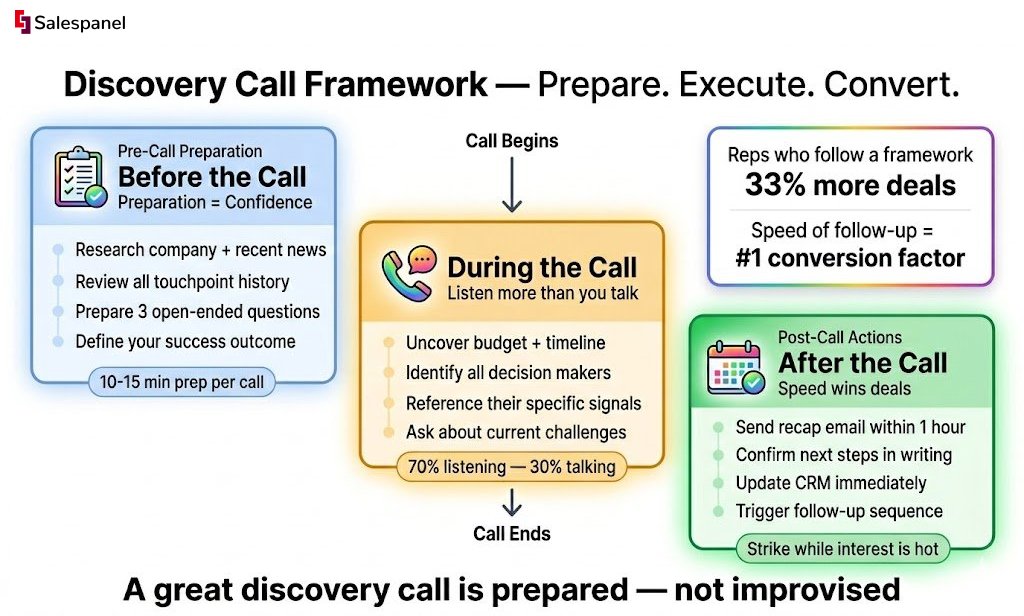
The goal is to move beyond surface-level needs and understand the business implications of the prospect’s problems. Practical Example: An enterprise SaaS representative using the MEDDIC framework would guide the conversation to quantify pain.
- Prospect: “Our reporting process is too slow.”
- Rep: “Tell me more about that. How slow is it?”
- Prospect: “It takes my team about a week to compile the monthly reports.”
- Rep (Quantifying): “So that’s 12 weeks a year just on reporting. What’s the opportunity cost of that time? What strategic projects could they be working on instead?” This structured conversation builds the business case for the solution using the prospect’s own metrics.
Why This Approach is Crucial
Jumping into a product demo without a thorough discovery is one of the most common sales pitfalls. It leads to generic presentations that fail to resonate because they aren’t tied to the prospect’s specific pains or strategic goals. A problem-centric approach builds a powerful foundation for the entire sales cycle, enabling a highly tailored demonstration and value proposition. Gong.io’s analysis of thousands of calls confirms that top-performing reps speak less and ask more probing questions, allowing the prospect’s own words to build the business case for a solution.
Actionable Tips for Implementation
- Prepare Targeted Questions: Develop a list of 10-15 open-ended questions before each call, focused on uncovering current state, desired future state, and the obstacles in between.
- Follow the 70/30 Rule: Aim to listen for approximately 70% of the call and talk for only 30%. This ensures you are gathering more information than you are giving.
- Use a Qualification Framework: Consistently apply a framework like BANT (Budget, Authority, Need, Timeline) or MEDDIC to ensure you cover all critical qualification criteria.
- Dig for Root Causes: When a prospect mentions a problem, ask “why” multiple times to understand the underlying issues and their full business impact.
- Document and Define Next Steps: Immediately log all notes in your CRM, and conclude the call by clearly summarizing the conversation and outlining a concrete follow-up plan.
10-Point Sales Prospecting Best Practices Comparison
| Strategy | Implementation complexity | Resource requirements | Expected outcomes | Ideal use cases | Key advantages |
|---|---|---|---|---|---|
| Research and Qualification Before Outreach | Medium — structured templates and processes | Time, access to quality data sources (LinkedIn, ZoomInfo), CRM | Higher response rates; better lead fit | Targeted outbound; enterprise and mid-market accounts | Reduces wasted outreach; improves conversation quality |
| Multi-Channel Prospecting Strategy | High — coordination across channels and teams | Multiple channel tools, analytics, content, team alignment | Increased reach and response; improved brand recall | Broad outreach; prospects with varied channel preferences; ABM support | Multiple touchpoints; less dependence on one channel |
| Personalization at Scale | High — systems, segmentation and automation | Data infrastructure, personalization engines, enrichment tools | Higher open/engagement rates; scalable relevance | High-volume outbound needing tailored messaging | Scalable customization; stronger credibility and engagement |
| Value-First Prospecting Approach | Medium — requires industry insight and messaging work | Research, content/insights creation, subject-matter expertise | Faster qualification; higher-quality conversations | Consultative sales; enterprise buyers; solution-led offers | Positions rep as trusted advisor; reduces resistance |
| Account-Based Prospecting (ABP) | High — strategic account planning and coordination | Cross-functional teams, intent data, creative campaigns | Higher deal sizes; improved win rates; predictable pipeline | High-value accounts and enterprise sales | Efficient resource allocation; deep stakeholder engagement |
| Sales Cadence and Follow-up Sequences | Medium — CRM configuration and discipline | CRM/sequencing tools, templates, monitoring | Increased contact and engagement; consistent follow-up | SDR teams, inside sales, structured outbound programs | Removes timing guesswork; scalable outreach process |
| Intent Data and Buying Signal Recognition | High — data integration and predictive models | Intent data providers, analytics, integration engineers | Better timing for outreach; higher conversion; shorter cycles | Prioritizing outreach; ABM and high-value account focus | Improves prospect quality; enables timely engagement |
| Referral and Warm Introduction Generation | Low–Medium — program design and enablement | Customer base or partners, incentive structures, advocacy ops | Much higher conversion rates; shorter sales cycles | Companies with satisfied customers and partner networks | High trust and conversion; lower prospecting time |
| Social Selling and LinkedIn Prospecting | Medium — consistent content and engagement | LinkedIn tools, time for content creation and engagement | Trust-building; inbound interest; qualified leads | Thought leadership, professional services, founder-led sales | Non-intrusive relationship building; public credibility |
| Discovery Calls and Problem-Centric Qualification | Medium — training and framework adoption | Skilled reps, qualification frameworks (MEDDIC/BANT), CRM | Better-qualified deals; reduced churn; higher close rates | Complex sales cycles; solution selling and enterprise deals | Deep qualification; aligns solution to real problems |
From Theory to Execution: Building Your Modern Prospecting Playbook
The journey through the ten essential sales prospecting best practices reveals a clear, central theme: the era of brute-force, high-volume outreach is over. Today’s most successful revenue teams operate not as isolated hunters but as integrated, data-driven strategists. They understand that a meticulously researched, value-first approach isn’t a “nice-to-have”; it’s the fundamental price of entry for earning a prospect’s attention in a crowded digital landscape. The strategies we’ve detailed, from account-based prospecting and multi-channel cadences to leveraging intent data and social selling, are not independent tactics. They are interconnected components of a single, sophisticated revenue engine.
The true differentiator lies in transforming this collection of best practices into a cohesive, repeatable, and scalable playbook. This is where strategy meets technology. Executing personalization at scale is impossible without a system that unifies behavioral data. Recognizing buying signals is a guessing game without a platform that can track and interpret those signals in real time. The ultimate goal is to build an operational framework where each action informs the next, creating a virtuous cycle of insight and engagement.
Key Takeaways for Your Prospecting Engine
Synthesizing these concepts, three core pillars emerge as non-negotiable for building a modern prospecting system:
- Data as the Foundation: Every effective action, from identifying the right accounts to personalizing outreach, begins with accurate, comprehensive data. This is not just about firmographics; it’s about a deep understanding of user behavior, intent signals, and engagement history. This is where a robust, privacy-aware data infrastructure becomes your most valuable asset.
- Technology as the Enabler: Manual processes cannot keep pace with the modern buyer. Your technology stack must automate the mundane, provide actionable intelligence, and connect disparate data points. A powerful marketing automation and lead qualification platform serves as the central nervous system, routing the right leads to the right reps with the right context at precisely the right moment.
- Strategy as the Guiding Force: Technology without strategy leads to efficient but ineffective chaos. Your playbook must define your Ideal Customer Profile (ICP), map out your engagement cadences, and establish clear KPIs. It’s the human element of strategy that gives purpose to the data and direction to the technology.
From Silos to Synergy: An Integrated Approach
The most critical shift required is moving from siloed activities to a synergistic system. When intent data from your website visitor tracking system automatically enriches an account in your CRM and triggers a personalized sequence in your sales engagement tool, you have built a true prospecting engine. This is where the philosophy behind Salespanel becomes a practical blueprint.
For instance, identifying high-intent accounts requires a reliable data foundation. Salespanel’s server-side tracking and identity resolution capabilities provide this technical backbone, capturing comprehensive anonymous visitors data even from first-time site visitors. This rich data then fuels a dynamic lead scoring system. Instead of relying on static, outdated scores, Salespanel’s lead scoring framework allows you to assign value based on real-time behaviors, firmographics, and engagement patterns, ensuring your sales team always focuses on the most qualified, ready-to-engage prospects.
By unifying these technical elements, you build a system that is not only efficient and scalable but also privacy-first and buyer-centric. The ultimate takeaway is to move beyond isolated tactics and build an integrated playbook where data, technology, and strategy work in concert to create meaningful conversations and drive predictable revenue. This holistic application of sales prospecting best practices is what separates high-growth companies from the rest.
Ready to transform your prospecting from a set of tactics into a fully integrated, data-driven revenue engine? Explore how Salespanel provides the tracking, identification, and lead scoring capabilities to power your modern sales playbook. Visit our resources at Salespanel to see how you can turn website visitors into qualified opportunities.