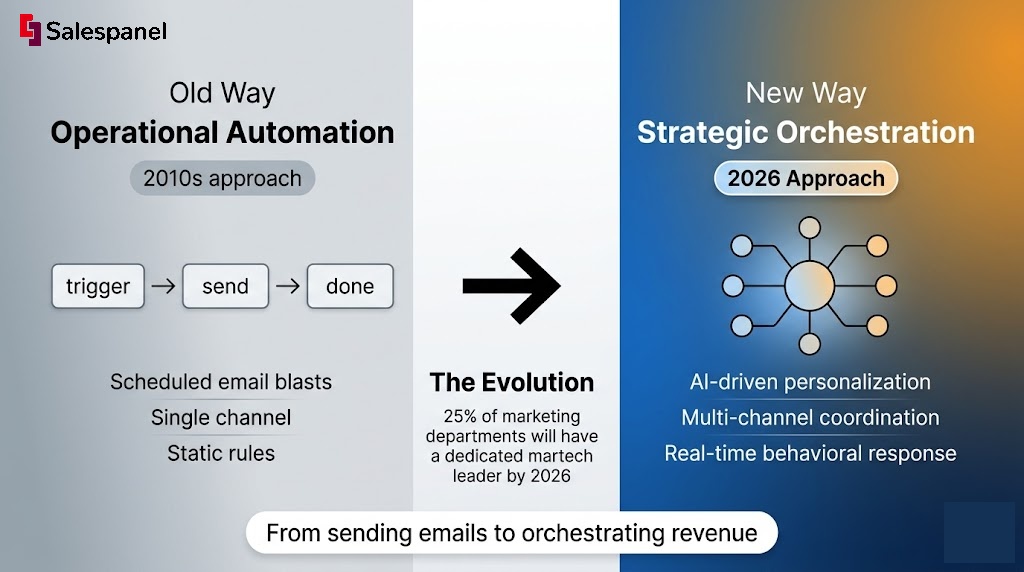
Marketing automation originated in the early 2010s as a revolutionary concept, promising to place repetitive tasks on autopilot. Early adopters realized unprecedented efficiency, with foundational studies from Forrester showing companies achieving a 10% or greater increase in their sales pipeline contribution. This initial wave was defined by simple, trigger-based logic. Today, that framework is obsolete. The contemporary landscape has evolved into an era of intelligent orchestration, where AI-driven predictive models, privacy-first data frameworks, and deeply integrated systems are the technical minimum for competitive performance.
The industry’s trajectory is shifting from basic tool management to complex strategic implementation. By 2026, Gartner predicts that 25% of marketing departments will have a dedicated marketing technology operations leader, a role created specifically to manage this new technical reality. Simply automating email sends is no longer a viable strategy; the modern standard demands a sophisticated understanding of data architecture, hyper-personalization, and cross-channel synergy. Thriving in this environment is contingent upon mastering marketing automation best practices that align with heightened customer expectations and complex data privacy regulations. This article is architected as a technical guide to bridge that gap. The central theme is the transition from operational automation to strategic orchestration, a philosophy that turns marketing from a cost center into a predictable revenue engine.
Inside, you will find in-depth analysis and practical examples for:
- Advanced Lead Scoring and Segmentation: Transitioning from rudimentary point systems to predictive models.
- Behavioral Trigger Automation: Architecting real-time responses to capitalize on user intent signals.
- Progressive Customer Profiling: Building rich data portraits over time without introducing user friction.
- Customer Lifecycle Orchestration: Aligning automated workflows with every stage of the buyer’s journey.
This is the technical roadmap required to transform disconnected marketing actions into a cohesive, revenue-generating system. Let’s dissect the practices that separate high-performing teams from the rest.
1. Lead Scoring and Segmentation
Effective marketing automation is not about mass communication; it is about delivering a precise message to a specific entity at a calculated time. Lead scoring and segmentation constitute the foundational practice for achieving this precision. This systematic methodology involves assigning numerical values (scores) to leads based on their explicit attributes and implicit behaviors, then grouping them into cohorts for targeted engagement. From a technical standpoint, this allows the sales function to allocate resources exclusively to prospects demonstrating the highest probability of conversion, transforming a cluttered pipeline into a prioritized action plan.
The core technical principle is that lead value is not uniform. A contact who downloads a detailed API documentation guide is quantifiably more sales-ready than one who only follows a brand on social media. Lead scoring quantifies this differential, creating a clear hierarchy of lead quality. This practice is a cornerstone of modern marketing automation best practices because it directly bridges the gap between marketing activities and sales-readiness, creating a data-driven service-level agreement (SLA) between departments.
How It Works in Practice
A technical implementation of a lead scoring model requires defining criteria that signal sales potential. These criteria are typically bifurcated into two data categories:
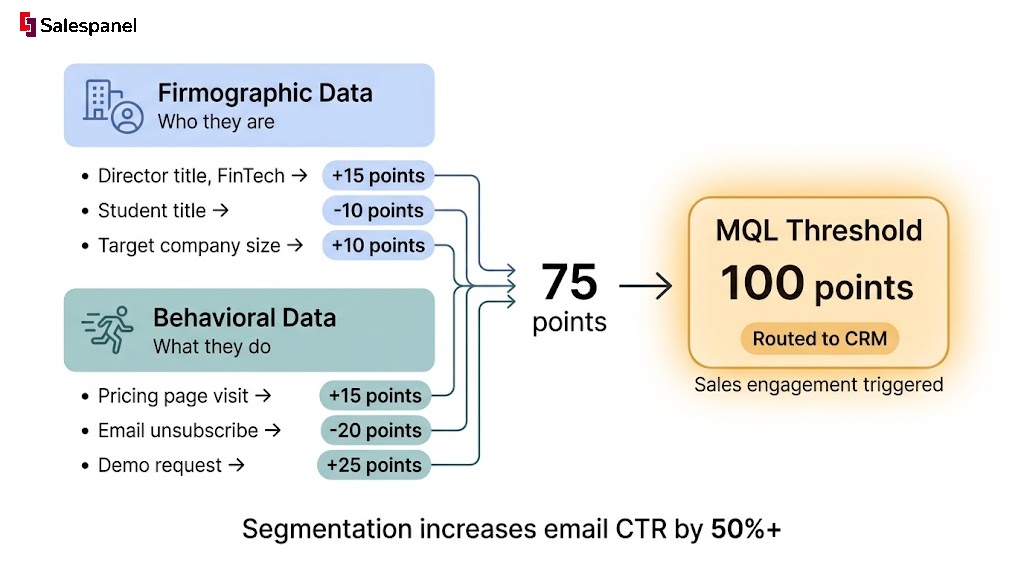
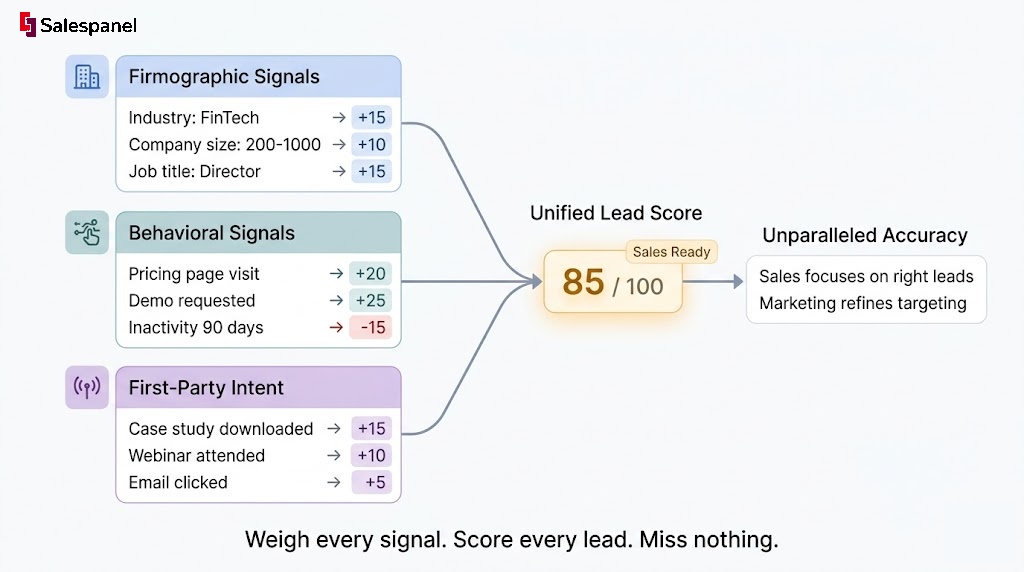
- Demographic/Firmographic Data: This includes explicit, declared information such as job title, company size, industry, and geographical location. Practical Example: A lead with a “Director” title from a target industry (e.g., FinTech) might be assigned +15 points, whereas a “Student” title might receive -10.
- Behavioral Data: This tracks implicit engagement signals, such as website page views, email open/click rates, content downloads, and form submissions. Practical Example: A visit to the pricing page might be worth +15 points, while an email unsubscribe event would trigger a negative score of -20.
Once a lead’s cumulative score crosses a predetermined threshold (e.g., 100 points), an automation rule flags them as a Marketing Qualified Lead (MQL) and routes their record, along with their complete activity history, to the CRM for sales engagement. This data-driven handoff is proven to be effective; for instance, a B2B tech firm can use segmentation to target leads in the “Healthcare” industry with case studies specific to HIPAA compliance, a tactic that can increase email click-through rates by over 50% compared to generic messaging. The ultimate takeaway is that scoring and segmentation provide the logical framework for all subsequent personalization.
Actionable Tips for Implementation
- Start Simple: Begin with 3-5 high-intent scoring criteria, such as demo requests, pricing page views, and trial sign-ups. More complex, weighted models can be developed iteratively.
- Align with Sales: Your scoring model is only effective if the sales team trusts its output. Collaborate with sales leadership to define the precise characteristics and behaviors of a “sales-ready lead” and set mutually agreed-upon score thresholds.
- Incorporate Negative Scoring: Implement score decay and negative point values for actions indicating disinterest (e.g., inactivity for 90 days) or unsuitability (e.g., visiting the careers page). This purges low-quality leads and maintains pipeline integrity.
- Review and Refine: A scoring model is a dynamic system, not a static rule. Analyze conversion data quarterly to correlate high scores with actual closed-won deals. Adjust point values based on empirical performance data.
2. Personalized Email Drip Campaigns
Personalized drip campaigns represent a sophisticated evolution from generic, broadcast-style email marketing. These are automated, multi-step email sequences engineered to deliver targeted, contextually relevant content to subscribers based on their specific behaviors, demographic data, and position within the customer journey. By leveraging trigger-based automation, you can dispatch the right message at the precise moment of intent, creating a personalized experience that guides leads through the sales funnel programmatically.
The fundamental objective is to build a data-driven relationship. A well-architected drip campaign feels like a one-to-one dialogue, responding intelligently to a user’s digital footprint. This level of personalization is a critical component of contemporary marketing automation best practices, as it demonstrably increases engagement, builds brand credibility, and accelerates the buyer’s journey. The key takeaway is that relevance, delivered at the right time, is the primary driver of engagement.
How It Works in Practice
The technical implementation of a personalized drip campaign begins with identifying key behavioral triggers and audience segments. The automation platform then executes a pre-defined workflow when a contact’s data record meets these criteria.
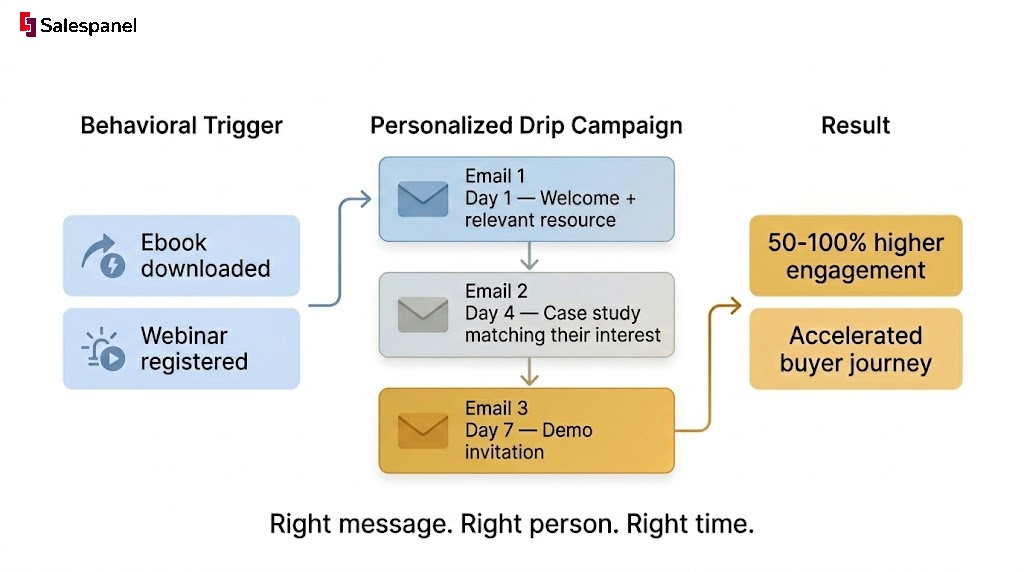
- Behavioral Triggers: Specific actions, such as downloading an ebook, registering for a webinar, or abandoning a shopping cart, can initiate a corresponding drip sequence. Practical Example: A user who abandons a cart containing a specific product category could receive a 3-part email series featuring customer testimonials for those products, followed by a limited-time shipping offer.
- Lifecycle Stages: A new subscriber is entered into a welcome series, a Marketing Qualified Lead (MQL) receives case studies and demo invitations, and a new customer is enrolled in an onboarding sequence. Practical Example: A new SaaS trial user might receive a 7-day email course that walks them through a new key feature each day, designed to increase product adoption and reduce churn.
Amazon’s product recommendation engine, a form of hyper-personalized drip campaign, is a prime example of driving revenue through behavioral data. Similarly, Airbnb leverages location and search history data to send targeted travel inspiration emails that see significantly higher engagement than their standard broadcasts. These examples validate the direct correlation between deep personalization and positive business outcomes.
Actionable Tips for Implementation
- Segment Your Audience: Avoid a one-size-fits-all approach. Segment contacts based on lifecycle stage, engagement level, firmographics, or content affinity before designing campaigns.
- Use Dynamic Content: Leverage personalization tokens and dynamic content blocks to insert the recipient’s name, company, or other known data points directly into the email body and subject line. This simple technique can boost open rates by over 20%.
- Map the Customer Journey: Architect your email sequences to align with the typical path a customer takes, providing valuable information at each decision point to address their evolving needs and objections.
- Focus on a Single CTA: Each email in a sequence should have one clear, primary call-to-action (CTA). Overwhelming recipients with multiple choices leads to decision paralysis and depresses conversion rates.
- Monitor and Optimize: Continuously track key performance indicators (KPIs) like open rates, click-through rates (CTR), and conversion rates. A/B test subject lines, content, and send times to optimize performance systematically.
3. Multi-Channel Campaign Orchestration
Modern customer journeys are not linear; they are a complex matrix of interactions across disparate channels like email, social media, SMS, and proprietary websites. Multi-channel campaign orchestration is the practice of managing these interactions in a synchronized, unified manner. Rather than executing siloed campaigns on different platforms, this approach ensures a consistent brand narrative and a seamless, personalized experience, irrespective of the engagement channel. It represents a technical evolution from simple multi-channel marketing to true, intelligent coordination.
This strategy is a crucial pillar of marketing automation best practices because it mirrors actual customer behavior. A prospect might see a LinkedIn ad, click through to a landing page, subscribe to a newsletter, and later receive a promotional SMS. Orchestration ensures each of these touchpoints feels like part of a single, coherent conversation, guiding the user fluidly through the funnel without friction or redundant messaging. The central takeaway is that consistency across channels builds trust and accelerates conversion.
How It Works in Practice
The technical implementation of multi-channel orchestration requires a centralized data platform, often a Customer Data Platform (CDP), to map and automate customer journeys across various touchpoints. The system utilizes a unified customer profile to trigger the correct action on the optimal channel at the most opportune time.
- Trigger-Based Communication: Practical Example: An abandoned e-commerce cart triggers a sequence. Hour 1: A follow-up email is sent. Day 1: A retargeting ad showcasing the abandoned item appears on their Facebook feed. Day 2: If no action is taken, an SMS with a 10% discount code is dispatched.
- Unified Customer Profiles: Data from all channels is aggregated into a single customer view. This prevents the automation system from serving retargeting ads to a user who has already completed their purchase via a link in an email.
Starbucks masterfully orchestrates its rewards program across its mobile app, email, and in-store point-of-sale systems. A purchase made in-store instantly updates the points balance in the app, which might then trigger a personalized email offer for a complementary product. This level of technical integration elevates the customer experience from transactional to immersive.
Actionable Tips for Implementation
- Start with 2-3 Core Channels: Do not attempt to orchestrate all channels simultaneously. Master the integration between your most critical channels (e.g., email, web, and CRM) before expanding your stack.
- Map Customer Journeys: Use analytics and user data to visualize the most common paths customers take to conversion. Identify key inflection points where a channel switch or cross-channel message would be most effective.
- Ensure a Consistent Brand Voice: Your messaging, tone, and visual identity must be uniform across all platforms to build brand equity and user trust.
- Use a Customer Data Platform (CDP): A CDP is the technical lynchpin for true orchestration. It ingests and unifies data from all sources, breaking down the data silos that prevent a holistic customer view.
4. Behavioral Trigger Automation
Moving beyond pre-scheduled, static campaigns, behavioral trigger automation enables marketing systems to respond to customer actions in real time. This practice involves architecting automated responses that are activated by specific, observable user behaviors, such as visiting a key webpage, opening a critical email, or abandoning a shopping cart. It transforms marketing from a one-way broadcast into a dynamic, two-way conversation, ensuring that communications are maximally relevant and timely.
The core technical concept is to leverage real-time behavioral data to deliver a specific message at the precise moment it will have the most impact. When a user demonstrates intent or need through their actions, an automated workflow is triggered to engage them. This approach is a cornerstone of effective marketing automation best practices because it directly capitalizes on user intent, guiding them seamlessly through their journey and significantly boosting conversion probabilities. The key takeaway is that immediacy and relevance are paramount.
How It Works in Practice
Implementing behavioral triggers begins with identifying key user actions that signal a critical moment for engagement. Once identified, automated workflows are constructed to execute a specific response when that action is logged.
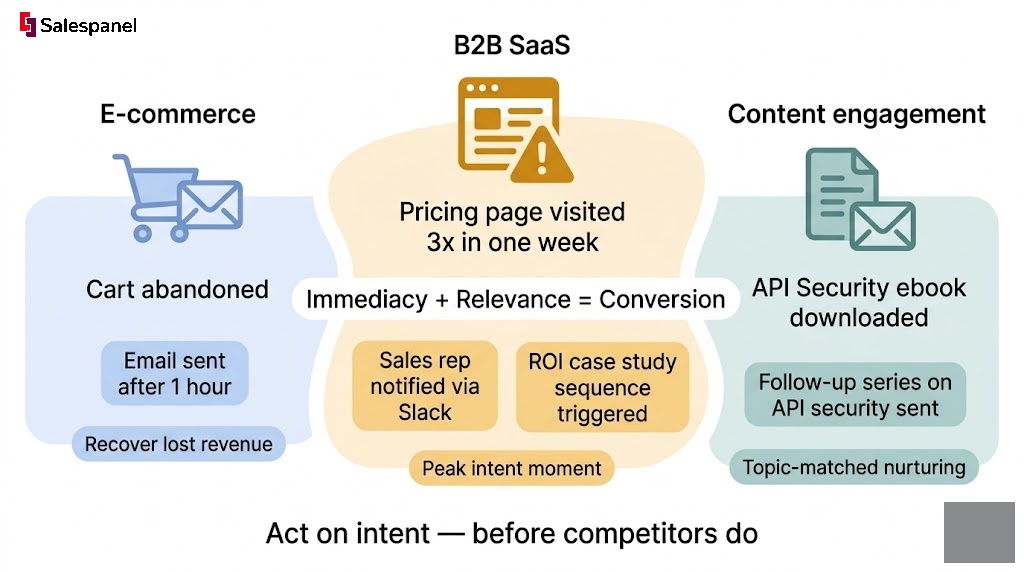
- E-commerce: A customer adds a product to their cart but fails to complete the purchase. After a pre-set delay (e.g., one hour), an automated email is triggered, reminding them of the item and potentially offering a small incentive. Practical Example: This “abandoned cart” workflow is a classic of the genre, responsible for recovering billions in lost e-commerce revenue annually.
- B2B SaaS: A prospect visits your pricing page three times in a single week. This behavior triggers two actions: an internal notification to a sales development representative via Slack and the prospect’s enrollment in a nurturing sequence that highlights ROI case studies and offers a one-on-one demo.
- Content Engagement: A user downloads an ebook about “API Security.” This action triggers a follow-up email series offering related blog posts, webinars, and advanced content on the same subject, positioning the brand as a subject matter expert.
Companies like Amazon have famously used cart abandonment emails to recover a significant percentage of would-be lost sales. Similarly, Netflix’s personalized viewing recommendations, triggered by watch history, are a prime example of behavioral automation driving user engagement and retention.
Actionable Tips for Implementation
- Set Appropriate Time Delays: Avoid triggering a response instantaneously. Implement strategic delays (e.g., 60 minutes for a cart abandonment email, 24 hours for a “we miss you” re-engagement email) to feel helpful, not intrusive.
- Use Progressive Messaging: For multi-step triggered campaigns, ensure your messaging evolves with each touchpoint. The first email might be a simple reminder, the second could highlight benefits, and the third might offer a time-sensitive incentive.
- Implement Frequency Caps: To prevent audience fatigue, set system-level limits on how many triggered communications a single user can receive within a specific timeframe (e.g., no more than three automated emails in 7 days).
- Test Trigger Conditions: Experiment with different behavioral thresholds to optimize performance. For instance, A/B test whether triggering a workflow after two pricing page visits is more effective than waiting for three.
5. Progressive Customer Profiling
In an era defined by data privacy concerns and user friction, presenting a new prospect with a lengthy data-entry form is a significant conversion inhibitor. Progressive customer profiling offers a more intelligent, user-centric alternative. This strategy involves the incremental collection of customer data across multiple interactions, building a comprehensive profile over time without overwhelming the user at any single touchpoint. This ensures a smoother user experience and consistently higher form conversion rates.
The core technical principle is to exchange value for information incrementally. A first-time visitor might only be asked for an email address to download a checklist. On their next visit, the system recognizes them and asks for their company name to access a webinar. This gradual data collection is a cornerstone of modern marketing automation best practices because it respects the user’s time while systematically enriching the contact database, enabling deeper segmentation and personalization. The key takeaway is to reduce friction and build trust through a gradual value exchange.
How It Works in Practice
Implementing progressive profiling relies on smart forms and conditional logic within your marketing automation platform. Instead of displaying the same static form to every visitor, the technology recognizes a returning contact (typically via a browser cookie) and dynamically presents new, unanswered questions.
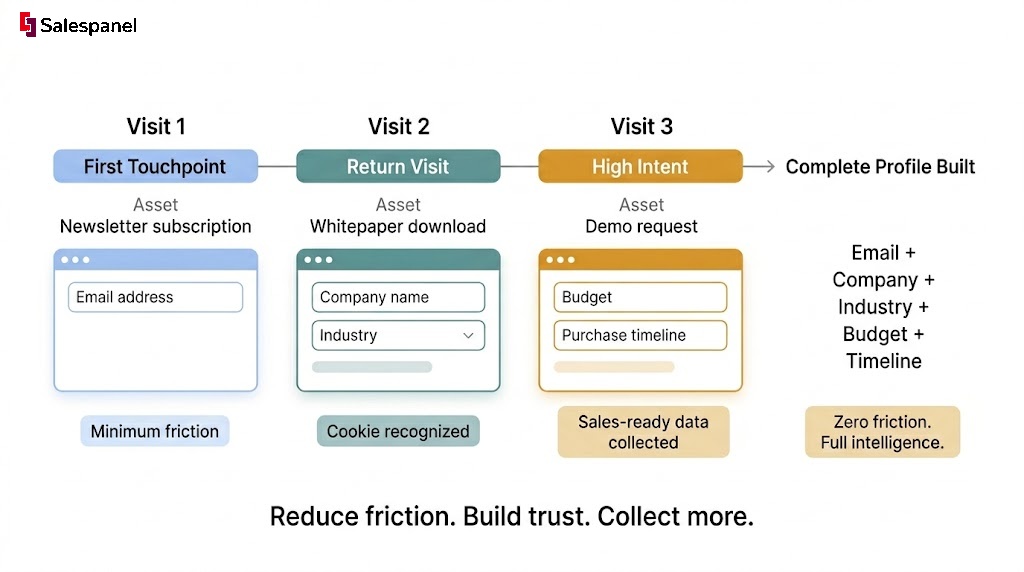
- Initial Touchpoint: The first form a user encounters is intentionally brief, typically asking only for a name and email address in exchange for a low-commitment asset like a newsletter subscription.
- Subsequent Interactions: When that user returns to download a whitepaper, the smart form, recognizing their cookie, hides the fields for name and email. It then presents the next logical questions in your data hierarchy, such as job title or company size. Practical Example: A B2B marketer could design a 3-stage profiling sequence: first interaction asks for email, second for company size and industry, and third (for a high-value asset like a demo) for budget and purchase timeline.
- Behavioral Inference: This explicit data collection can be augmented with implicit behavioral data. For example, if a user consistently engages with content related to “cybersecurity,” the automation platform can infer their interest and use that tag for future segmentation, reducing the need for direct questions.
HubSpot’s smart forms are a prime example of this technology, allowing marketers to dynamically swap form fields to build rich contact profiles over time. The result is a more accurate and comprehensive customer profile built on a foundation of mutual trust and value exchange.
Actionable Tips for Implementation
- Prioritize Initial Fields: Begin with the absolute minimum data required for initial contact, usually just an email address. Each additional field is a point of friction that will reduce submission rates.
- Implement Smart Forms: Utilize a marketing automation platform that supports smart or dynamic forms. Configure them to hide fields for which you already have data and present the next prioritized question.
- Map Your Questions: Strategically plan the data points you need to collect across the entire customer journey. Ask high-level qualifying questions first (like industry) and save more sensitive, sales-oriented questions (like budget) for later-stage, high-intent interactions.
- Leverage Social Logins: Offer options for users to register with platforms like Google or LinkedIn. This can pre-populate several data fields instantly via OAuth, accelerating the profiling process with user consent.
6. Customer Lifecycle Automation
True marketing automation extends far beyond lead acquisition; it is about orchestrating the entire customer relationship from initial awareness to long-term advocacy. Customer lifecycle automation is a strategic methodology that uses automated workflows to guide customers through every stage of their journey. This practice ensures that communications are always contextually relevant, timely, and aligned with the customer’s current relationship status, from onboarding and adoption to retention and expansion.
The objective is to move beyond discrete, one-off campaigns and create a cohesive, evolving conversation. An awareness-stage prospect requires educational content, while a long-time power user benefits from advanced feature tutorials and loyalty rewards. By automating these stage-specific interactions, you can scale personalized experiences that increase engagement, reduce churn, and maximize customer lifetime value (LTV). This is one of the most impactful marketing automation best practices because it shifts focus from short-term acquisition to sustainable, long-term growth. The central takeaway is that retention and expansion are more cost-effective than acquisition.
The following timeline visualizes the key stages of customer lifecycle automation and the measurable impact at each phase.
This progression clearly demonstrates how automated, stage-specific nurturing directly contributes to significant improvements in key business metrics like churn reduction and LTV.
How It Works in Practice
Implementing lifecycle automation involves mapping the customer journey into distinct stages and creating automated triggers that move users between them. These stages are typically defined as awareness, acquisition, onboarding, adoption, retention, and advocacy. Each stage has a unique objective and a corresponding set of automated campaigns.
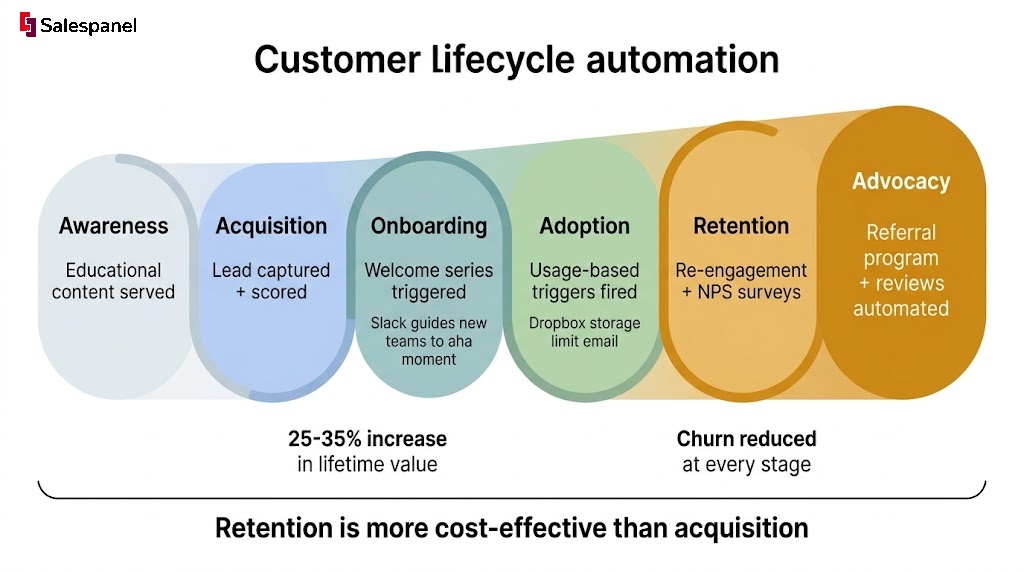
- Onboarding: Practical Example: After a SaaS purchase, an automated welcome series is triggered. Slack excels here with a sequence of in-app messages and emails that guide new teams through setting up channels and integrations, ensuring they reach the “aha!” moment quickly and see immediate value.
- Adoption & Engagement: Practical Example: Based on product usage data, Dropbox identifies free users who are approaching their storage limit. This triggers an automated email campaign that highlights the benefits of their paid plans, effectively converting free users to paying customers based on a clear needs-based signal.
- Retention & Advocacy: Practical Example: For loyal customers, you can automate anniversary rewards, feedback requests using Net Promoter Score (NPS) surveys, or referral program invitations. Adobe identifies engaged Creative Cloud users and automatically presents them with relevant upgrade options, a strategy that has successfully increased LTV.
Actionable Tips for Implementation
- Map Your Stages: Clearly define the entry and exit criteria for each lifecycle stage based on specific data points. What precise action or data change moves a customer from “Onboarding” to “Adoption”?
- Create Stage-Specific Content: Develop a library of content assets tailored to the needs of each stage, including email templates, in-app messages, help desk articles, and video tutorials.
- Use Behavioral Triggers: Leverage customer data, such as login frequency, feature usage metrics, or support ticket history, to trigger automated workflows. A customer who has not logged in for 30 days should be automatically enrolled in a re-engagement campaign.
- Optimize for Advocacy: Once a customer is in the retention or advocacy stage, automate requests for reviews, testimonials, or case studies to build social proof and fuel top-of-funnel acquisition efforts.
7. Data-Driven A/B Testing and Optimization
Relying on assumptions and “best practices” alone in marketing automation leads to performance stagnation. Data-driven A/B testing, also known as split testing, is the rigorous practice of methodically comparing two versions of a single variable to determine which performs better against a specific metric. This continuous, empirical process of experimentation eliminates guesswork, allowing you to optimize everything from email subject lines to complex nurturing workflows based on statistical evidence rather than intuition. It transforms your automation strategy from a static set of rules into a dynamic, ever-improving system.
The principle is rooted in the scientific method: formulate a hypothesis, test it with a control and a variant, analyze the results for statistical significance, and iterate. By isolating and testing one element at a time, you can attribute performance differences directly to that change. This approach is a critical component of marketing automation best practices because it provides a clear, quantifiable path to maximizing ROI. The key takeaway is simple: test, don’t guess.
How It Works in Practice
Implementing A/B testing involves creating a control (Version A) and a variation (Version B) of a marketing asset and exposing them to two similarly sized, randomized audience segments. Performance is tracked against a predefined goal (e.g., open rates, CTR, conversion rates) until a statistically significant winner is determined.
- Campaign-Level Testing: Practical Example: In an email campaign, test a subject line with an emoji versus one without. Or test a call-to-action button that says “Learn More” against one that says “Get Your Free Demo” to see which drives more clicks from a specific audience segment.
- Workflow-Level Testing: This involves optimizing the automation logic itself. Practical Example: In a lead nurturing sequence, test whether a 3-day delay between follow-up emails results in higher overall engagement than a 5-day delay. Or test sending emails in the morning versus the afternoon.
This methodology has produced well-documented, significant results. During the 2012 U.S. presidential campaign, Barack Obama’s digital team used extensive A/B testing on everything from website buttons to email campaigns, a strategy credited with raising an additional $60 million in donations. This demonstrates that even seemingly minor tweaks can yield substantial returns when validated by data.
Actionable Tips for Implementation
- Test One Variable at a Time: To achieve clean, interpretable data, isolate a single element for each test—the headline, the CTA button color, the email sender name, or the core image. Testing multiple variables at once (multivariate testing) is more complex and requires larger sample sizes.
- Ensure Statistical Significance: Do not end tests prematurely based on early results. Use a sample size calculator and wait until your test reaches a statistical significance level of 95% or higher. Most modern automation platforms have this functionality built-in.
- Prioritize High-Impact Elements: Focus your initial efforts on elements that have the largest potential impact on your goals, such as email subject lines, landing page headlines, and CTA copy.
- Document Everything: Maintain a centralized log of all tests conducted, including the hypothesis, the variations tested, the results, and the key learnings. This creates an invaluable internal knowledge base that prevents re-testing old ideas and informs future strategy.
8. Lead Nurturing with Content Mapping
Automated lead nurturing transcends generic email blasts by strategically aligning valuable content with specific stages of the buyer’s journey. This is achieved through content mapping: the practice of creating and delivering educational, problem-solving content that directly addresses a prospect’s questions and pain points at each stage, guiding them systematically from initial awareness to a final purchase decision. This transforms your automation from a simple messaging tool into a sophisticated guidance system.
The core principle is to provide value before asking for a sale. A prospect in the “awareness” stage is not ready for a sales demo; they require an ebook that helps them diagnose their problem. Content mapping ensures you deliver the right asset at the right time, building trust and establishing your brand as an authority. This is a cornerstone of effective marketing automation best practices because it warms leads methodically, making them more receptive to sales conversations. The key takeaway is that content must match context and intent.
How It Works in Practice
Implementing a content map involves organizing your assets around the classic three-stage buyer’s journey:
- Awareness Stage: The prospect is experiencing symptoms of a problem but may not have a name for it. Content should be educational and diagnostic. Practical Example: Blog posts titled “5 Signs Your Current Software is Inefficient,” ebooks, checklists, and industry research reports.
- Consideration Stage: The prospect has defined their problem and is actively researching potential solutions. Content should compare options and highlight your methodology. Practical Example: Case studies, webinars showcasing your product in action, expert guides, and solution comparison sheets.
- Decision Stage: The prospect has shortlisted solutions and is ready to make a choice. Content should remove final barriers and make it easy to buy. Practical Example: Free trials, live demos, pricing pages, ROI calculators, and implementation guides.
An automated nurturing workflow would then serve a sequence of these assets over time. A new lead who downloads an awareness-stage ebook would, a week later, be sent a link to a relevant consideration-stage case study. This model is validated by HubSpot’s content strategy, which generates a massive volume of qualified leads by providing valuable educational content for every possible stage of the journey.
Actionable Tips for Implementation
- Map to Personas and Stages: Create a matrix with buyer personas on one axis and journey stages on the other. Use this grid to identify content gaps and prioritize the creation of new assets.
- Use Progressive Gating: Do not require extensive form fills for top-of-funnel content. Use progressive profiling to gather more data as leads engage with higher-value, bottom-of-funnel content like webinars or demos.
- Build Topic Clusters: Organize your content around core “pillar” pages for your main topics, surrounded by related “cluster” content (like blog posts) that link back to the pillar page. This structure improves user experience and SEO performance.
- Track Content Consumption: Use your marketing automation platform to monitor which assets a lead engages with. This behavioral data provides powerful signals about their interests and current stage in the buyer’s journey, enabling more dynamic and personalized nurturing paths.
9. Integration and Data Synchronization
Marketing automation platforms are powerful, but their efficacy is limited when they operate in a vacuum. True automation excellence is achieved when your martech platform functions as the central nervous system for your entire customer data ecosystem. Integration and data synchronization is the technical practice of creating a seamless, real-time connection between your marketing platform and other critical business systems, such as your CRM, e-commerce platform, and customer support helpdesk. This eliminates data silos and creates a unified, 360-degree view of the customer.
The objective is to ensure data consistency, accuracy, and accessibility across all departments. When your sales team sees the exact same lead engagement data in the CRM that your marketing team sees in their automation tool, organizational alignment becomes frictionless. This holistic view is a cornerstone of advanced marketing automation best practices, as it enables personalization based on a complete understanding of a customer’s interactions. The takeaway is that integrated data is the foundation of intelligent automation.
How It Works in Practice
Effective integration involves connecting disparate software applications, typically via Application Programming Interfaces (APIs), so they can share data programmatically. This creates a unified data flow where an action in one system can trigger an automated response in another.
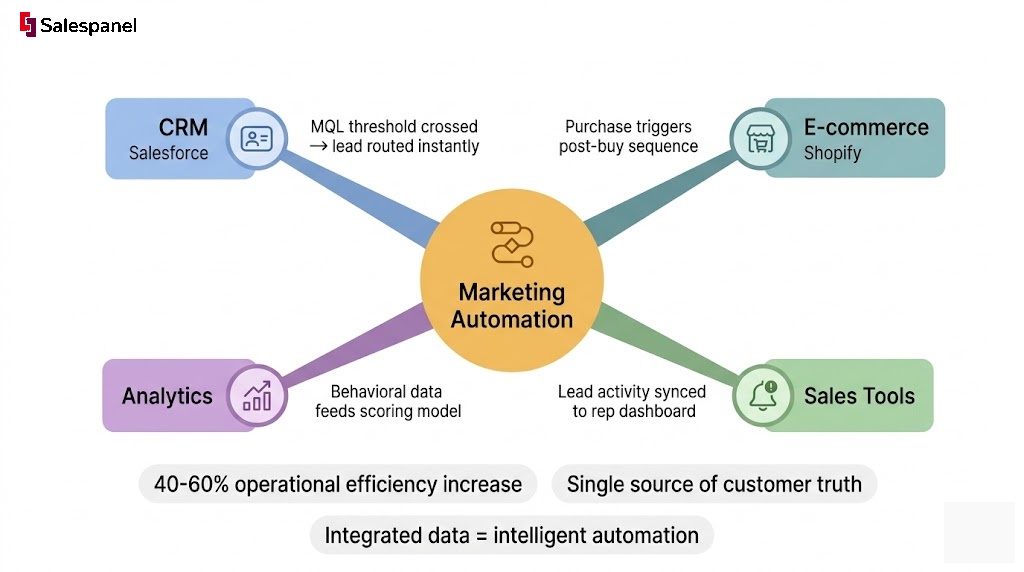
- CRM Integration: This is the most critical connection. Practical Example: When a lead’s score in your marketing automation platform crosses the MQL threshold, their record is instantly created or updated in your CRM (like Salesforce), along with their full activity history (pages viewed, emails opened), and a new task is automatically assigned to a sales representative.
- E-commerce Integration: Connecting a platform like Shopify allows you to trigger automated workflows based on purchase behavior. Practical Example: A customer purchases “Product A.” This data syncs to the automation tool, which then enrolls the customer in a post-purchase email sequence that offers tutorials for “Product A” and upsells a complementary “Product B” two weeks later.
Zapier has built its entire business on this principle, connecting over 5,000 applications to allow non-technical users to build complex, automated workflows. This empowers marketers to, for example, sync webinar registrants from GoToWebinar directly to their CRM and then add them to a specific email nurture sequence without writing a single line of code.
Actionable Tips for Implementation
- Prioritize Critical Integrations: Begin with the most impactful connection: your CRM. This ensures your sales and marketing teams operate from a single source of truth. From there, expand to e-commerce, customer support, and analytics tools.
- Establish Data Governance: Define clear rules for data mapping and management. Determine which system is the “source of truth” for specific data points (e.g., the CRM for contact information) to prevent data conflicts and overwrites during synchronization.
- Implement Regular Audits: Schedule periodic data quality checks and cleansing processes. Run reports to find duplicate records, incomplete information, and synchronization errors to maintain a healthy and reliable database.
- Use Middleware for Complexity: For integrations across multiple complex systems, leverage an Integration Platform as a Service (iPaaS) tool like MuleSoft or Zapier. These platforms simplify the management of data flows and provide a central hub for monitoring.
Marketing Automation Best Practices Comparison
| Item | Implementation Complexity | Resource Requirements | Expected Outcomes | Ideal Use Cases | Key Advantages |
|---|---|---|---|---|---|
| Lead Scoring and Segmentation | High – complex setup and tuning | Data analytics tools, CRM systems | 30-50% increase in conversions | Prioritizing leads, targeted marketing campaigns | Improves sales alignment, personalized messaging |
| Personalized Email Drip Campaigns | Medium – setup of automated flows | Content creation, email platforms | 50-100% higher engagement | Lead nurturing, customer journey communication | Reduces manual effort, 24/7 lead nurturing |
| Multi-Channel Campaign Orchestration | Very high – complex integration | Advanced tech stack, multi-channel tools | 30-40% increase in campaign effectiveness | Coordinated messaging across platforms | Unified customer view, maximized engagement |
| Behavioral Trigger Automation | Medium to High – requires tracking infrastructure | Real-time tracking systems | 50-80% higher conversions | Real-time responses based on user actions | Immediate customer engagement, scalable personalization |
| Progressive Customer Profiling | Medium – gradual data strategy | Smart forms, data management tools | 20-40% higher form completions | Incremental data collection and profiling | Better UX, detailed customer profiles |
| Customer Lifecycle Automation | High – complex workflows | Content libraries, stage-specific assets | 25-35% increase in lifetime value | Nurturing customers through all lifecycle stages | Reduces churn, predictable revenue growth |
| Data-Driven A/B Testing and Optimization | Medium – requires analytical setup | Traffic, testing platforms | 15-30% improved conversion rates | Campaign and content performance optimization | Evidence-based decisions, continuous improvement |
| Lead Nurturing with Content Mapping | Medium to High – content creation heavy | Content teams, marketing automation | 45-60% more qualified leads | Aligning content with buyer journey stages | Builds authority, shortens sales cycle |
| Integration and Data Synchronization | Very High – technical and complex | APIs, middleware, IT resources | 40-60% operational efficiency increase | Connecting multiple systems for unified data | Eliminates silos, increases data accuracy |
Beyond the Workflow: Your Next Strategic Move
We have dissected the essential components of a high-performance marketing automation system, from the precision of lead scoring to the dynamic engagement of behavioral triggers and the strategic foresight of lifecycle automation. Each practice represents a critical gear in a larger revenue-generating machine.
The central theme connecting these strategies is a fundamental shift in philosophy: true marketing automation excellence is not about automating tasks but about orchestrating intelligent, customer-centric journeys at scale. It requires moving beyond discrete campaigns to build a responsive, interconnected ecosystem that adapts to customer behavior in real time. This is not an operational tactic; it is a strategic re-architecting of how customer relationships are built and nurtured.
Synthesizing Best Practices into a Cohesive Strategy
The transition from operational automation to strategic orchestration hinges on one non-negotiable prerequisite: a comprehensive, unified data foundation. You cannot personalize, segment, or score effectively with fragmented, incomplete, or inaccurate data. The practices discussed, from progressive profiling to data synchronization, all underscore the necessity of a single source of customer truth.
Here’s the technical blueprint for connecting the dots:
- Foundation First: Prioritize data integration. Ensure your CRM, analytics platforms, and automation tools are seamlessly synchronized to create a 360-degree view of every interaction.
- Intelligence Layer: Implement a sophisticated lead scoring model. This is the brain of your operation, directing resources and ensuring sales engages only with qualified, sales-ready leads. Advanced frameworks, like Salespanel’s lead scoring framework, allow you to weigh firmographic data, behavioral signals, and first-party intent for unparalleled accuracy.
- Orchestration in Action: With a solid data foundation and intelligent scoring, you can execute complex workflows with confidence. Map your content to lifecycle stages, deploy personalized drip campaigns, and use behavioral triggers to deliver the right message at the precise moment of need.
From Implementation to Mastery: Your Actionable Next Steps
Mastering these marketing automation best practices is an iterative process of refinement. Your immediate goal is to transform these concepts from a checklist into a living, operational part of your marketing DNA.
Begin by conducting a strategic audit of your current automation efforts. Ask these critical questions:
- Data Integrity: Is our lead data unified and reliable? Can Website visitor tracking from Salespanel accurately trace a prospect’s journey from their first anonymous visit to a closed deal?
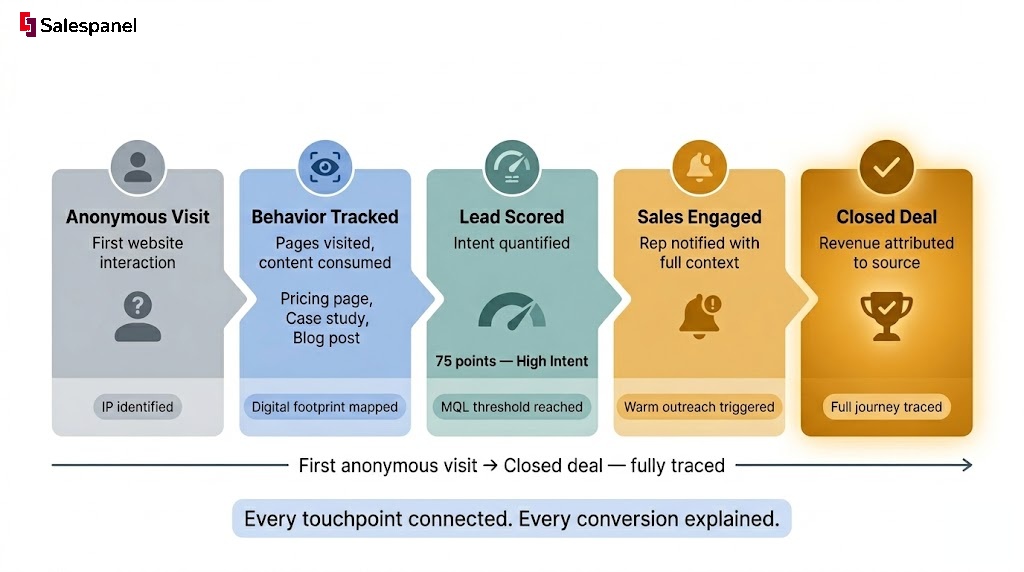
- Scoring Accuracy: Does our lead scoring model accurately predict sales-readiness? Are we refining it quarterly based on closed-won and closed-lost data?
- Workflow Effectiveness: Are our nurturing workflows generic, or are they truly personalized based on behavior, lifecycle stage, and expressed interests?
The ultimate takeaway is this: view your automation platform not as a tool that sends emails, but as a strategic asset that captures intelligence, qualifies intent, and accelerates revenue. This is the philosophy at Salespanel, where the focus is on building a robust data foundation to empower teams to stop marketing at an audience and start building meaningful relationships with them. This is the future of marketing, powered by intelligent, strategic automation.
Ready to build the data foundation that powers elite marketing automation? Discover how Salespanel’s advanced website visitor identification and lead qualification framework can help you implement these best practices and turn anonymous traffic into a predictable revenue pipeline. Explore our resources at Salespanel to get started.