Sales Intelligence Platforms: Complete Guide for Modern B2B Sales Teams

As the sales leader of your organization, you are most likely to face one or more of these questions every quarter:
- Is our business effectively positioning its offerings to outperform the competition?
- Are we using the latest tools and data-backed strategies to capitalize on market opportunities and win more deals?
- What can be the next big shift that will redefine our sales approach?
The discipline of B2B sales is constantly evolving. Numerous trends have come and gone, from automation to personalization and predictive analytics, among others. However, none of these strategies holds a candle to this one technology that is quietly redefining how top-performing sales teams operate, with data-driven precision.
Yes, we are talking about sales intelligence platforms.
Valued at USD 4.40 billion in 2024, the global sales intelligence market is on a strong upward trajectory. It’s forecasted to climb to USD 10.25 billion by 2032, reflecting a robust 11.3% CAGR as businesses worldwide accelerate adoption of data-powered sales intelligence platforms.
Curious to know more? In this guide, we will deconstruct the technical architecture of sales intelligence platforms, provide practical examples of their applications and use cases, and establish a central theme: the relentless pursuit of actionable sales insights to identify in-market buyers, personalize outreach at scale, and accelerate the entire sales cycle.
The Transition from Guesswork to Data-Driven Sales
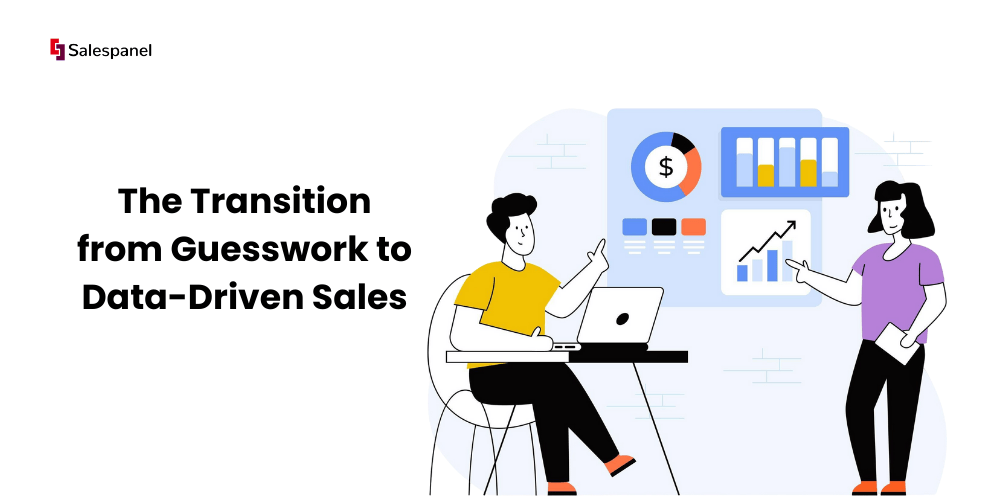
Sales has undergone a dramatic transformation—from instinct-driven cold calls and brute-force volume tactics to a precision science powered by data and technology.
Once a discipline based on the “art” of intuition, it has now evolved into an intelligence-led process defined by timing, context, and buyer understanding.
In the midst of this shift, the central theme is clear: ditching static contact lists for dynamic, intelligent data is the key to unlocking a decisive competitive advantage. Sales intelligence platforms are the engines making this happen, turning a vast ocean of information into a clear map for your sales team to accelerate conversion opportunities and generate more revenue.
The Rush to Intelligent Sales

Research further corroborates this emerging trend. For instance, HubSpot reported that businesses using sales intelligence tools saw a 28% increase in sales productivity and a 25% increase in sales revenue within six months of adopting the technology.
This explosive growth is happening for one simple reason: high-performing sales organizations understand that their most valuable asset is, in fact, the quality of their data.
Instead of sales reps spending hours digging for information, they can instantly pull up detailed profiles with company size, tech stack details, and a full engagement history. This frees them up to focus on what they do best: building relationships and closing deals.
Why This Matters for Your Sales Team

B2B customers today have access to more information than ever before. Not to mention, the landscape is fiercely competitive, with hundreds of companies selling almost-similar products. In fact, younger decision-makers (under 40) complete more than two-thirds of their buying journeys digitally and independently before reaching out to sales.
In light of this, sales teams need to be proactive, and one way to do that is to master sales intelligence platforms. Without these tools, your sales team is flying blind—missing critical buying signals and wasting precious time on low-quality leads.
In contrast, arming your sales team with the right intelligence can help them:
- Spot In-Market Buyers: Identify the exact accounts from companies actively researching solutions like yours right now,
- Personalize Outreach at Scale: Use specific company events or tech changes as a perfect, relevant reason to start a conversation, and,
- Shorten the Sales Cycle: Engage prospects with the right information at the very moment they are most interested.
This guide will break down what sales intelligence platforms are, how they work, and most importantly, how you can pick the right one to drive your business growth.
What is Sales Intelligence?
Before we get to the nitty-gritty of sales intelligence platforms, let’s define what sales intelligence actually means.

Many sales teams have a skewed understanding of the term, seeing it as a high-tech method for finding phone numbers. In reality, however, it is the process of transforming a flood of raw, unstructured data into razor-sharp, actionable insights that guide every single strategic and tactical move your sales team makes—from ICP creation to lead generation, pipeline acceleration, and growth opportunity discovery.
Unlike traditional contact lists that provide salespeople with a series of numbers but little information about prospects, a sales intelligence platform informs sales reps about market trends, helps them develop new engagement strategies, and flags critical buying signals.
This shifts the conversation from “who should we call?” to a more strategic three-part query: “who and why should we call, right now, with this exact message?”
The Four Pillars of Sales Intelligence Data
To provide this level of clarity, sales intelligence platforms aggregate and enrich data from countless sources, building a complete, multidimensional profile of every prospect.
This rich data generally falls into four key categories that, when combined, provide a complete intelligence picture. This framework is a crucial takeaway for evaluating any platform.
Here is a breakdown of the four main types of data that these platforms deliver and their practical application in a sales strategy:
| Data Type | Description | Strategic Sales Application |
|---|---|---|
| Firmographics | The “who” and “what” of a company: its industry, size, annual revenue, and location. | Instantly qualifies if an account fits your Ideal Customer Profile (ICP), preventing wasted effort on poor-fit leads. |
| Technographics | The technology stack a company uses, from their CRM to their marketing automation software. | Uncovers immediate conversation starters—like if they use a competitor’s tool or a system that integrates with yours. |
| Buyer Intent Signals | Behavioral clues that a company is actively researching a solution like yours. | Tells you when to reach out — think spikes in keyword research or downloads of relevant content. It’s a green light for engagement. |
| Contact Data | The nuts and bolts: verified names, job titles, direct dials, and email addresses for decision-makers. | Ensures your message reaches the right person, eliminating guesswork and bounce-backs from outdated information. |
Combining these four pillars helps you do much more than just prospecting—it enables you to execute a clear, data-backed strategy for every outreach attempt. This is what makes sales intelligence platforms a must-add to every sales team’s tech stack. They build on a solid foundation of real-time insights to deliver sophisticated capabilities like predictive analytics.
Connect Data Points and Start Leading Strategic Conversations
The real technical achievement of any sales intelligence platform is the foundation it establishes for targeted messaging, based on these data points. For instance, a platform might identify an account that perfectly matches your firmographic and technographic profile, and then flag that same account the moment employees begin exhibiting buyer intent signals.
That is your window of opportunity! Let’s understand this with a practical example!
Practical Example: A sales rep receives an alert: a Director of Engineering at a target account, who you know uses your competitor’s technology (technographic data), just downloaded a whitepaper on a topic directly tied to your solution (intent signal). This piece of intelligence transforms a cold call into a warm, perfectly timed, and highly relevant conversation.
Thus, a jumble of disconnected data points can become a cohesive narrative with the right sales intelligence, empowering reps to enter conversations armed with validated, relevant information that greatly increases the chances of conversion.
One great example of such a sales intelligence platform is Salespanel. Its Account Reveal feature can unmask anonymous visitors from your target accounts, providing your team with concrete evidence of which companies are evaluating your pricing or solution pages at this exact moment. This turns prospecting into a proactive, intelligence-driven game!
The Core Features Driving Sales Intelligence Platforms
Modern sales intelligence platforms are complex systems built to interpret the digital landscape and pinpoint tangible sales opportunities.

So what are the core features of such software? Let’s check them out below!
Real-Time Data Enrichment and Verification
Stale or incorrect information can render any sales effort ineffective. The solution?
Real-time data enrichment.
A sales intelligence platform functions as an automated fact-checker for your CRM, constantly cross-referencing your contact lists against massive, live databases. For instance, if a contact gets promoted or changes jobs, the platform automatically updates their records.
Practical Example: A sales rep has been targeting a VP of Marketing at a key account. The platform detects that this contact has moved to a new company and updates the CRM record with their latest title and contact information. In addition, it identifies their replacement at the original company, thus creating two active opportunities from a single data change.
Dynamic and Predictive Lead Scoring
As mentioned above, salespeople are often inundated with low-quality leads, which can result in wasted time and effort. This is where dynamic lead scoring comes in.
Setting up predictive lead scoring using machine learning helps you move beyond static rules (e.g., “job title = VP”) to identify which prospects are most likely to convert right now. The system analyzes thousands of data points—firmographics, technographics, and behavioral signals—and the algorithm learns to prioritize leads that resemble your best customers.
Practical Example: A lead from a 500-person tech company (firmographic data) that uses a complementary CRM (technographic data) visits your pricing page for the third time this week (behavioral signal). Instead of being just another website visit, your sales intelligence platform’s algorithm flags this combination of factors as a high-priority buying signal, bumping the lead to the top of one of your sales agents’ queues for immediate follow-up.
Unmasking Anonymous Website Visitors
One of the most powerful features of a sales intelligence platform is the ability to identify companies visiting your website, even if they never submit a form.
Using reverse DNS lookup and data enrichment technologies, these platforms can deanonymize traffic to provide you with a list of qualified accounts. You can see which target accounts are browsing your site, what pages they are viewing, and for how long. This visual timeline provides sales reps with immediate context, which they can use to tailor their outreach efforts.
Detecting Critical Buying Signals
Buying signals are the digital footprints that indicate a prospect is in an active buying cycle. Sales intelligence platforms powered by AI are engineered to identify these signals by scanning millions of sources for specific triggers.
For example, AI algorithms are constantly monitoring for events such as:
- Hiring Initiatives: A target company posts job openings for roles where your product can be highly useful.
- Funding Announcements: A prospect secures a new round of funding, often signaling a new budget for investing in software purchases.
- Negative Competitor Mentions: A potential customer voices frustration with a competitor on social media or a review site.
- Technology Changes: A company adds or drops a tool from its tech stack, opening the door for a new alternative.
These signals provide the “reason to call,” shifting the conversation from a generic pitch to a timely, targeted engagement that dramatically increases response rates.
Benefits of Investing in Sales Intelligence
“To compete effectively, marketers must drive awareness and preference early in the buying journey,” said Kerry Cunningham, Head of Research and Thought Leadership at 6sense, in their B2B Buyer Experience Report 2024.
This statement underscores the growing impact of sales intelligence on RevOps teams and illustrates how salespeople can get ahead of the curve using data-driven sales strategies.
Here are some of the key benefits of investing in sales intelligence:
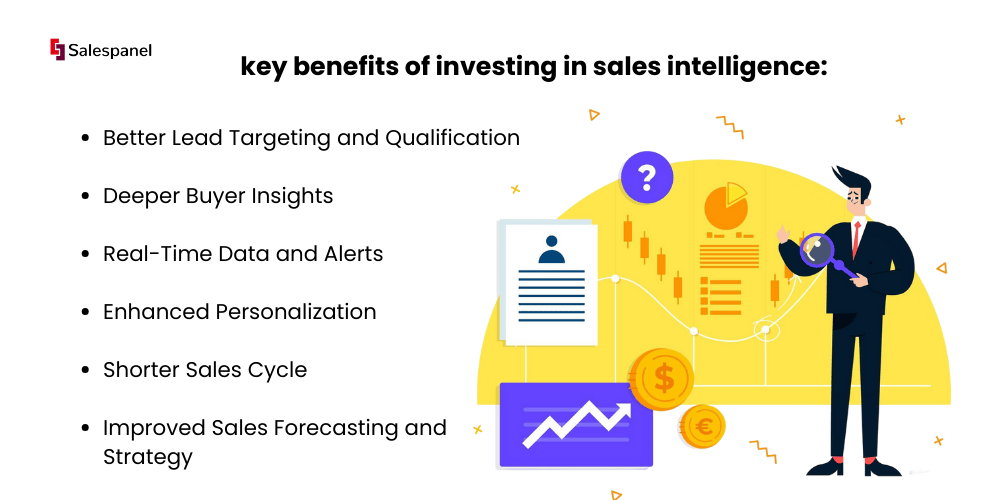
- Better Lead Targeting and Qualification: By combining firmographic, technographic, and intent data, SI platforms help reps focus on accounts showing active buying signals, saving time and improving win rates.
- Deeper Buyer Insights: Sales intelligence provides contextual background on each prospect—from company size and industry to tech stack, hiring trends, and even recent news—thus, allowing sales representatives to make conversations more relevant.
- Real-Time Data and Alerts: Unlike static databases, sales intelligence platforms deliver live updates on prospect activity, such as funding rounds, leadership changes, or new technology adoption. This enables sales teams to reach out at exactly the right moment.
- Enhanced Personalization: With a comprehensive understanding of buyer personas and decision-making patterns, reps can craft hyper-personalized pitches that directly address pain points—moving away from generic outreach to meaningful communication.
- Shorter Sales Cycle: By revealing which leads are most engaged and when they’re ready to buy, SI eliminates guesswork and accelerates deal closure. Teams spend less time chasing dead leads and more time nurturing high-potential ones.
- Improved Sales Forecasting and Strategy: SI provides data-driven insights into trends, pipeline health, and market shifts. This allows leadership to make accurate forecasts, allocate resources efficiently, and plan strategic moves confidently.
Implementing Sales Intelligence Platforms in Your Organization
Understanding the technology is one part of the equation; implementing it effectively, however, can be a very different ball game. While your company’s size and data handling capacity will usually determine the kind of sales intelligence you require, there are a few use cases that every sales intelligence software should help with.
Hyper-Targeted Prospecting
The “spray and pray” methodology is defunct in 2025, with savvy customers who know exactly what they want. In fact, 80% of B2B buyers make their first contact with the sales team after traversing almost three-fourths of the buyer journey on their own.
This means, unless you are prepared, the customer will knock on your door, be disappointed, and end up in your competitor’s lobby, possibly within a day. So how can you prepare?
Using sales intelligence to turn the tables, of course!
Sales intelligence enables teams to build highly precise Ideal Customer Profiles (ICPs) that allow them to understand customer pain points, prepare for every scenario, and thereby increase the likelihood of conversion.
SI even helps companies identify net-new accounts that mirror their best customers for their outreach efforts. This goes beyond basic firmographics like industry or company size. A modern ICP integrates technographic data (what software are they using?), buying signals (are they hiring for a role that needs your tool?), and growth indicators (did they just secure funding?).
Practical Example: A SaaS company that sells project management software can use sales intelligence to:
- Define the ICP: Understand that their best customers are typically B2B tech companies with 200-500 employees that use Salesforce and are hiring “Product Managers.”
- Filter the Database: Execute a query to generate a list of every company in North America that meets all four criteria.
- Find the Right People: Filter for titles like “VP of Product” or “Director of Engineering” in an already hyper-targeted list, building a directory of high-quality prospects on autopilot.
Powering Account-Based Marketing Campaigns
Account-Based Marketing (ABM) is entirely dependent on data quality. To effectively target the entire buying committee at a major organization, sales and marketing teams must leverage data coming from a single source of truth. This is precisely what sales intelligence platforms deliver.
Most ABM campaigns fail because of one problem: generic, one-size-fits-all messaging. Sales intelligence solves this by providing the specific details needed to make every touchpoint feel personal and relevant to each stakeholder involved in the deal.
This level of insight ensures that marketing ads, email sequences, and sales calls are perfectly synchronized. Sales teams can gain direct insights into the company’s tech stack, recent activities, and unique challenges, enabling them to tailor and time their outreach perfectly.
Enabling Deeply Personalized Outreach
Want a reality check? B2B decision-makers receive thousands of emails and DMs every single day. So, how do you cut through this noise?
The only solution is relevant, timely, and highly personalized messaging. Sales intelligence provides the ammunition reps need to craft messages that command attention.
You can craft your messages based on:
- Trigger Events: “I saw your company just closed a Series B round. Congratulations! As you scale the engineering team, our platform can help…”
- Technographic Insights: “Noticed you are using Marketing Tool X. Our software integrates seamlessly to help your team better track…”
- Personnel Changes: “Congratulations on the new role as VP of Sales! I know many leaders in your position are focused on improving forecast accuracy…”
The end goal is to make these data-driven workflows more efficient. To that end, many sales intelligence platforms combine AI and automation technologies to scale these personalized touchpoints without losing the human feel. Check it out!
Executing Competitive Analysis
Understanding your competitors’ activities provides a massive strategic advantage. With sales intelligence tools, you can monitor a competitor’s customer base, spotting accounts that might be vulnerable to churn, and swoop in to claim them as your customers.
Practical Example: You receive an alert when a key customer of your main competitor leaves a negative review online or when their contract is approaching its renewal date. This allows your team to engage at the perfect moment with a targeted displacement campaign. This transforms competitive intelligence from a passive research project into an aggressive sales strategy.
The Future of Sales: AI and Revenue Intelligence

Did you really think we would discuss sales intelligence without bringing up AI? Traditional sales intelligence platforms have been around for a while, but artificial intelligence is the undeniable driving force behind the growing popularity of modern sales intelligence platforms.
In fact, sales intelligence is slowly being transformed by AI into a more comprehensive concept: revenue intelligence. This represents a critical paradigm shift, moving from a narrow focus on pre-sales prospecting to a holistic analysis of the entire customer lifecycle.
Revenue intelligence involves scrutinizing every touchpoint along the customer journey—from the first website visit and initial sales call through onboarding, adoption, and renewal. This gives sales teams, or rather RevOps teams, the tools and insights they need to tailor buyer experiences and maximize sales efforts for conversions and revenue.
From Data Collection to Automated Insights
Instead of merely presenting data points for human interpretation, AI-powered revenue intelligence systems actively analyze interactions to generate automated, actionable insights.
Market research corroborates this. In 2024, estimates placed the global revenue intelligence market value between $1.2 billion and $3.83 billion. In fact, the market size is expected to grow at an average 12.1% CAGR and reach $13.4 billion by 2033.
This growth is fueled by key AI applications that are fundamentally changing revenue operations, including:
- Conversation Analysis: AI tools can transcribe and analyze sales calls in real time. This helps sales teams identify key topics, detect customer sentiment, and provide reps with on-the-spot coaching prompts to handle objections or reinforce value propositions.
- Predictive Forecasting: AI algorithms can analyze the entire interaction history of a deal—every email, meeting, and call—to accurately predict which deals are likely to close and which are at risk, transforming sales forecasting into a precision science.
- Automated Insight Generation: AI continuously sifts through customer and prospect data to uncover patterns a human would likely miss, such as flagging a perfect upsell opportunity or identifying the common traits of deals that close fastest.
The True Impact on Revenue Operations
For sales leaders, the implications of revenue intelligence can be significant.
For instance, revenue intelligence makes coaching targeted and effective. Instead of offering generic advice, a manager can review AI-generated highlights from a rep’s calls to focus on specific areas needing improvement.
Practical Example: An AI flags that a specific sales rep consistently struggles when conversations turn to budget. The sales manager then used role-playing exercises and target coaching focused squarely on that weak spot, leading to rapid, measurable improvement.
The objective is no longer just to accumulate data for the top of the funnel. You should want to build a system of operational intelligence that spans the entire revenue organization, optimizing every stage for maximum efficiency and growth..
Choosing the Right Sales Intelligence Platform
Now that we have provided you with a comprehensive overview of sales intelligence platforms—its core features, benefits, and implications in the broader revenue generation field—let’s discuss how you can select the right sales intelligence platform for your organization.
Selecting the right sales intelligence platform is a critical business decision that can directly impact your entire sales operation. This is why it is important to go beyond a rigorous evaluation and focus on what it can actually do to solve your specific business problems.
So, where should you start? The initial step is an honest assessment of your current sales processes. Where are the primary bottlenecks? Are reps spending excessive time on manual prospecting or outreach? Is your CRM data inaccurate or outdated?
Pinpointing these pain points provides a clear lens for evaluating potential solutions. Let’s dive into the details now.
Key Evaluation Criteria
Here are the key evaluation criteria you must keep in mind while evaluating sales intelligence platforms for your organization:
- Data Accuracy and Scope: This is the foundation of any sales intelligence tool. If the data is inaccurate, every other feature is rendered useless. Challenge vendors on data sources, verification processes, and update frequency.
- Seamless Integration: A new tool must integrate seamlessly into your existing tech stack. Deep, bi-directional integration with your CRM (like Salesforce or HubSpot) is mandatory. Data must flow effortlessly between systems to minimize manual work and eliminate information silos.
- Usability and Adoption: Even the most powerful platform is worthless if your team won’t use it. Prioritize a clean, intuitive interface that feels like a natural extension of a salesperson’s workflow, not another cumbersome task.
- Scalability and Support: Consider your future needs. Will the platform scale with your team and evolving strategy? You must also assess the quality of customer support. Ensure there is a clear path to getting help during implementation and beyond.
To structure your evaluation and compare vendors systematically, use the following checklist. This will help guide your conversations and ensure that you ask the right questions.
Platform Evaluation Checklist
Here is a snapshot of the criteria you must use to evaluate your sales intelligence platforms:
| Evaluation Criteria | Key Questions to Ask | Why Does It Matter |
|---|---|---|
| Data Quality | Where does your data come from? How often is it refreshed and verified? Can you show me the data accuracy rate for my specific target market? | Bad data leads to wasted time, incorrect targeting, and damaged brand reputation. |
| CRM Integration | How deep is the integration with our CRM? Is it bi-directional? What does the setup process look like? | A shallow or one-way sync creates data silos and manual work. The goal is a seamless flow of information, not another chore for your sales representatives. |
| User Experience (UX) | Can we get a live demo for our sales team? How many clicks does it take to perform a common task, like building a prospect list? | A clunky or confusing UI can prevent your team from fully adopting the technology and maximizing its ROI. |
| Feature Alignment | Which of your features directly solves our top 3 sales bottlenecks? How does this tool support our specific GTM strategy (e.g., ABM, outbound)? | Focus on the core capabilities that align with your business goals and solve your unique problems. |
| Onboarding Support and Customer Service | What does your onboarding and training process entail? What are your support hours and typical response times? Do we get a dedicated success manager? | Strong support and training are critical for a smooth rollout and long-term success. Responsive customer service prevents workflow disruptions. |
| Pricing and Scalability | How does your pricing model work? What happens when our team grows? Are there usage limits we should be aware of? | Avoid platforms with punitive pricing models and limited scalability that penalize you for success. |
This checklist covers the core factors that determine whether a sales intelligence platform becomes an asset to your organization. Choose carefully!
How to Implement a Sales Intelligence Platform?

A successful rollout requires a strategic, phased approach, not a company-wide launch on day one. This methodology reduces risk and builds internal momentum.
In light of this, the most effective strategy is to start with a pilot program. Select a small yet skilled group of sales reps to test the platform in a real-world environment. This allows you to prove ROI on a smaller scale, gather valuable feedback, and create internal champions who can advocate for the tool’s benefits to executive stakeholders. Based on the pilot program’s results, you can then build a wider training program and a staggered deployment schedule.
It is also important to define success metrics from the outset. You must track KPIs such as the increase in qualified meetings booked, the reduction in prospecting time, and the overall impact on your sales pipeline and revenue after you implement your sales intelligence platform.
This is why our philosophy at Salespanel is to make data actionable directly within existing workflows. For instance, a clear success metric could be the number of new opportunities generated from insights provided by its website visitor tracking feature. This approach turns anonymous website traffic into tangible leads, ensuring the platform delivers measurable business value and drives revenue generation efforts from day one.
Got Questions about Sales Intelligence? Here are some FAQs.
Jumping into the world of sales intelligence platforms can feel like diving headfirst into the ocean. It can feel exciting, but you may also run the risk of drowning in deep waters.
As these tools become a core part of any modern sales team, it is natural to have questions. We have heard a bunch of them from our customers, so we have put together some quick and concise answers to the most common ones we get from sales teams trying to figure all this out.
What is the Difference Between a CRM Platform and a Sales Intelligence Tool?
Your CRM platform serves as your team’s digital Rolodex. It works as a system of record—a place where you manage all the relationships you already have with customers and prospects. It holds the information your team has gathered through calls, emails, and meetings.
In contrast, a sales intelligence platform acts as your data scout. Its main job is to go out and find fresh, external data about potential customers and markets you know nothing about. It then plugs the information into your CRM, enriching your contacts and identifying qualified leads, turning your static database into a proactive engine for finding new opportunities.
Where Do Sales Intelligence Platforms Get Their Data? Is it Accurate?
Top-tier SI platforms don’t just pull data from one single source. They use a mix of methods to make sure the information is solid.
Such software gathers public data from sources such as company websites, press releases, and official business filings. They also buy specialized datasets from third-party vendors and use their own tech, like AI-powered web crawlers, to uncover unique insights.
However, here’s the critical part: the best platforms don’t just collect data—they obsessively verify its accuracy. This usually involves a blend of automated checks and actual human review teams who constantly refresh contact info and company details.
The goal is to ensure that every piece of data extracted is as accurate as possible. This is an important evaluation criteria when you are looking at different software options, so make sure to ask your selected vendors about specific details on how they source and verify their data.
How to Measure the ROI of a Sales Intelligence Platform?
To measure the return on your SI platform investment, you need to track a few key performance indicators (KPIs) before and after you bring the tool on board. By setting a clear baseline, you can directly link the financial upside to how the platform is making your team more productive.
Here are the most important metrics you should be watching:
- Better lead quality: Are you seeing a higher conversion rate from that initial contact touchpoint to a qualified opportunity?
- Time saved: How much less time is each sales rep spending on manual prospecting and digging for information?
- More qualified meetings: Is your sales development team booking more solid appointments by leveraging the tool?
- Shorter sales cycles: Are you closing deals faster after investing into your SI platform?
Ready to turn your anonymous website visitors into real sales opportunities? Check out Salespanel’s Account Reveal to see how our B2B marketing automation platform can help you spot, score, and connect with your best prospects across different stages of your sales funnel.
Sell more, understand your customers’ journey for free!
Sales and Marketing teams spend millions of dollars to bring visitors to your website. But do you track your customer’s journey? Do you know who buys and why?
Around 8% of your website traffic will sign up on your lead forms. What happens to the other 92% of your traffic? Can you identify your visiting accounts? Can you engage and retarget your qualified visitors even if they are not identified?