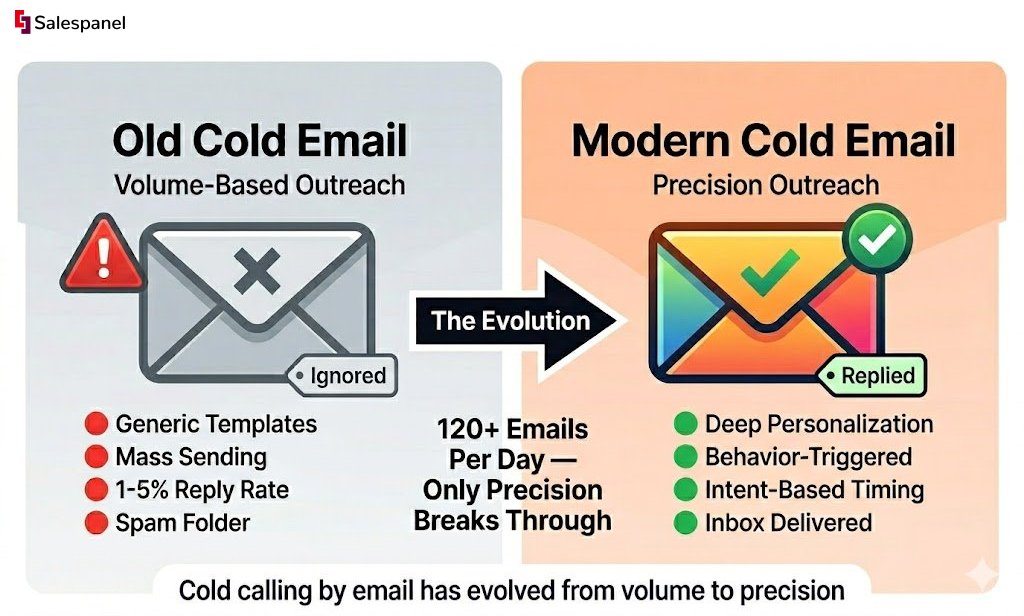
Cold emailing, a term that once conjured images of indiscriminate, automated blasts into the digital void, has undergone a radical transformation. Historically a game of volume, its success was measured in sheer sends, a brute-force tactic yielding diminishing returns. Today, that model is obsolete. The future of effective outreach—what we now call “cold calling by email”—is not about volume, but precision. It is a technical discipline blending deep personalization, behavioral psychology, and the intelligent application of data. Recent B2B email statistics show that while the average professional receives over 120 emails daily, reply rates have dropped to as low as 1-5%. This article is a comprehensive guide to navigating this new landscape, providing a tactical playbook to ensure your outreach is not just seen, but valued, read, and actioned.
You will learn how to build automated systems that convert anonymous website visitors, identified through tools like website visitor tracking from Salespanel, into high-value customers. The future of B2B marketing isn’t just sending emails; it’s about initiating intelligent, automated conversations at scale. This is your practical guide to mastering them.
Why Traditional Cold Email Outreach Is Broken
A person looking at a broken email icon on a computer screen, symbolizing the failure of old outreach methods.
Let’s be blunt: the old cold email playbook is toast. The days of spraying generic templates and praying for a reply are long gone. What used to feel like a simple numbers game, where more sends equaled more success, now yields almost nothing. If your outreach strategy is still stuck in that old mindset, you’re not just spinning your wheels—you’re falling behind.
This doesn’t mean cold email is dead. Not even close. It has just evolved from a brute-force tactic into a precision tool. Success today is all about smarts: a sophisticated mix of deep personalization, a little bit of psychology, and the intelligent use of data.
Cold Hard Numbers Tell the Story
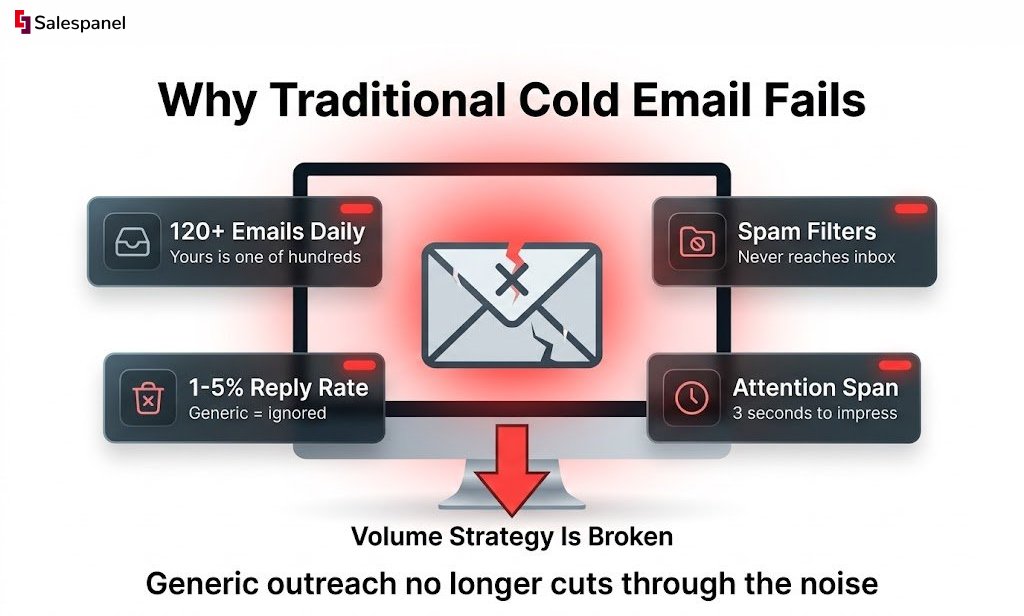
The data shows exactly why the old “spray and pray” methods just don’t cut it anymore. Think about it: the average business professional gets hit with over 120 emails every single day. Your message isn’t just competing with a few others; it’s one in a hundred, all fighting for a few seconds of your prospect’s attention.
People have gotten incredibly good at spotting and deleting sales emails, sometimes without even reading the subject line. On top of that, sophisticated spam filters from platforms like Gmail are getting better and better at hiding your messages away in folders that never see the light of day. The result? Engagement has plummeted. To put it in perspective, let’s look at how the key metrics have shifted.
Cold Email Performance Past vs Present
This table gives a quick comparative overview showing the decline in key cold email metrics, highlighting the need for a new strategic approach.
| Metric | Past Performance | Current Performance | Implication for Strategy |
|---|---|---|---|
| Open Rate | ~36% | ~27.7% | Subject lines and sender reputation are more critical than ever to even get noticed. |
| Reply Rate | 5-10% | 1-5% | Generic messages get ignored. Personalization is the only way to earn a response. |
| Deliverability | High | Lowered | Spam filters are aggressive. Technical setup and email warming are now mandatory. |
| Primary Tactic | Volume-based | Value-based | Focus has shifted from quantity of sends to the quality and relevance of each email. |
The downturn in these numbers sends a clear message: what worked before won’t work now. For a deeper dive into the numbers, exploring some B2B email statistics can be eye-opening.
The Big Shift: From Volume to Value
The fundamental flaw of traditional cold email is that it’s built on interruption, not value. It puts the sender’s needs way ahead of the recipient’s time and attention. Modern, effective outreach flips that script entirely. It’s about a complete change in how you think:
- From Generic to Hyper-Relevant: Ditch the broad messaging. Successful campaigns target specific pain points and triggers unique to each person you contact.
- From Selling to Helping: Your immediate goal isn’t to pitch. It’s to offer a genuine solution to a problem your prospect is actually trying to solve.
- From Automation to Augmentation: Technology isn’t for sending more emails faster. It’s for enhancing your personalization and getting the timing just right.
The brutal truth is that a deleted, unread email isn’t just a neutral outcome—it’s a negative one. You haven’t just failed to connect; you’ve potentially branded yourself as spam, making any future attempts to reach out even harder.
Adapting to this new world isn’t just a good idea; it’s essential for anyone serious about B2B sales and growth. In the next sections, we’ll walk you through exactly how to master the modern art of cold email, from building razor-sharp prospect lists to writing messages that actually get opened, read, and replied to.
Building a Hyper-Specific Prospect Profile
A magnifying glass focusing on one person in a crowd, representing the targeting of a specific prospect profile.
A successful cold email campaign has very little to do with the first word you write. It’s all about the homework you do beforehand. The absolute bedrock of any campaign that gets replies is a deeply researched, almost obsessively specific prospect profile. This is so much more than just slapping a filter on for company size or industry. That stuff only tells you what a company is, not why on earth they’d need you right now.
To write an email that actually lands, you have to find the triggers—the specific events that tell you a prospect is actively looking for a solution to a problem you can solve. Without that, you’re just another notification to be swiped away.
Moving Beyond Firmographics to Intent Signals
Generic targeting gets you generic results. Real personalization comes from digging for “intent signals”—the behavioral data and situational clues that turn your outreach from a random interruption into a timely, relevant conversation. For a deeper dive, there’s a great guide on creating buyer personas that actually work.
These signals are basically breadcrumb trails leading you to the right person at the perfect moment. You just have to know where to look.
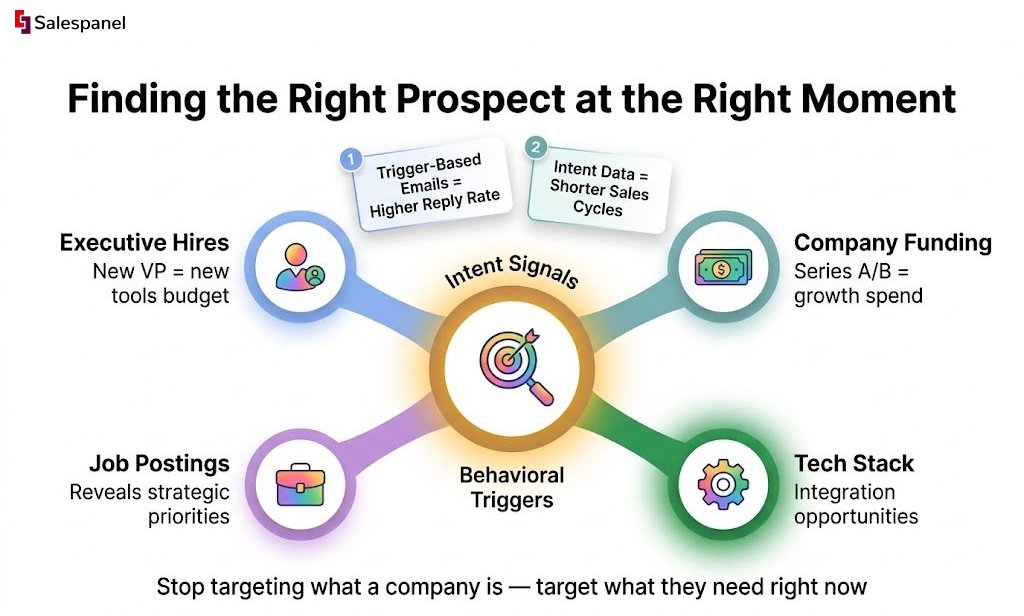
- Executive Hires: A brand new VP of Marketing or Head of Sales isn’t there to keep things the same. They’ve been hired to make a change and are actively hunting for new tools and strategies to make a splash in their first 90 days.
- Company Funding: A fresh Series A or B funding round is a massive signal. It means they have new cash to spend and aggressive growth targets to hit. This is the perfect time to show them how your solution helps them scale efficiently.
- Job Postings: If a company is hiring a “Salesforce Administrator,” you know they’re invested in that ecosystem. If they’re looking for a “Content Marketing Manager,” they’re focused on top-of-funnel growth. These postings reveal their exact operational needs and strategic priorities.
- Technology Mentions: Using tools like LinkedIn Sales Navigator to find prospects mentioning a competitor’s tool or a piece of tech that integrates with your own provides a natural, built-in conversation starter.
A Practical Example of Profiling
Let’s make this real. Say you sell a project management tool built for creative agencies. The generic approach is to target any agency with 50+ employees. This is a low-yield strategy.
The hyper-specific approach? You find an agency that just posted a job for a “Project Manager.” In the job description, they specifically mention “managing client deadlines” as a key responsibility. This is your trigger.
That one piece of data tells you they’re struggling with workflow, they have an active need, and they’re already spending money to fix it. Your email transforms from, “We sell project management software,” to, “Saw you’re hiring a PM to wrangle client deadlines—we help agencies like yours nail that exact challenge.”
This is the difference between an email that gets deleted and one that gets a reply. By focusing on these triggers, your message becomes contextually aware and instantly valuable. This isn’t just sending emails; it’s the core of modern cold calling by email.
Crafting Emails That Actually Get Read
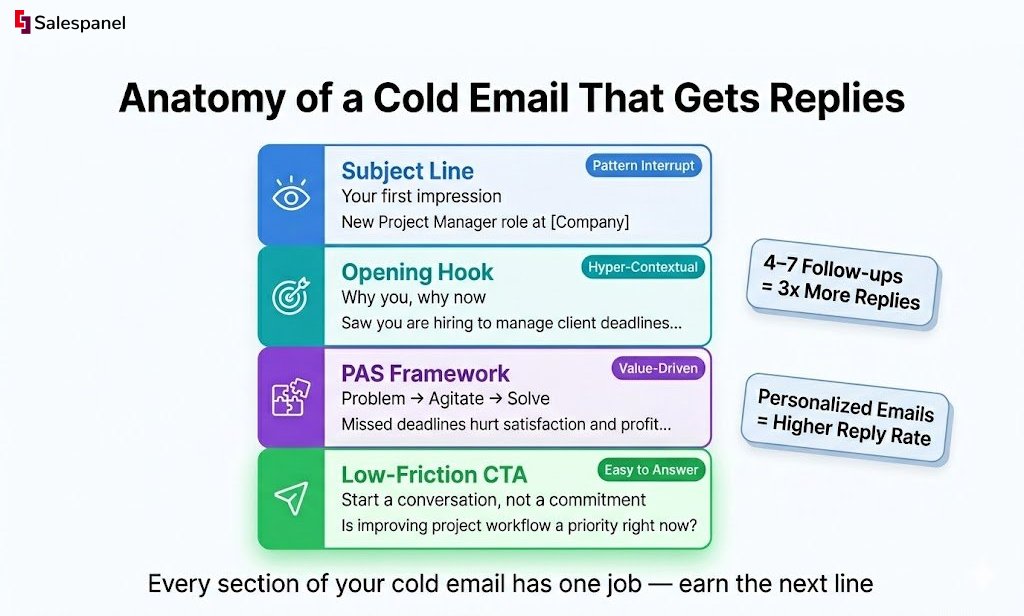
Once you’ve got your prospect profile dialed in, it’s time to actually write the thing. Every cold email is a micro-battle for someone’s attention. You typically win or lose that battle in a matter of seconds based on three critical components: the subject line, the opening line, and the call-to-action (CTA). If you’re serious about making cold calling by email a channel that actually brings in business, getting these three parts right isn’t just a suggestion—it’s everything.
The Subject Line: Your First Impression
The subject line is your first—and often your only—chance to get noticed in a crowded inbox. Its job isn’t to sell anything. Its only job is to be interesting enough to earn the click. Vague, tired subjects like “Quick Question” or “Checking in” are dead on arrival. They scream “mass email” and often get automatically filtered out. Instead, your goal should be to spark curiosity while being directly relevant to the person you’re emailing.
Here are a few practical frameworks that work:
- The Observation: “[Observation about their company]” — Practical Example: “New Project Manager role at [Company Name]”
- The Connection: “[Mutual Connection/Interest] Intro” — Practical Example: “Jane Doe suggested I reach out”
- The Question: “Question about [Prospect’s Recent Project/Post]” — Practical Example: “Question about your recent LinkedIn post on logistics”
Why do these work? Because they immediately prove you’ve done a bit of homework. They create a “pattern interrupt” in an inbox full of generic noise and show this email is specifically for them.
The First Sentence Is Your Hook
So the subject line got you the open. Fantastic. Now you’ve got about three seconds to convince them to keep reading. This is where you need to show them this isn’t just another copy-pasted email blast. This is the moment where all that research you did on their triggers pays off. Lead with the “why you, why now.” Connect your email directly to a specific event, challenge, or piece of news you uncovered.
Weak Opening: “My name is John, and I work at SaaS Co. We help companies like yours increase efficiency.”
Strong Opening: “Saw your team is hiring a new Project Manager to help manage client deadlines. We recently helped [Similar Company] cut their project overruns by 20% when they were facing a similar challenge.”
The second one is hyper-contextual. It instantly tells the prospect you understand their world, which makes them far more likely to stick around for the rest of your message.
Structuring the Body with Purpose
Okay, you’ve got their attention. Now, the body of your email has to deliver value, and it has to do it fast. One of the most effective frameworks for this is Problem-Agitate-Solve (PAS). Instead of just rattling off a list of features, you’re guiding the prospect through a story they already know. For a deeper dive, check out these excellent tips on how to write effective emails that get opened.
Here’s how PAS breaks down:
- Problem: State the challenge you know they’re probably dealing with. (e.g., “Managing multiple client projects often leads to missed deadlines and scope creep.”)
- Agitate: Briefly poke the bruise. What are the negative consequences of that problem? (e.g., “This not only hurts client satisfaction but can also crush team morale and profitability.”)
- Solve: Introduce your solution as the straightforward answer to that pain. (e.g., “Our platform gives creative agencies a real-time dashboard of every project, so you can spot bottlenecks before they happen.”)
This structure makes your pitch feel less like a sales pitch and more like a helpful diagnosis from an expert.
The Low-Friction Call-to-Action
Finally, we arrive at the CTA. This is where so many good cold emails go to die. Asking a complete stranger for a 30-minute demo is a huge ask. That’s a high-friction request that demands a big commitment. Your goal here isn’t to book a meeting; it’s just to start a conversation. Make your CTA a simple, low-effort, interest-gauging question.
Instead of: “Are you free for a call next Tuesday at 10 AM?” Try: “Is improving project workflow a priority for your team right now?”
This simple yes/no question is easy for them to answer and instantly qualifies their interest without making them pull up their calendar. It’s a small tweak, but it can make a massive difference in your reply rate, turning a cold outreach into a warm conversation.
Executing Your Campaign and Following Up with Intent
Hitting “send” on that first email isn’t the finish line; it’s the starting gun. From this point on, the success of your entire cold email effort boils down to two things: a flawless technical send and a follow-up sequence that actually adds value. Before a single message goes out, you have to be confident it can actually land in an inbox. This is where the unglamorous but critical backbone of email deliverability comes in.
Securing Your Sender Reputation
Not configuring your email authentication is like sending a postcard with no return address—it’s instantly suspicious and likely headed for the trash. For anyone serious about outreach, setting up these three records is non-negotiable:
- SPF (Sender Policy Framework): This is your domain’s approved senders list. It tells receiving mail servers which IP addresses are authorized to send email on your behalf, preventing spoofing.
- DKIM (DomainKeys Identified Mail): This adds a digital signature to your emails. The recipient’s server can check this signature to verify the message wasn’t altered in transit.
- DMARC (Domain-based Message Authentication, Reporting & Conformance): This protocol is the enforcer. It builds on SPF and DKIM, telling servers what to do with emails that fail the checks—reject, quarantine, or monitor.
Getting these records in place is a foundational step. It protects your domain’s reputation and dramatically increases the chances of bypassing spam filters. Many powerful email outreach tools can help guide you through this or even run automated checks for you.
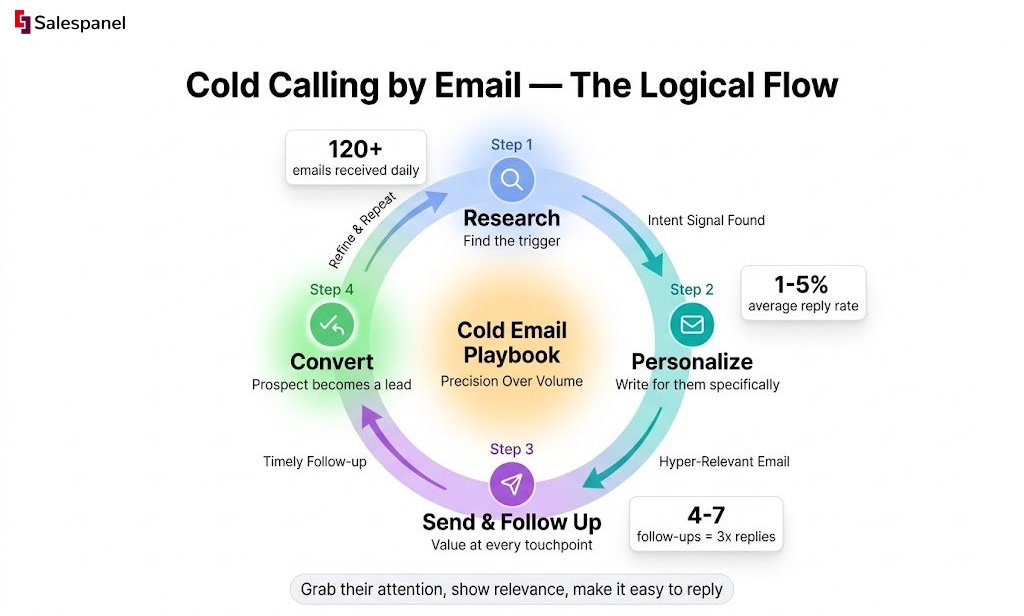
This infographic breaks down the essential parts of a cold email that works, from the subject line that gets the click to the CTA that kicks off a real conversation. Infographic about cold calling by email Notice the flow here. It’s a logical path: grab their attention, show them why it matters to them right now, and then make it incredibly easy for them to take the next step.
The Art of the Value-Driven Follow-Up
With your technicals sorted, it’s time to focus on the follow-up. The goal isn’t just to “bump” your last email to the top of their inbox. It’s to drop a new, valuable breadcrumb with every single touchpoint. A generic “just checking in” email is worse than sending nothing. Your follow-up cadence should feel less like pestering and more like a series of helpful, insightful nudges.
A study of over 20 million outreach emails found that sequences with 4 to 7 follow-ups can get 3x more replies than those with only 1 to 3. Persistence pays, but only when it’s intelligent.
Let’s make this real. Imagine a prospect from your campaign visits your pricing page. That’s a huge buying signal. Tools with Website visitor tracking from Salespanel can fire off an immediate alert to your sales team, giving you the perfect opening for a timely, hyper-relevant follow-up. Suddenly, you’re not a random person in their inbox anymore. Your message can shift from the weak “Did you see my last email?” to the powerful “Saw you were checking out our integration options—happy to answer any specific questions you had.” This kind of intelligent follow-up closes the gap between a cold outreach shot in the dark and a genuine, helpful conversation.
Measuring Success and Optimizing Performance
Sending a cold email campaign without tracking performance is like driving with your eyes closed. Success in cold email isn’t about how many messages you fire off; it’s about the real business outcomes they create. It’s time to ditch the vanity metrics and zero in on the data that actually fills your sales pipeline. For years, we all obsessed over open rates. But they’ve become notoriously unreliable thanks to privacy features like Apple’s Mail Privacy Protection. They don’t tell you if your message truly landed.
Metrics That Actually Drive Revenue
If you want to know what’s really working, you need to track the signals that show genuine interest and move a prospect forward. These are the numbers that have a direct line to closed deals.
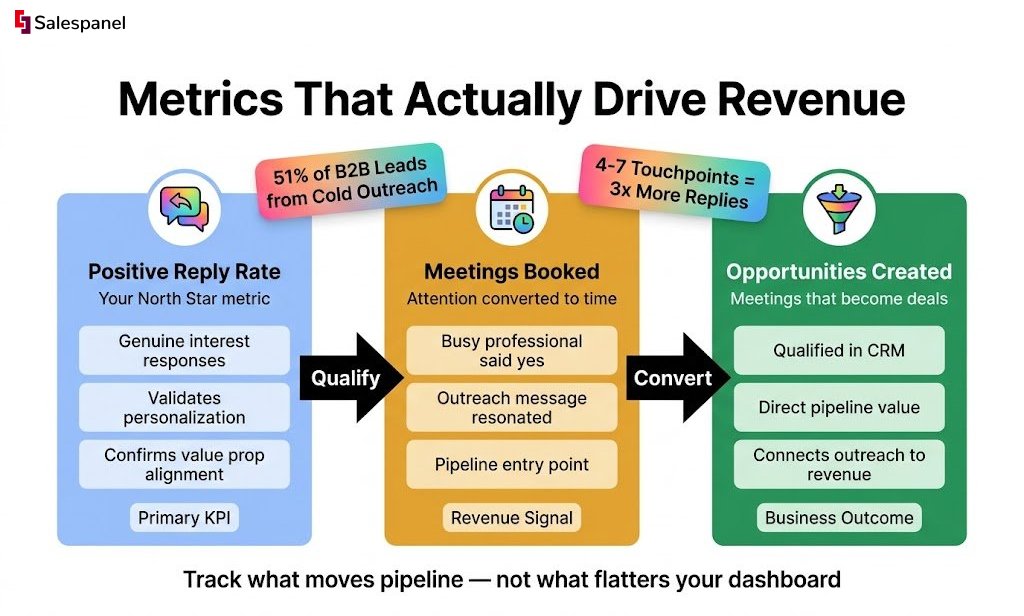
- Positive Reply Rate: This should be your North Star. It’s not just any reply, but the percentage of prospects who responded with actual interest. A high positive reply rate is the ultimate validation that your targeting, personalization, and value prop are all hitting the mark.
- Meetings Booked: This is the clearest measure of how well your email convinces a busy person to give you their time.
- Opportunities Created: Taking it a step further, how many of those booked meetings turned into qualified sales opportunities in your CRM? This is where you connect your outreach directly to pipeline value.
A low open rate but a high positive reply rate is infinitely more valuable than the other way around. It means you’re breaking through to the right people, even if others aren’t opening the email.
The Power of A/B Testing and Intent Data
The name of the game is continuous improvement. A systematic approach to A/B testing lets you sharpen every part of your outreach. You should constantly be testing different subject lines, opening hooks, value propositions, and calls-to-action to see what your audience responds to.
This is where things get really interesting. When you start pulling in behavioral data, you create a powerful feedback loop. Take Salespanel’s lead scoring framework. It lets you automatically qualify leads based on what they do. Say a prospect clicks a link in your email and then spends five minutes on your pricing page. Their lead score shoots up, flagging them as a high-intent lead for immediate follow-up. This data does more than just spot hot leads. It gives you critical insights to refine your Ideal Customer Profile (ICP). If you notice that prospects from a specific industry are consistently digging into your content, you know exactly where to double down on your next campaign.
Cold email is far from dead; industry data shows that roughly 51% of B2B leads still come from cold outreach. You can find more insights about B2B lead generation at Cognism.com. By blending your outreach with real-time intent data, you ensure your efforts are focused where they’ll get the biggest bang for your buck. You stop guessing and start building a data-driven sales machine.
Common Questions About Cold Email Outreach
Even with a solid game plan for your cold outreach, you’re bound to run into some specific questions once you get going. Let’s tackle a few of the most common ones with straight-to-the-point, practical answers.
How Many Follow-Up Emails Are Too Many?
There isn’t a single magic number here, but what we’ve seen work best is a sequence of 4-6 touchpoints spread out over a couple of weeks. But honestly, the number of emails is far less important than what’s in them. Each follow-up has to bring something new to the table. Ditch the generic “just checking in” fluff. Instead, send them a relevant case study, a link to an insightful article, or even a quick thought on a problem you know they’re facing in their industry. It also helps to mix it up a bit—try connecting on LinkedIn between emails to keep the interaction from feeling stale.
The most critical rule? If someone asks you to stop or opts out, you stop. Immediately. Protecting your sender reputation is non-negotiable.
What Is the Best Day and Time to Send Cold Emails?
You’ve probably seen those studies that claim Tuesday at 10 AM is the golden hour. The problem with that “conventional wisdom” is that it’s exactly when everyone else is flooding your prospect’s inbox, too. A much smarter approach is to think about your specific Ideal Customer Profile (ICP). A startup founder is probably burning the midnight oil, while a corporate VP might be clearing their inbox first thing at 7 AM. The best time isn’t a universal slot; it’s your prospect’s time.
Use the A/B testing features in your outreach tool. Experiment with different days and times, but pay attention to the reply rates, not just the opens. That’s where you’ll find the real data on when your audience is actually paying attention. This data-driven strategy will beat a generic schedule every single time.
How Do I Keep My Emails Out of the Spam Folder?
Landing in the inbox instead of the spam folder is part technical setup, part content strategy. You have to get both right. First, your technical foundation needs to be solid. This means getting your email authentication records—SPF, DKIM, and DMARC—configured correctly. This is how you prove to email providers that you are who you say you are.
Next, you have to warm up any new email account you plan to send from. You can’t just flip a switch and send hundreds of emails. Start slow with a handful of highly personalized messages and gradually ramp up the volume over a few weeks. Finally, take a hard look at what you’re writing. Steer clear of spammy trigger words (“free,” “guarantee,” “act now”), stuffing your email with too many links, or using huge images. Your ultimate goal is to get real, human replies. The more positive engagement you generate, the better your sender reputation becomes, which is the key to staying out of spam long-term.
At Salespanel, our entire approach is about turning raw data into smart, actionable insights. When you can see how prospects engage with your website after that first click, you get the context you need to make every follow-up more personal and effective. Take a look at our resources to see how you can build a smarter outreach strategy. Find out more at https://salespanel.io/resources.